
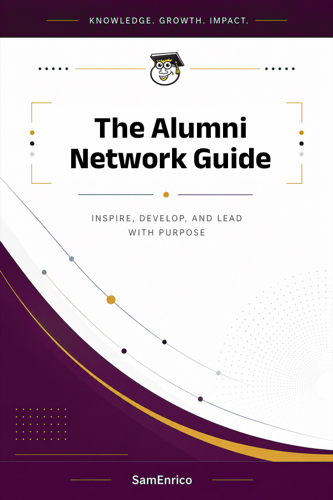
The Alumni Network Guide eBook
Leverage school and university connections for car
Leverage school and university connections for career advancement and mentorship.
Formats
Free sample
Chapter 1: The Warm Generosity Lie--You are not bothering them. You are offering them a gift.Let me say that again, because your entire networking future depends on internalizing it: every time you hesitate to email an alumnus because you think you are being annoying, demanding, or presumptuous, you are making a mathematical error. You are calculating the cost of your outreach as the inconvenience to the recipient. But you are failing to calculate the benefit.What if I told you that successful people derive more satisfaction from giving advice than from receiving it? What if I told you that behavioral psychologists have measured this effect, and it is not just a nice sentiment—it is a biological fact?
What if I told you that the person on the other end of your email is actually hoping someone like you will reach out, because helping you makes them feel wise, generous, and connected to their own younger self?This is the Warm Generosity Lie. The lie is not that generosity is warm. The lie is that you are the one who benefits most from the exchange. You are not. The alumnus benefits just as much—often more.The Email That Changed Everything I sent forty-seven emails during my senior year of college.
Forty-seven carefully crafted, anxiously proofread, desperately hopeful emails to alumni who worked at companies I admired. I researched each one. I found commonalities—same major, same study abroad program, same hometown in one case. I spent hours on each email.Forty-seven sent. Zero replies.I remember sitting in my dorm room on a Tuesday night, staring at my sent folder, refreshing my inbox every thirty seconds like a gambler pulling a slot machine lever.
Nothing. The silence was so complete I started to wonder if my email account was broken. I sent a test email to my roommate. It worked. The problem was not technology.
The problem was me.What was I writing? The same thing everyone writes. The same thing you have probably written. "Dear Alumnus, I am a current student at [School] and I really admire your career path. Would you be open to a fifteen-minute chat to share some advice?
I would love to learn from your experience. Let me know if you have any time in the coming weeks. Best, [Name]."This is the universal template of failure. It is polite, respectful, and utterly useless. It says nothing.
It asks for everything. It signals that you have done zero research, that you value your own time more than theirs, and that you are one of the fifty identical emails they received this week.I did not know this at the time. I thought I was being respectful by being vague. I thought I was giving them space. I was actually giving them permission to ignore me.Three years later, after I had started my career, I found myself on the other side of the equation.
I was the alumnus receiving emails from current students. And I finally understood the silence.In one week, I received twelve outreach emails. Eleven of them were variations of the vague template above. I ignored every single one. Not because I am a bad person.
Not because I do not want to help. But because I had no idea how to help. These students had not told me what they actually wanted. A "chat" could mean anything from "Can you review my résumé?" to "Can you introduce me to your CEO?" to "Can we become best friends?" I could not commit to an undefined obligation, so I committed to nothing.The twelfth email was different. It came from a student named Maya.
Here is what she wrote, exactly as I still have it saved in my inbox:"Dear Mr. Chen, I am a junior in Economics, same as you were. I saw your Linked In post about transitioning from investment banking to product management. I have two specific questions: (1) What was the single hardest technical skill you had to learn for the PM role? (2) Would you recommend the same online course you took, or has something better come out in the last three years?
I know you are busy—even a two-line reply to just question one would be invaluable to me. Thank you either way."I replied in four minutes.I did not feel annoyed. I felt seen. Maya had done her homework. She knew my specific transition.
She had two concrete, answerable questions. She gave me permission to be brief. She was not asking for my friendship or my network or my time. She was asking for my knowledge—which I had in abundance and could dispense in thirty seconds.I answered both questions. Then I offered a fifteen-minute call, unprompted.
Why? Because her email was so respectful of my time that I wanted to give her more of it. That is the paradox of the Warm Generosity Lie: when you ask for very little, people often give you much more. When you ask for a "chat," they give you nothing.Maya and I still keep in touch. She is now a senior product manager at a company she loves.
She tells me that my four-minute reply changed the trajectory of her career. I tell her that her four-sentence email changed my understanding of networking forever.The Psychology of Generosity: Why Helping You Feels Good Let us go beneath the surface. Why does an alumnus feel good when you ask for specific advice? The answer lies in three psychological mechanisms that have been rigorously studied and documented. Understanding these mechanisms will permanently reframe how you think about outreach.Mechanism One: The Helper's High In 2008, researchers at the University of British Columbia conducted a now-famous study on the neurochemistry of generosity.
They gave participants a small amount of money and instructed half to spend it on themselves and half to spend it on others. Then they measured their happiness levels. The results were unambiguous: the group that spent money on others reported significantly higher happiness than the group that spent on themselves. This effect was not just subjective—subsequent f MRI studies showed that acts of generosity trigger the same reward pathways in the brain as eating chocolate, winning money, or having sex.This is the helper's high. When you help someone, your brain releases dopamine, oxytocin, and endorphins.
You literally get a biochemical reward for being generous. Evolution wired us this way because cooperative groups outcompeted selfish groups. Our ancestors who helped others were more likely to receive help in return, and their brains evolved to make helping feel good.What does this mean for your alumni outreach? It means that when you ask an alumnus for specific, answerable advice, you are not taking something from them. You are giving them an opportunity to experience the helper's high.
You are offering them a legal, ethical, zero-cost dose of dopamine. Most people will say yes to that.Mechanism Two: The Wisdom Validation Effect Human beings have a deep psychological need to feel that their knowledge and experience are valuable. Psychologists call this "competence validation." When someone asks you for advice, it signals that you are worth listening to—that your…
This is the end of the free sample. Get the eBook to keep going. Buy now
About this book
Details
- Author
- Tellez Rashida
- Publisher
- SamEnrico
- Language
- English
- Genre
- Non-Fiction, Self-Help
- Released
- 2026-06-08
- Pages (approx.)
- 145
- Available as
- eBook, Audiobook

Read better in the ZLOADR app
Your eBooks on your phone or tablet. Sign in with your SamEnrico account and start reading.
More by Tellez Rashida
 Mortgage Free Retirement PlanTellez Rashida$11.99
 Shift Work for Military PersonnelTellez Rashida$11.99
 Body Image for Eczema Warriors CourseTellez Rashida$11.99
 Self Esteem After Weight ChangeTellez Rashida$11.99
 Silicon Shadows: The Ghost in the Quantum CodeTellez Rashida$11.99
 The Beacon in the Void: The Wow! Signal's Last SecretTellez Rashida$11.99
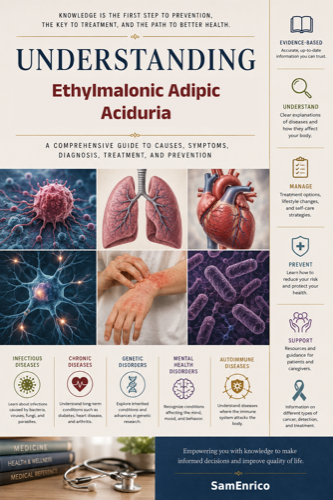 Understanding Ethylmalonic Adipic AciduriaTellez Rashida$17.99
 CV Writer Partnership ProgramTellez Rashida$12.99
 ToS for Nonprofits GuideTellez Rashida$12.99
 Motion Graphics SpecialistTellez Rashida$11.99
 How to Become a Mosquito SprayerTellez Rashida$11.99
You may also like
 Hong Kong Handover 1997Dunn Johnnie$11.99
 Zumba For Postnatal Recovery CourseNeal Christian$11.99
 Zumba for BeginnersLadner Nikia$11.99
 YouTube Comment Mining GuideHumes Pandora$12.99
 Worry Box MeditationCarlin Rudy$11.99
 Workplace Stress MeditationNguyen Lynn$11.99
 Workplace Stress and Sleep RepairHawley Ivory$11.99
 Workplace Perfectionism CureDelaney Jeffry$11.99
 Workplace Injustice Anger GuideWallen Isabelle$11.99
 Work Addiction and Burnout LinkGreenwood Ester$11.99
 Women in Yoga and WellnessBeattie Galina$11.99
 Women in Stand Up ComedyChun Evangeline$11.99