
Non-FictionSocial Media Founder
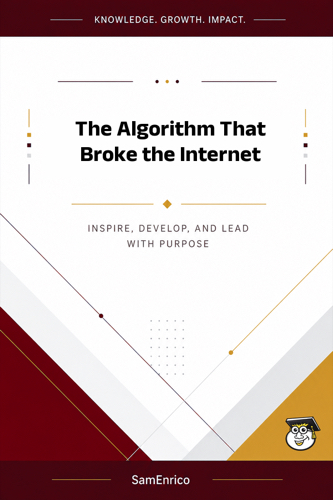
The Algorithm That Broke the Internet eBook
Unravel the untold story of how a single algorithm
Unravel the untold story of how a single algorithmic tweak at a major social platform triggered a global digital uprising, reshaping free speech and corporate power forever.
Formats
Free sample
Chapter 1: The Religion of Metrics...–- In the beginning, there was the feed. It was chronological, innocent, and boring. Then someone decided to make it smart. That decision—made in a conference room overlooking a parking garage in Menlo Park—would eventually lead to riots, death threats, and the collapse of trust in the most powerful communication tool ever built. But no one knew that yet.
On a crisp October morning in 2009, the only question was: how do we keep people scrolling?The conference room smelled of cold pizza and desperation. Facebook’s user growth had flattened for the first time since the company left Harvard’s dorms. The chronological feed—a simple reverse-chronological list of everything your friends posted—was showing its cracks. Users were missing important updates. Mothers didn’t see their children’s graduation photos.
Small businesses complained that their posts disappeared into the void. The problem was not too little content; it was too much. The average Facebook user had 130 friends. If each friend posted just once per day, that was 130 posts. No one scrolled through 130 posts.
The solution, everyone agreed, was curation. The question was: curation by whom?Chris, a reclusive engineer from the early Google days, believed algorithms could solve the problem. He had watched Google News organize the chaotic firehose of global journalism into something readable. Why couldn’t the same logic apply to your aunt’s vacation photos? His opponent in the debate was the product team, which believed human curation—friends liking and commenting—was the only signal that mattered.
The compromise was ugly but inevitable: an algorithm that learned from human behavior. If people clicked on something, the algorithm would show more of that. If people ignored something, the algorithm would bury it. This was not evil. This was, in its original form, almost noble.
Information overload was real. Attention was finite. Someone had to decide what you saw. Why not a machine?The algorithm that launched in 2009 was called Edge Rank. It was simple enough to write on a whiteboard.
Every post had three scores: an affinity score (how close you are to the person posting), a weight score (photos and videos counted more than text), and a time decay score (newer posts beat older posts). Multiply these three numbers, rank the results, and serve them to the user. That was it. No secret manipulation. No political bias.
Just math that reflected human relationships. Edge Rank worked so well that users spent 40% more time on Facebook within six months. The problem—the first of many—was that Edge Rank did not know the difference between a good relationship and a toxic one. Affinity was measured by interactions. If you argued with your ex-boyfriend every day, Edge Rank decided you two were best friends.
If you silently admired a photographer’s work without commenting, Edge Rank decided you didn’t care. The algorithm learned what you did, not what you felt.This distinction—between revealed preference and actual desire—would become the central lie of the attention economy. You are not what you love. You are what you click on when you are tired, bored, or angry. And on social media, you are almost always tired, bored, or angry.The Birth of the Attention Machine By 2012, Edge Rank had evolved.
Facebook was public, flush with cash, and terrified of Twitter. Twitter’s chronological feed was simpler, faster, and more addictive for breaking news. Facebook’s response was to double down on algorithmic ranking, but now with a new metric: time-on-site. The company had discovered that the longer someone stayed on the platform, the more ads they saw, and the more money Facebook made. This discovery was not hidden.
It was celebrated in all-hands meetings. “We are in the attention business,” the VP of product announced to applause. “Every second someone spends on Facebook is a second they are not spending anywhere else.”The logic was seductive in its simplicity. If attention is the currency, then engagement is the interest rate. Every click, every like, every comment, every share—these were deposits into Facebook’s bank account.
The algorithm’s job was no longer to show you what you missed. Its job was to keep you watching. This shift, from curation to extraction, is the single most important turning point in internet history. It happened slowly, then all at once. Engineers stopped asking “is this true?” and started asking “will this keep people scrolling?” Content moderators stopped asking “is this harmful?” and started asking “does this violate our terms of service narrowly enough that we can remove it without hurting engagement?”The internal memos from this era, some of which were later leaked to Congress, reveal a company struggling with its own success.
One engineer wrote: “We are optimizing for time-on-site. The most effective way to increase time-on-site is to surface emotionally arousing content. The most emotionally arousing content is negative. We are therefore systematically biasing the feed toward outrage.” The response from leadership was brief: “Show data.” The engineer ran the A/B test. Negative content increased time-on-site by 17%.
The algorithm was updated within a week.This was not a conspiracy. It was a feedback loop. The engineers were not evil; they were incentivized. The product managers were not malicious; they were measured on quarterly metrics. The executives were not sociopaths; they answered to shareholders who demanded growth.
The algorithm was not broken. It was working exactly as designed. The problem was the design.The You Tube Pipeline While Facebook perfected the outrage engine, You Tube was building its own monster. In 2012, You Tube’s homepage was a chaotic mess of random uploads. Users complained that the platform was impossible to navigate.
The solution, again, was algorithmic. You Tube’s recommendation system started simple: “people who watched this also watched that.” But within two years, the system had evolved into something far more powerful. You Tube discovered that the best predictor of what you would watch next was not what you had watched before, but what people with similar watching habits had watched after watching the same video. This is called collaborative filtering, and it is brilliant. It is also dangerous.Because what You Tube discovered—and what it took years to admit—was that the collaborative filtering algorithm had a strong preference for conspiracy theories, extremist content, and outrage.
The reason was mathematical. Mainstream content had many pathways: you could watch a CNN video and then watch sports, cooking, or music. Conspiracy content had fewer pathways. Once you watched one video claiming the moon landing was fake, the algorithm had very few places to send you besides more moon landing fake videos. The result was a funnel.
Moderate viewers stayed moderate, but curious viewers—those who clicked on one slightly unusual video—were rapidly pushed into increasingly extreme content. The algorithm did not know the difference between “this is interesting” and “this is dangerous.” It only knew that the dangerous content kept people watching longer.In 2018, You Tube quietly changed its recommendation algorithm to reduce “borderline content.” Engagement dropped by 2%. The company considered that an acceptable cost. But the damage was already done. Millions of viewers had been radicalized by…
This is the end of the free sample. Get the eBook to keep going. Buy now
About this book
Details
- Author
- Broussard Marx
- Publisher
- SamEnrico
- Language
- English
- Genre
- Non-Fiction, Social Media Founder
- Released
- 2026-06-03
- Pages (approx.)
- 143
- Available as
- eBook, Audiobook

Read better in the ZLOADR app
Your eBooks on your phone or tablet. Sign in with your SamEnrico account and start reading.
More by Broussard Marx
 Confrontation Phobia Assertive GuideBroussard Marx$11.99
 Email Overload SolutionBroussard Marx$11.99
 YouTube Child Star PhenomBroussard Marx$11.99
 Uber Driver Bonuses GuideBroussard Marx$11.99
 Indian GST E Way Bill Generation GuideBroussard Marx$11.99
 Scott Neighbor InterviewBroussard Marx$11.99
 Citation Rules for Books and Journals GuideBroussard Marx$11.99
 C130 Hercules PilotBroussard Marx$11.99
 Carnegie MellonBroussard Marx$11.99
 Rommel's Ghost Division: The Desert Fox's Western Front GambitBroussard Marx$11.99
 Red Dust Rising: The Untold Story of Mars' First Human FootprintBroussard Marx$11.99
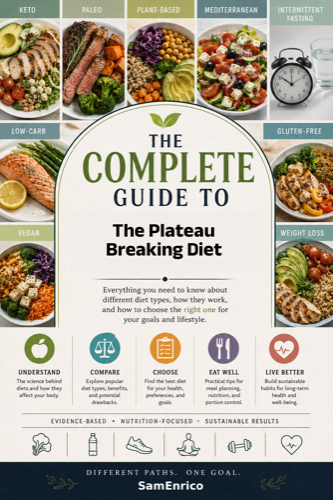 The Complete Guide to the Plateau Breaking DietBroussard Marx$11.99
You may also like
 Hong Kong Handover 1997Dunn Johnnie$11.99
 Zumba For Postnatal Recovery CourseNeal Christian$11.99
 Zumba for BeginnersLadner Nikia$11.99
 YouTube Comment Mining GuideHumes Pandora$12.99
 Worry Box MeditationCarlin Rudy$11.99
 Workplace Stress MeditationNguyen Lynn$11.99
 Workplace Stress and Sleep RepairHawley Ivory$11.99
 Workplace Perfectionism CureDelaney Jeffry$11.99
 Workplace Injustice Anger GuideWallen Isabelle$11.99
 Work Addiction and Burnout LinkGreenwood Ester$11.99
 Women in Yoga and WellnessBeattie Galina$11.99
 Women in Stand Up ComedyChun Evangeline$11.99