
Non-FictionHealth & WellnessSports Medicine
Testosterone and Athletic Performance eBook
Optimize T naturally for endurance power and recov
Optimize T naturally for endurance power and recovery without crossing doping lines.
Formats
Free sample
Chapter 1: The Strongest Weakness--–- The medal felt heavy around Mark’s neck. He had just finished third in a 70.3 Ironman, a personal best, a podium finish at age 41. His wife hugged him. His coach patted his back. The crowd cheered.
But Mark felt nothing except a dull, familiar exhaustion that had stopped being a sensation and had become a permanent state of being.That night, in the hotel room, he couldn’t sleep. Not from excitement. His heart wasn’t racing. His mind wasn’t replaying the race. He was simply lying awake at 2:00 AM, staring at the ceiling, his legs twitching with restless energy while his brain felt wrapped in wet wool.
His wife had fallen asleep an hour ago. He hadn’t touched her in six weeks. Not because he didn’t love her. Because the thought of sex felt like another workout he couldn’t complete.Mark was the fittest he had ever been. And his testosterone was 218 ng/d L.His doctor had called it “low normal.” The reference range on the lab report said 250–1,100 ng/d L.
Mark was below that. But the doctor said not to worry—he was an endurance athlete, after all. “Your body is efficient,” the doctor said. “You don’t need as much testosterone as a sedentary man.”Mark believed him. Until he didn’t.The Paradox That Changes Everything This book opens with a counterintuitive reality that will unsettle you, perhaps even anger you, because it challenges the fundamental assumption of every endurance training plan you have ever followed.The fittest endurance athletes often have the lowest resting testosterone levels.Read that again.
Let it land.The marathoner who runs 70 miles per week. The cyclist who logs 300 kilometers. The triathlete who trains twice a day, six days a week. These athletes are leaner, have lower resting heart rates, and possess greater cardiovascular efficiency than almost any other human on the planet. By every objective measure of fitness, they are at the peak of human performance.And yet, their testosterone levels frequently fall into the clinical hypogonadism range—below 300 ng/d L for men, and for women, free testosterone levels so low that they disrupt everything from bone density to libido to recovery.This is what I call the Endurance Paradox: the harder you train to become a better athlete, the more you may be undermining the very hormonal engine that makes adaptation, power, and recovery possible.Let me be clear.
This is not an argument against endurance sports. I am not telling you to stop running, cycling, or swimming. I am telling you that the conventional training wisdom—more volume, harder efforts, less rest—is directly and predictably suppressing your body’s ability to produce the hormones you need to improve.You have been training your heart, your lungs, your capillaries, and your slow-twitch muscle fibers. But you have been accidentally training against your endocrine system.Defining the Hormonal Hierarchy Before we go further, we need a shared language. This book is not a medical textbook, but you cannot fix what you cannot name.Testosterone is the primary male sex hormone (androgens) and an anabolic steroid.
In both men and women, it plays critical roles in:Muscle protein synthesis (repairing the damage you do during training)Red blood cell production (oxygen delivery to working muscles)Bone density (stress fracture prevention)Libido and mood (the “drive” to train and recover)Cognitive function (reaction time, decision-making under fatigue)For male athletes, total testosterone typically ranges from 400–800 ng/d L in healthy, active populations. For female athletes, total testosterone is much lower (15–70 ng/d L), but free testosterone (the unbound, bioavailable fraction) is the more relevant metric, typically 0.3–1.9 ng/d L.These are not arbitrary numbers. They represent the difference between training adaptations that stick and training that slowly erodes your health.Now, introduce the antagonist.Cortisol is a glucocorticoid hormone released by the adrenal glands in response to stress—physical, psychological, or metabolic. Its job is to mobilize energy (glucose) during threat, reduce inflammation acutely, and keep you alive when resources are scarce.Cortisol is not evil. Without it, you would die of septic shock from a minor infection.
Without it, you would never adapt to training because the inflammatory signal that triggers repair would run unchecked.But cortisol and testosterone exist in a reciprocal relationship. When one goes up, the other tends to go down. This is not coincidence. It is evolutionary programming.Your body operates on a simple hierarchy of survival:Immediate survival (running from a predator, fighting infection)Long-term survival (energy storage, immune function)Reproduction (sex drive, fertility, testosterone production)Cortisol is the hormone of immediate survival. Testosterone is the hormone of reproduction and long-term physical maintenance.
When your body senses a chronic threat—like daily high-volume endurance training—it downregulates testosterone production to divert resources toward the more urgent task of keeping you alive through the perceived stress.This is not a design flaw. It is a feature. Your body is not trying to make you a faster runner. It is trying to keep you alive. And it will sacrifice your testosterone, your libido, your bone density, and your recovery to do it.The Cortisol Steal: How Your Training Turns Against You Let me walk you through the cascade, because understanding the mechanism is the first step to disarming it.You begin a workout.
Let’s say a 90-minute run at a steady pace, Zone 3 effort (70–80% of max heart rate). For the first 30–40 minutes, your body responds appropriately. The sympathetic nervous system activates. Your heart rate rises. Blood shunts to working muscles.
And acutely, testosterone levels actually rise slightly due to increased blood flow and LH (luteinizing hormone) pulsatility.This is the anabolic window—the brief period where exercise stimulates, rather than suppresses, testosterone.But after approximately 40 minutes of continuous moderate-to-high intensity work, something shifts. Your muscle glycogen begins to deplete. Your body perceives this as an energy crisis. The adrenal glands release cortisol to mobilize alternative fuels (free fatty acids, and if necessary, amino acids from muscle tissue).This is where the Steal happens.Cortisol does not simply coexist with testosterone. It actively inhibits it at three distinct points in the HPT axis:Hypothalamus: Cortisol reduces the pulsatile release of Gonadotropin-Releasing Hormone (Gn RH).
Without Gn RH, the next step in the cascade never happens.Pituitary Gland: Even if some Gn RH gets through, cortisol blunts the pituitary’s sensitivity to it, reducing the release of Luteinizing Hormone (LH) and Follicle-Stimulating Hormone (FSH).Testes (Leydig cells): Cortisol directly downregulates the expression of the enzyme 3β-hydroxysteroid dehydrogenase (3β-HSD), which is required to convert cholesterol into testosterone. No enzyme, no testosterone.By the 90-minute mark of a continuous run, your testosterone may have dropped by 20–40% below baseline. Cortisol may have doubled or tripled. And this is after a single workout.Now imagine doing that five or six days per week, year after year.This is the Cortisol Steal. Your endurance training is literally stealing your testosterone.A Note on Intensity: The Missing Variable At this point, some of you are thinking, “But I do long, slow Zone 2 runs.
Those aren’t stressful.”You are partially correct. And this distinction is so important that I want to pause here and make…
This is the end of the free sample. Get the eBook to keep going. Buy now
About this book
Details
- Author
- Blunt Jenniffer
- Publisher
- SamEnrico
- Language
- English
- Genre
- Non-Fiction, Health & Wellness, Sports Medicine
- Released
- 2026-06-07
- Pages (approx.)
- 151
- Available as
- eBook, Audiobook

Read better in the ZLOADR app
Your eBooks on your phone or tablet. Sign in with your SamEnrico account and start reading.
More by Blunt Jenniffer
 Breaking Bad News GuideBlunt Jenniffer$11.99
 Memory After Insomnia GuideBlunt Jenniffer$11.99
 Cape Town Franchise Startup GuideBlunt Jenniffer$11.99
 Smallpox Vaccine Victory HistoryBlunt Jenniffer$11.99
 The Silent Takeover: How the 1996 NBA Lockout Reshaped the Business of BasketballBlunt Jenniffer$11.99
 The Last Brushstroke: Van Gogh’s Secret Letters to the MoonBlunt Jenniffer$11.99
 Global Internal Comms PlaybookBlunt Jenniffer$12.99
 Digital Cooperative PlatformsBlunt Jenniffer$12.99
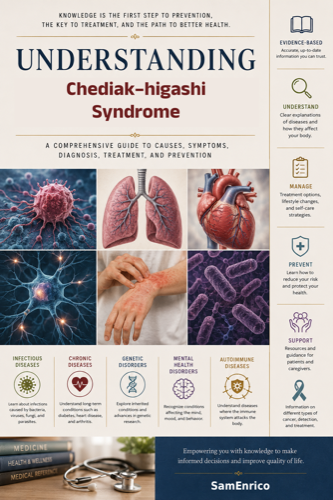 Understanding Chediak–higashi SyndromeBlunt Jenniffer$17.99
 How to Become a BusherBlunt Jenniffer$11.99
 Hair Tinsel ApplicatorBlunt Jenniffer$11.99
You may also like
 Hong Kong Handover 1997Dunn Johnnie$11.99
 Zumba For Postnatal Recovery CourseNeal Christian$11.99
 Zumba for BeginnersLadner Nikia$11.99
 YouTube Comment Mining GuideHumes Pandora$12.99
 Worry Box MeditationCarlin Rudy$11.99
 Workplace Stress MeditationNguyen Lynn$11.99
 Workplace Stress and Sleep RepairHawley Ivory$11.99
 Workplace Perfectionism CureDelaney Jeffry$11.99
 Workplace Injustice Anger GuideWallen Isabelle$11.99
 Work Addiction and Burnout LinkGreenwood Ester$11.99
 Women in Yoga and WellnessBeattie Galina$11.99
 Women in Stand Up ComedyChun Evangeline$11.99