
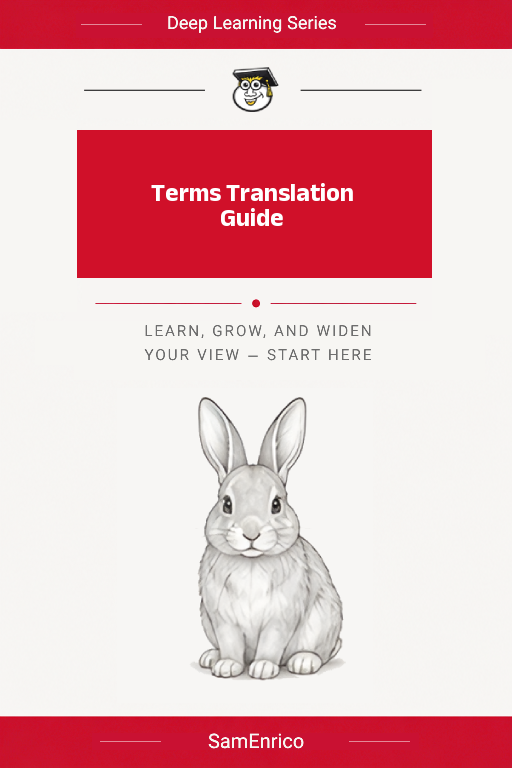
Terms Translation Guide eBook
Translate your terms of service for multilingual a
Translate your terms of service for multilingual audiences with disclaimer of translation accuracy and controlling language clauses.
Formats
Free sample
Chapter 1: The Translation Trap--–- It begins with a single word. Not a paragraph, not a clause, not a contract – just one ordinary-looking word that a lawyer drafted, a product manager approved, and a machine translated. That word travels across borders, through servers, and onto a screen in Warsaw, Berlin, or São Paulo. A user clicks "I Agree" without reading the English original – because why would they? The words on their screen are in their language.
They look official. They look binding. They look safe.But that one word has changed. Not obviously – not in a way that triggers a spell-check error or a grammar warning. It has changed in a way that only a bilingual lawyer or a litigation expert would notice, months or years later, when a dispute arises and a judge asks: "What did the user actually agree to?"This is the Translation Trap.
It is not a bug in software. It is not a typo. It is a fundamental failure to understand that legal language does not survive translation intact. And it is costing companies millions of dollars in lawsuits, regulatory fines, and lost enforceability.This chapter will show you exactly how the Translation Trap works, why even professional translators fall into it, and how to spot the most dangerous errors before they become evidence in a class action lawsuit. We will examine real-world case studies – including the Grindr Polish translation disaster, the Pay Pal syntax collapse, and the hidden dangers of words like "consideration" and "liability" – to build a framework for understanding why translation breaks contracts.
By the end of this chapter, you will never look at a translated Terms of Service the same way again.The Illusion of Transparency When most people think about translation, they imagine a simple substitution process. The English word "cat" becomes "gato" in Spanish. The French phrase "je t'aime" becomes "I love you." This works for menus, travel phrases, and basic conversation because the underlying concepts are concrete and universal.Legal language is not universal.Legal language is a technology – a precise, jurisdiction-specific system of obligations, rights, and procedures that has evolved over centuries. English contract law emerged from medieval common law courts and the Chancery system. French civil law traces back to the Napoleonic Code.
German contract law is shaped by the Bürgerliches Gesetzbuch (BGB) of 1900. Each system has its own vocabulary, its own assumptions, and its own rules for what makes a promise enforceable.When you translate a legal term, you are not finding an equivalent. You are making a choice – often a choice between several imperfect options, each carrying different legal consequences. And that choice, made by a translator who may not be a lawyer or reviewed by a product manager who does not speak the target language, becomes the binding terms of a contract that a court will interpret.Consider the word "consideration." In English common law, consideration is the thing of value exchanged between parties to make a contract binding. Without consideration, you have a gift or a promise, not an enforceable agreement.
The concept is fundamental – it is taught in the first week of law school and tested on the bar exam.Now translate "consideration" into French. The direct equivalent might be "contrepartie" – which exists in French contract law but carries different requirements. Or "cause," which is a related but distinct concept under the Napoleonic Code. Or "considération," which is a false friend – it means "thoughtfulness" or "respect," not a legal term at all. Each choice changes the legal analysis.
Each choice creates a risk that a French court will interpret the contract differently than a US court would.This is the illusion of transparency. The translation looks clear. The words appear to match. But the legal meaning has shifted, often invisibly, and the contract has broken without anyone noticing until it is too late.The False Friend: When Words Betray You Legal false friends are the most dangerous class of translation errors because they are invisible to non-specialists. A false friend is a word that appears to have the same meaning across languages but actually carries different legal weight, different obligations, or different consequences.The classic example is the English word "liability." In everyday English, liability means responsibility or legal obligation.
But in legal English, liability has specific technical meanings – strict liability, vicarious liability, joint and several liability – each with its own rules.Translate "liability" into German, and you face a choice. "Haftung" is the closest equivalent, but German law distinguishes between "Verschuldenshaftung" (liability based on fault) and "Gefährdungshaftung" (strict liability for dangerous activities). An English liability clause that assumes fault-based liability may be unenforceable in Germany if the activity falls under strict liability rules. The translator who chooses "Haftung" without understanding this distinction has created a contract that German courts will interpret under a different legal standard than the drafter intended.Another example is the English word "representation." In US contract law, a representation is a statement of fact that induces a party to enter a contract. False representations can give rise to claims of fraud or misrepresentation.
But in French law, "représentation" often refers to agency relationships – one person acting on behalf of another. A French translation of an English representation clause might inadvertently create an agency relationship that neither party intended.The Grindr case provides a particularly vivid illustration. Grindr, a dating app, banned a user for violating its terms of service. The English To S stated that Grindr "reserves the right to suspend or terminate your account at any time, with or without cause." This clause is standard in US app terms – it gives the company broad discretion to remove users who violate policies.When Grindr translated its To S into Polish, the translator rendered "banned your account" as "zakazać twojego konta." The problem is that "zakazać" means "to forbid" or "to prohibit" in a criminal or administrative sense – it implies a government-style prohibition, not a private company's contractual right to terminate service. Polish administrative law has specific procedures for government prohibitions, including rights of appeal and judicial review.
The user sued, arguing that Grindr had exceeded its contractual authority because the Polish translation suggested a level of due process that Grindr did not provide.The case settled, but the lesson is clear: a single false friend can transform a standard termination clause into an unintended administrative proceeding. The translator did not make a spelling error. The translator made a legal error – choosing a Polish word that sounded plausible but carried entirely different legal baggage.The Syntax Trap: When Sentences Collapse Beyond individual words, the structure of legal sentences creates another category of translation failure. English legal drafting has a well-documented problem: lawyers love long sentences. They nest clauses inside clauses, pile up modifiers, and delay the verb until the reader has forgotten the subject.Consider this sentence from Pay Pal's legacy user agreement – a real example, not a parody:"Pay Pal, in its sole discretion, may refuse to process any transaction, or may reverse any transaction, or may place funds in its possession on hold for up to 180 days, or may require you to take or refrain from taking actions that Pay Pal…
This is the end of the free sample. Get the eBook to keep going. Buy now
About this book
Details
- Author
- Jorgensen Annamae
- Publisher
- SamEnrico
- Language
- English
- Genre
- Non-Fiction, First 30 Days
- Released
- 2026-06-01
- Pages (approx.)
- 159
- Available as
- eBook, Audiobook

Read better in the ZLOADR app
Your eBooks on your phone or tablet. Sign in with your SamEnrico account and start reading.
More by Jorgensen Annamae
 Hiring Professional Downsizing CoordinatorsJorgensen Annamae$11.99
 The Digital FootprintJorgensen Annamae$11.99
 Anger Restructuring ExercisesJorgensen Annamae$11.99
 The Apple Notes Memory GuideJorgensen Annamae$11.99
 Grief Couples Survival GuideJorgensen Annamae$11.99
 The Architects of the Golden City: Timbuktu's Urban VisionariesJorgensen Annamae$11.99
 Regional Human Resources ManagerJorgensen Annamae$11.99
 Venture Debt vs Bank LoanJorgensen Annamae$12.99
 How to Start a Block Printing of Textiles Business (Beginners Guide)Jorgensen Annamae$11.99
 Understanding Waardenburg Syndrome Type 2Jorgensen Annamae$17.99
You may also like
 Hong Kong Handover 1997Dunn Johnnie$11.99
 Zumba For Postnatal Recovery CourseNeal Christian$11.99
 Zumba for BeginnersLadner Nikia$11.99
 YouTube Comment Mining GuideHumes Pandora$12.99
 Worry Box MeditationCarlin Rudy$11.99
 Workplace Stress MeditationNguyen Lynn$11.99
 Workplace Stress and Sleep RepairHawley Ivory$11.99
 Workplace Perfectionism CureDelaney Jeffry$11.99
 Workplace Injustice Anger GuideWallen Isabelle$11.99
 Work Addiction and Burnout LinkGreenwood Ester$11.99
 Women in Yoga and WellnessBeattie Galina$11.99
 Women in Stand Up ComedyChun Evangeline$11.99