
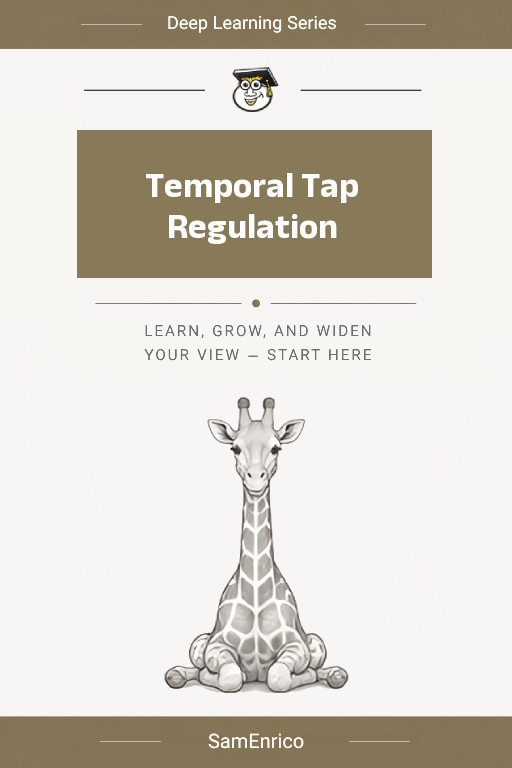
Temporal Tap Regulation eBook
Tap specific acupuncture points on skull for 30 se
by Farrar Hye
Tap specific acupuncture points on skull for 30 seconds to downregulate stress response.
Formats
Free sample
Chapter 1: The Thirty-Second Lie...--Most of what you have been taught about managing stress is a lie.Not a malicious lie, necessarily. Not a conspiracy designed to keep you anxious and exhausted. But a lie nonetheless—a well-intentioned, culturally reinforced misunderstanding about how your nervous system actually works. The lie sounds something like this: If you just think positively enough, breathe deeply enough, or talk through your feelings long enough, the stress will go away.It will not. And the reason it will not is not because you are broken or weak or undisciplined.
It is because your brain does not process linguistic instructions during a stress response. You cannot think your way out of a neurochemical flood any more than you can think your way out of falling down a flight of stairs. Once the amygdala—that small, almond-shaped cluster of neurons deep in your temporal lobe—has sounded the alarm, your cortex (the logical, reasoning part of your brain) is effectively placed on hold. You are not calm because you cannot be calm. Your body has decided, correctly or not, that you are in danger.This is the Thirty-Second Lie: the belief that stress management requires minutes or hours of meditation, expensive therapy sessions, or complex cognitive restructuring.
The truth, which forms the foundation of this book, is that your skull is a control panel. And on that control panel are specific points that, when pressed for exactly thirty seconds, can physically interrupt the stress cascade faster than any thought or breath ever could.Welcome to Temporal Tap Regulation.The Problem with Conventional Stress Management Let us begin with a simple experiment. Try, right now, to stop thinking about a pink elephant. Do not picture its trunk, its floppy ears, or its awkward, lumbering gait. Whatever you do, do not visualize that elephant.You just visualized the elephant.This is the ironic processing effect, first described by psychologist Daniel Wegner.
The more you try to suppress a thought, the more persistently it returns. Now apply this to stress. When you are in the middle of a panic attack—heart racing, palms sweating, chest tight with a sense of impending doom—and someone tells you to "just calm down" or "think positive thoughts," what happens? You become more anxious. Because you are trying to suppress the very sensation of fear, and your brain interprets that effort as evidence that there must be something truly terrifying to suppress.Conventional stress management techniques fall into three categories, each with a fatal flaw:Category One: Cognitive Techniques (talk therapy, affirmations, reframing).
These require a functioning prefrontal cortex. During acute stress, your prefrontal cortex goes offline. It is like trying to use a computer that has been unplugged.Category Two: Breathing Techniques (deep breathing, box breathing, alternate nostril). These work—but they work slowly. The vagus nerve, which mediates the relaxation response, takes approximately ninety seconds of rhythmic breathing to activate fully.
Ninety seconds is an eternity when you feel like you are dying.Category Three: Distraction Techniques (counting, naming objects, visualizing a calm place). These are effective only for mild to moderate anxiety. In a full sympathetic surge, distraction is a pebble thrown at a freight train.None of these techniques are useless. They have their place, and I will reference several of them throughout this book as companions to the protocol you are about to learn. But they share a common limitation: they work from the outside in.
They attempt to use the mind to calm the body.Temporal Tap Regulation works from the inside out. It uses the body to calm the mind.The Neurobiology of a Hijack To understand why thirty seconds of pressure on your skull can accomplish what minutes of breathing cannot, you need to understand what happens inside your skull during a stress response. I will keep this brief and accessible—no medical degree required.Your nervous system has two main branches: the sympathetic (fight-or-flight) and the parasympathetic (rest-and-digest). Under normal conditions, these two branches operate in a dynamic balance, like a seesaw. When the seesaw tips toward sympathetic, your heart rate increases, your digestion slows, your pupils dilate, and your body releases cortisol and adrenaline.
When it tips toward parasympathetic, your heart rate decreases, your digestion activates, your pupils constrict, and your body releases acetylcholine and oxytocin.The problem is that the sympathetic branch has a hair trigger. This is not a design flaw; it is a survival feature. Your ancient ancestors needed to react instantly to a predator. A slight delay in perceiving a rustle in the bushes could mean death. So evolution built a shortcut: sensory information from your eyes and ears travels directly to the amygdala before it reaches your cortex.
The amygdala asks one question: "Is this a threat?" If the answer is even maybe, it sounds the alarm.This alarm system is called the HPA axis (hypothalamic-pituitary-adrenal). Within milliseconds of the amygdala's decision, your hypothalamus releases corticotropin-releasing hormone (CRH). Your pituitary gland releases adrenocorticotropic hormone (ACTH). Your adrenal glands release cortisol and adrenaline. Your heart pounds.
Your muscles tense. Your breathing becomes shallow and rapid.And your prefrontal cortex—the part of your brain that could tell you, "Actually, that rustle was just the cat"—is now starved of blood flow. The body has redirected oxygen to your large muscle groups so you can run or fight. Thinking is a luxury you cannot afford.This is the hijack. And it takes approximately twenty to thirty minutes for cortisol to be metabolized and cleared from your system once the threat is gone.
Twenty to thirty minutes of feeling like you are falling apart, even after you know rationally that you are safe.Unless you have a way to mechanically interrupt the cascade.The Discovery: Why Skull Pressure Works The insight behind Temporal Tap Regulation emerged from a strange overlap of three fields: Traditional Chinese Medicine (TCM), modern neuroanatomy, and the study of mechanoreceptors.The TCM Connection: For thousands of years, acupuncturists have identified specific points on the skull that, when stimulated, produce profound calming effects. Points like GB-20 (the "suboccipital pool"), Yin Tang (the "third eye"), and Anmian ("peaceful sleep") were not discovered randomly. They were mapped through centuries of clinical observation. The ancient Chinese could not explain why these points worked—they spoke of "qi" and "meridians" and "blocked energy"—but they knew that they worked.The Neuroanatomy Connection: In the late twentieth and early twenty-first centuries, neuroscientists began to understand the cranial nerves—the twelve pairs of nerves that emerge directly from the brain. Several of these nerves pass through foramina (holes) in the skull that are accessible from the surface.
The trigeminal nerve (CN V), the vagus nerve (CN X), and the occipital nerves all have superficial branches that can be stimulated mechanically.The Mechanoreceptor Connection: Your skin and deeper tissues contain specialized nerve endings called mechanoreceptors. These receptors are designed to detect pressure, vibration, and stretch. When you apply sustained pressure to a mechanoreceptor, it sends a signal along the nerve to the brainstem. That signal is interpreted as "touch" or "pressure." But crucially, sustained pressure also triggers a reflex: the brainstem, receiving a strong, non-threatening tactile signal…
This is the end of the free sample. Get the eBook to keep going. Buy now
About this book
Details
- Author
- Farrar Hye
- Publisher
- SamEnrico
- Language
- English
- Genre
- Non-Fiction, Mental Wealth
- Released
- 2026-05-29
- Pages (approx.)
- 160
- Available as
- eBook, Audiobook

Read better in the ZLOADR app
Your eBooks on your phone or tablet. Sign in with your SamEnrico account and start reading.
More by Farrar Hye
 Luxury Auto by GenerationFarrar Hye$11.99
 Collaborative JournalingFarrar Hye$11.99
 Workplace Evening Wind DownFarrar Hye$11.99
 Vegan Dining Out GuideFarrar Hye$11.99
 SAD And Circadian RhythmFarrar Hye$11.99
 Future Self GuidanceFarrar Hye$11.99
 Anger De escalation with ElderlyFarrar Hye$11.99
 Networking for DoctorsFarrar Hye$11.99
 Turtle Ships and Samurai: Korea's Desperate Stand Against JapanFarrar Hye$11.99
 The Golden Tables of Axum: Where Wisdom and Empire ConvergedFarrar Hye$11.99
 A Collector's Handbook to the Mazda Rx3Farrar Hye$11.99
 How to Produce Leaf CleanerFarrar Hye$11.99
You may also like
 Hong Kong Handover 1997Dunn Johnnie$11.99
 Zumba For Postnatal Recovery CourseNeal Christian$11.99
 Zumba for BeginnersLadner Nikia$11.99
 YouTube Comment Mining GuideHumes Pandora$12.99
 Worry Box MeditationCarlin Rudy$11.99
 Workplace Stress MeditationNguyen Lynn$11.99
 Workplace Stress and Sleep RepairHawley Ivory$11.99
 Workplace Perfectionism CureDelaney Jeffry$11.99
 Workplace Injustice Anger GuideWallen Isabelle$11.99
 Work Addiction and Burnout LinkGreenwood Ester$11.99
 Women in Yoga and WellnessBeattie Galina$11.99
 Women in Stand Up ComedyChun Evangeline$11.99