
Non-FictionInformativeEducational
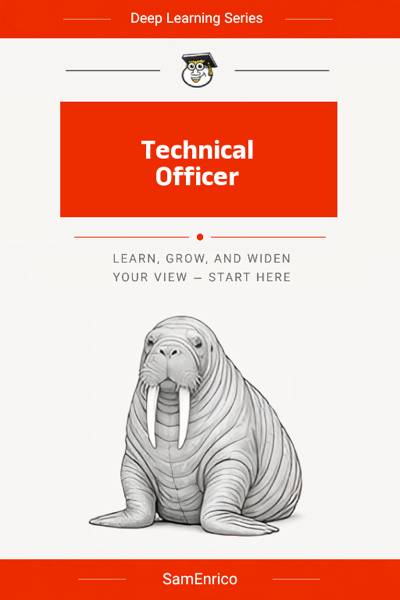
Technical Officer eBook
A Coursebook on Technical Officer
by Finney Meg
A Coursebook on Technical Officer
Formats
Free sample
Chapter 1: The Invisible Pivot--–- Most people assume a Technical Officer is simply a senior technician with a fancier job title. Someone who knows more about soldering irons than spreadsheets, more about oscilloscopes than organizational charts. This assumption is not only wrong—it is dangerously misleading. The modern Technical Officer occupies one of the most misunderstood, underappreciated, and strategically vital roles in any technical organization. They are the invisible pivot around which operations, compliance, and leadership turn.
And until you understand what they actually do, you will never master the role yourself.This chapter dismantles the myths, maps the three distinct archetypes of the Technical Officer, introduces the mental models that separate exceptional practitioners from merely adequate ones, and provides a self-assessment to help you identify your own trajectory. By the end, you will see the role differently—and you will understand why this book exists.The Great Misconception Walk into almost any laboratory, manufacturing plant, university technical services department, or certification body. Ask ten people what a Technical Officer does. You will get ten different answers. Some will say “keeps the equipment running.” Others will say “makes sure we follow the rules.” A few might mutter “whatever needs doing.” This lack of clarity is not a sign of incompetence.
It is a sign that the role has outgrown its traditional definitions.The term “Technical Officer” emerged in the mid-twentieth century, largely in Commonwealth countries, as a way to recognize skilled practitioners who were neither engineers (lacking formal degrees in some cases) nor tradespeople (operating at a higher cognitive level than traditional technicians). Over decades, the role evolved independently across sectors. Today, an IEC Technical Officer in Geneva has almost nothing in common with a University Lab Technical Officer in Melbourne—except that both are indispensable to their organizations.This fragmentation creates a serious problem. When a role lacks a shared definition, it lacks career pathways, appropriate compensation structures, and—most critically—a coherent body of professional knowledge. Aspiring Technical Officers are left to piece together skills from engineering management books, project management guides, and regulatory compliance manuals, none of which quite fit.
This book exists because that fragmented approach fails.The Three Archetypes After analyzing hundreds of job descriptions, interviewing practitioners across eight countries, and mapping the competencies demanded by top employers, a clear pattern emerges. Despite the surface chaos, every Technical Officer role falls into one of three archetypes—or a hybrid of them. Understanding which archetype you inhabit (or aspire to) is the first step toward mastery.Archetype One: The Operational Manager The Operational Manager keeps the physical infrastructure running. Their world is equipment, facilities, consumables, and schedules. They wake up thinking about calibration intervals, preventive maintenance windows, and the dreaded phone call that begins “the centrifuge just made a noise I have never heard before.”This archetype dominates universities, hospital laboratories, manufacturing plants, and research institutions.
Their key performance indicators are uptime, mean time between failures, calibration compliance rates, and consumables inventory accuracy. They are evaluated on things not breaking—which is thankless work, because nobody notices when everything works.The Operational Manager needs deep knowledge of maintenance strategies (corrective, preventive, predictive), inventory management systems, vendor coordination, and basic facility management. They must understand equipment lifecycles, depreciation, and the brutal arithmetic of repair-or-replace decisions. Their soft skills revolve around prioritization—because everything is urgent when equipment fails—and managing the expectations of researchers or production staff who view downtime as a personal insult.Consider Maria, a Technical Officer at a university materials science lab. She manages 147 pieces of major equipment, from atomic force microscopes to high-temperature furnaces.
Her day begins at 7:00 AM, checking overnight log files for error messages. By 8:30 AM, she has already rescheduled three calibration appointments, ordered a replacement vacuum pump, and talked a Ph D student out of “just trying one more thing” on a misaligned sputtering system. She does not design experiments. She does not publish papers. But without her, the lab produces nothing.Archetype Two: The Compliance Custodian The Compliance Custodian lives in the world of standards, regulations, audits, and documentation.
Their guiding question is not “does it work?” but “can we prove it works to an external auditor?” They translate dense regulatory language into actionable procedures, maintain technical files that can withstand legal scrutiny, and sleep reasonably well knowing that everything is traceable.This archetype dominates certification bodies (UL, TÜV, BSI), regulated industries (medical devices, aerospace, pharmaceuticals), and organizations pursuing ISO accreditation. Their key performance indicators include audit findings (fewer is better), corrective action closure times, document control compliance, and the absence of regulatory sanctions. They are evaluated on risk management—and they are often the first to know when something has gone wrong.The Compliance Custodian needs deep knowledge of specific standards (ISO/IEC 17020, 17025, 17065 depending on sector), quality management systems, document version control, and audit methodologies. They must understand the difference between technical regulations (mandatory) and voluntary standards (market-driven but often de facto mandatory). Their soft skills revolve around meticulousness, patience with paperwork, and the ability to explain compliance requirements to engineers who would rather be building things.Consider James, a Technical Officer at a medical device certification body.
His week includes reviewing a client’s technical file for a new infusion pump, conducting a witness audit of their sterility testing, and preparing a corrective action response for a nonconformity found in the previous quarter. He has not touched a piece of equipment in three years. His tools are checklists, standards documents, and a document management system with rigorous version control. He is absolutely essential to patient safety—and absolutely invisible to anyone who thinks “real work” happens at a workbench.Archetype Three: The Technical Liaison The Technical Liaison bridges the gap between deep technical work and the rest of the organization. They translate engineer-speak into executive summaries and business requirements into technical specifications.
They sit at the intersection of R&D, product management, regulatory affairs, and commercial strategy. Their superpower is bilingualism—fluent in both the language of circuits and the language of spreadsheets.This archetype dominates trade associations, R&D consortia, standards development organizations, and technology transfer offices. Their key performance indicators are less obvious: successful technology transfers, standards amendments passed, industry consortia agreements signed, and internal stakeholders who actually understand what the technical team is doing. They are evaluated on influence and alignment—nebulous concepts that make performance reviews challenging.The Technical Liaison needs deep knowledge of technical domains (enough to be credible) plus business acumen, negotiation skills, and political awareness. They must understand how standards are developed (the WTO-TBT process, national committee structures, the role of observers), how to present technical data to non-technical audiences, and how to find compromise when engineers disagree.
Their soft skills revolve around active listening, strategic patience, and the ability to let other people take credit for your ideas.Consider Priya, a Technical Officer at an electrical industry trade association. She represents member companies on four international standards committees, negotiates technical positions with regulators, and briefs executives on emerging compliance requirements. She does not own a multimeter. She has not written an SOP in years. But when a new regulation threatens to add millions in compliance costs to her members…
This is the end of the free sample. Get the eBook to keep going. Buy now
About this book
Details
- Author
- Finney Meg
- Publisher
- SamEnrico
- Language
- English
- Genre
- Non-Fiction, Informative, Educational
- Released
- 2026-05-23
- Pages (approx.)
- 147
- Available as
- eBook, Audiobook

Read better in the ZLOADR app
Your eBooks on your phone or tablet. Sign in with your SamEnrico account and start reading.
More by Finney Meg
 SAS WW2 Desert RaidersFinney Meg$11.99
 Racist Bully RecollectionsFinney Meg$11.99
 Home Detox Safety GuideFinney Meg$11.99
 Immigrant Parent PressureFinney Meg$11.99
 The Mumbai Murders: When Bollywood Glitter Met Underworld BloodFinney Meg$11.99
 How to Produce Climbing RopeFinney Meg$11.99
 Reference Checking Across CulturesFinney Meg$12.99
 A Beginners Guide to Punchball (Volume 1)Finney Meg$11.99
You may also like
 Hong Kong Handover 1997Dunn Johnnie$11.99
 Zumba For Postnatal Recovery CourseNeal Christian$11.99
 Zumba for BeginnersLadner Nikia$11.99
 YouTube Comment Mining GuideHumes Pandora$12.99
 Worry Box MeditationCarlin Rudy$11.99
 Workplace Stress MeditationNguyen Lynn$11.99
 Workplace Stress and Sleep RepairHawley Ivory$11.99
 Workplace Perfectionism CureDelaney Jeffry$11.99
 Workplace Injustice Anger GuideWallen Isabelle$11.99
 Work Addiction and Burnout LinkGreenwood Ester$11.99
 Women in Yoga and WellnessBeattie Galina$11.99
 Women in Stand Up ComedyChun Evangeline$11.99