

Non-FictionMental WealthTech Anxiety
Tech Failure Anxiety Plan eBook
Prepare mentally for slides not working so you don
by Paris Jonie
Prepare mentally for slides not working so you don't panic in the moment.
Formats
Free sample
Chapter 1: The Fortune-Telling Error--–- The first time my slides died, I was standing in front of two hundred people at a hotel ballroom in Austin. It was 10:47 on a Tuesday morning. I had spent eighteen hours the previous week crafting seventy-two slides. Every transition was timed. Every animation was polished.
Every font was kerned to within an inch of its life. At 10:48, the projector emitted a soft clicking sound, like a Geiger counter finding something it did not like. Then the screen went gray. Then the gray turned to black. Then I turned to the audience and said something I had not planned to say.
I said, "Oh no."Those two words—"Oh no"—lasted less than a second. But in that second, I felt my entire chest compress. My palms, which had been dry, became wet. My tongue stuck to the roof of my mouth. And my brain, which ten seconds earlier had contained a flawless presentation about communication strategy, now contained exactly three thoughts.
The first thought was: "Everyone is looking at me." The second thought was: "Everyone can see that I am panicking." The third thought was: "I am going to stand here forever in silence while two hundred people watch me die."None of those thoughts were true. The audience was looking at the blank screen, not at me. They could not see my wet palms or my dry tongue. And I was not going to die. But my brain did not know that.
My brain was doing what human brains have evolved to do: it was predicting catastrophe. It was fortune-telling. And it was wrong.This chapter is about why your brain does that, why it feels so real, and how to stop it before it stops you.The Ancient Circuitry of Panic To understand why a frozen slide feels like a life-threatening emergency, you need to understand something about your brain that no one tells you in business school. Your brain does not know the difference between a predator and a projector. Neurologically speaking, a dead laptop in a conference room activates the exact same threat-detection circuitry as a saber-toothed tiger did for your ancestors.
This is not a metaphor. This is anatomy.Deep inside your skull, tucked behind your eyes and slightly above your ears, sits a small almond-shaped cluster of neurons called the amygdala. The amygdala's job is simple: detect threats and sound the alarm. It does not think. It does not reason.
It does not ask follow-up questions. It just detects and alarms. When your amygdala decides that something is dangerous, it sends a signal to your hypothalamus, which activates your sympathetic nervous system, which floods your body with adrenaline and cortisol. Your heart rate increases. Your breathing becomes shallow.
Your blood moves away from your digestive system and toward your large muscles. Your palms sweat—not because you are nervous, but because sweat improves grip strength, which would have helped you climb a tree to escape that tiger. Your mouth goes dry because saliva production is not a survival priority when you are being hunted.This is called the fight-or-flight response. It is elegant. It is ancient.
It saved your ancestors' lives thousands of times. And it is completely useless when your Power Point freezes.Here is the cruel irony: the fight-or-flight response actually makes tech failures worse. When your amygdala sounds the alarm, blood flow decreases to your prefrontal cortex—the part of your brain responsible for complex thinking, planning, and verbal fluency. In other words, at the exact moment you need to say something clever and calm, your brain starves the very region that produces clever and calm speech. Your prefrontal cortex goes offline.
Your amygdala takes over. And your amygdala does not know any words. It only knows alarm.This is why you freeze. This is why you say "Oh no." This is why you click the same button seventeen times as if the eighteenth click will somehow work. You are not weak.
You are not a bad presenter. You are a human being with a normally functioning brain that is doing exactly what it evolved to do. The problem is not your brain. The problem is that your brain is using outdated software for a modern problem.The Fortune-Telling Error: A Cognitive Distortion Now let us introduce the specific mental habit that turns a minor tech glitch into a full-body panic attack. In cognitive behavioral therapy—the most scientifically validated form of talk therapy for anxiety disorders—there is a concept called "cognitive distortions." These are systematic patterns of irrational thinking that your brain falls into, usually without your awareness.
One of the most common cognitive distortions is called "fortune telling."Fortune telling is exactly what it sounds like: predicting a negative future outcome as if it were already a fact. You do not say, "I am worried that the screen might go black." You say, "The screen is going to go black." You do not say, "I am nervous that people might think I look unprepared." You say, "Everyone is going to think I am an imposter." You take a feared possibility and treat it as a guaranteed certainty. Your brain, in other words, tells fortunes. And like most fortune-tellers, it is usually wrong.Let me give you an example from outside the world of presentations. Imagine you are waiting for a friend to meet you for coffee.
Your friend is ten minutes late. Your phone buzzes. You look down. It is not your friend. It is a notification from a food delivery app.
A fortune-telling brain would immediately conclude: "My friend forgot about me. My friend does not value our friendship. My friend is on their way to meet someone else." That is fortune telling. A non-fortune-telling brain would think: "My friend is probably stuck in traffic. Or their phone died.
Or they are running late because their meeting ran over." Notice the difference. The fortune-telling brain treats the worst-case scenario as fact. The non-fortune-telling brain treats the worst-case scenario as one possibility among many.Now apply this to tech failures. A fortune-telling brain, thirty seconds before a presentation, thinks: "The projector is going to fail. Everyone will laugh.
I will forget everything. My career will be over." These are not predictions. They are fortunes. And they are written by an anxious fortune-teller who has no evidence for any of them. The projector might fail.
It probably will not. But even if it does, no one will laugh. You will not forget everything. Your career will not end. You have simply told yourself a story that your amygdala believes because your amygdala cannot distinguish between a story and reality.The Externalization of the Irrational Voice Here is where we move from understanding to action.
The first and most important exercise in this book—the only exercise that will be repeated across multiple chapters because it is that foundational—is called the Externalization of the Irrational Voice. It is a simple, four-step process that takes less than five minutes. It will feel silly the first time you do it. Do it anyway.Step One: Write down your worst-case scenario.Take out a piece of paper. Not a phone.…
This is the end of the free sample. Get the eBook to keep going. Buy now
About this book
Details
- Author
- Paris Jonie
- Publisher
- SamEnrico
- Language
- English
- Genre
- Non-Fiction, Mental Wealth, Tech Anxiety
- Released
- 2026-06-06
- Pages (approx.)
- 128
- Available as
- eBook, Audiobook

Read better in the ZLOADR app
Your eBooks on your phone or tablet. Sign in with your SamEnrico account and start reading.
More by Paris Jonie
 Sudden Employee Departure Financial Impact GuideParis Jonie$11.99
 Cannabis Use Disorder MedicationsParis Jonie$11.99
 The Dance Brain Protection GuideParis Jonie$11.99
 Sleep Chronotype AssessmentParis Jonie$11.99
 Binge Eating For Caregivers GuideParis Jonie$11.99
 Horizontal Merger Block PrecedentsParis Jonie$11.99
 The Sponsor Relationship GuideParis Jonie$11.99
 Spouse Death and Adult ChildrenParis Jonie$11.99
 Reddit Upvote Validation TrapParis Jonie$12.99
 The Last Broadcast: The 1960s Radio War That Changed the WorldParis Jonie$11.99
 Blood and Obsidian: The Spy Who Fell to TeotihuacanParis Jonie$11.99
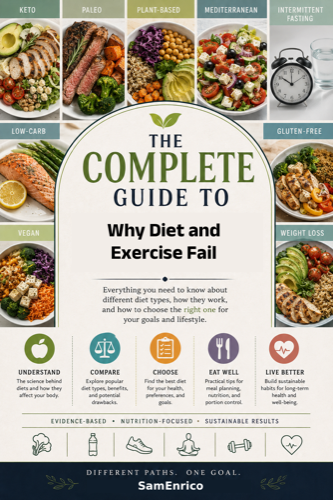 The Complete Guide to Why Diet and Exercise FailParis Jonie$11.99
You may also like
 Hong Kong Handover 1997Dunn Johnnie$11.99
 Zumba For Postnatal Recovery CourseNeal Christian$11.99
 Zumba for BeginnersLadner Nikia$11.99
 YouTube Comment Mining GuideHumes Pandora$12.99
 Worry Box MeditationCarlin Rudy$11.99
 Workplace Stress MeditationNguyen Lynn$11.99
 Workplace Stress and Sleep RepairHawley Ivory$11.99
 Workplace Perfectionism CureDelaney Jeffry$11.99
 Workplace Injustice Anger GuideWallen Isabelle$11.99
 Work Addiction and Burnout LinkGreenwood Ester$11.99
 Women in Yoga and WellnessBeattie Galina$11.99
 Women in Stand Up ComedyChun Evangeline$11.99