
Non-FictionSelf-HelpSuicide Prevention
Talking About Suicidal Thoughts Guide eBook
Asks directly about self harm intentions safely.
Asks directly about self harm intentions safely.
Formats
Free sample
Chapter 1: The 90-Second Pause--–- The fluorescent lights of the consultation room hummed at a frequency that Dr. Sarah Chen had never noticed before. She noticed them now because her mind had gone completely, terrifyingly blank. Across from her sat Marcus, a 34-year-old veteran who had just said the words she had been trained to hear but never truly prepared for: "I have a plan." Sarah had been a licensed clinical psychologist for eight years. She had read the textbooks, attended the workshops, and passed the licensing exams.
But in this moment, with Marcus looking at her with a mixture of hope and terror, she did nothing. For ninety seconds—which felt like ninety hours—she sat frozen, her mouth open, her heart pounding so loudly she was certain Marcus could hear it. She did not ask a follow-up question. She did not reach for a safety plan. She did not call for backup.
She simply sat there, paralyzed by the fear that whatever she said next might be the wrong thing and that a wrong thing might cost Marcus his life.Marcus survived that session. He survived because after ninety seconds of unbearable silence, he spoke again: "Dr. Chen? Are you still there?" That question snapped her back into her body. She took a breath, leaned forward, and said the only honest thing she could think of: "Marcus, I am so glad you told me.
I need a moment to think, and then we are going to make a plan together. You are not alone in this." That session became the pivot point of Sarah’s career. She went home that night and did not sleep. She replayed the ninety seconds of paralysis on a loop, dissecting every moment of fear. The next morning, she called a supervisor—not to confess a failure, but to ask a question: "Why did I freeze, and how do I make sure I never freeze again?"That question is the reason this book exists.The Epidemic No One Talks About Here is a truth that the textbooks rarely name: most clinicians are afraid to ask directly about suicide.
Not because they are bad clinicians. Not because they lack compassion. But because the fear of "getting it wrong" is so overwhelming that the brain’s threat response activates, and the clinician defaults to avoidance, redirection, or—as in Sarah’s case—complete paralysis.The data on this fear is staggering. A 2020 survey of 1,200 mental health professionals published in Suicide and Life-Threatening Behavior found that nearly 40 percent of clinicians reported avoiding the direct question "Are you thinking about suicide?" at least once in the past year. The most common reasons given were: "I didn't want to plant the idea" (68 percent), "I wasn't sure how to handle a yes" (54 percent), and "I was afraid of being sued" (47 percent).
These are not fringe practitioners. These are licensed, experienced professionals working in hospitals, private practices, and community mental health centers across the country.The irony—and it is a cruel one—is that the fear of asking is precisely what puts patients at greater risk. When clinicians avoid the question, patients interpret that avoidance as confirmation that their suicidal thoughts are too shameful to speak aloud. The secret stays in the dark, where it grows heavier and more dangerous. Conversely, when a clinician asks directly and calmly, patients consistently report a sense of relief.
A 2018 study in the Journal of Clinical Psychiatry asked 400 patients with recent suicidal ideation how they felt when a clinician asked directly about suicide. Seventy-two percent reported feeling "relieved" or "cared for." Only 3 percent reported feeling "worse." Asking does not plant the idea. Asking waters the seed of connection.This chapter is about that fear—where it comes from, how it manifests in your body and behavior, and most importantly, how to transform it from an obstacle into a tool. We will begin by normalizing the anxiety you feel. Then we will dismantle the myths that sustain that anxiety.
Finally, we will introduce the framework that will guide the rest of this book: the shift from risk-focused interrogation to relational dialogue. By the end of this chapter, you will not be fearless—fearlessness is neither possible nor desirable in this work. But you will be prepared. And preparation is the antidote to paralysis.The Anatomy of Clinician Fear To understand why you freeze, you have to understand what happens in your brain when a patient says something that triggers a threat response. This is not psychology—this is neurobiology.The amygdala, a small almond-shaped structure deep in the temporal lobe, is your brain’s smoke detector.
Its job is to scan the environment for threats and sound the alarm before your conscious mind has time to think. When a patient says "I want to kill myself," your amygdala interprets that as a threat—not to your physical safety necessarily, but to your competence, your professional identity, and your sense of control. The alarm sounds. Cortisol and adrenaline flood your system. Your heart rate increases.
Your breathing becomes shallow. Your peripheral vision narrows. This is the "tunnel vision" that clinicians report—the sensation of being trapped in a small, dark corridor with only one way out.Here is what the amygdala does not know: you are trained for this moment. You have skills. You have protocols.
But the amygdala does not care about training when the alarm is sounding. It cares about survival, and its definition of survival is "escape the situation as quickly as possible." That is why your first impulse might be to change the subject, offer reassurance ("You have so much to live for!"), or end the session early. These are not signs of incompetence. They are signs that your nervous system is doing exactly what evolution designed it to do: protect you from perceived danger.The problem is that in suicide assessment, the "danger" is not an external predator. The danger is the patient’s internal suffering—and avoiding that suffering does not help the patient.
It abandons them. So the task of this book is not to silence your amygdala. The task is to retrain it. To teach your brain that the question "Are you thinking about suicide?" is not a threat signal but a clinical tool. And like any tool, it becomes less frightening the more you use it.The Myth That Kills: "Asking Gives Them the Idea"Let us dismantle the most persistent and dangerous myth in suicide prevention: the belief that asking about suicide plants the idea in a patient’s mind.
This myth has no basis in evidence, yet it persists in medical schools, therapy trainings, and even in the intuitions of well-meaning clinicians. It is time to kill this myth permanently.The research on this question is remarkably consistent. A 2014 meta-analysis in the British Journal of Psychiatry reviewed 13 studies involving over 4,000 participants and found no evidence that asking about suicidal ideation increases suicidal thoughts or behaviors. None. Zero.
In fact, the majority of studies showed a small but significant decrease in suicidal ideation following direct assessment. Why? Because asking about suicide does not introduce a new concept to the patient’s mind—it acknowledges a concept that…
This is the end of the free sample. Get the eBook to keep going. Buy now
About this book
Details
- Author
- Kinder Jaimee
- Publisher
- SamEnrico
- Language
- English
- Genre
- Non-Fiction, Self-Help, Suicide Prevention
- Released
- 2026-06-09
- Pages (approx.)
- 154
- Available as
- eBook, Audiobook

Read better in the ZLOADR app
Your eBooks on your phone or tablet. Sign in with your SamEnrico account and start reading.
More by Kinder Jaimee
 Anger in Trauma BondingKinder Jaimee$11.99
 Grandparents Raising GrandkidsKinder Jaimee$11.99
 Directory Era French HistoryKinder Jaimee$11.99
 The Interruption Signal SystemKinder Jaimee$11.99
 Postpartum Depression Nutrition GuideKinder Jaimee$11.99
 Pelvic Floor AppsKinder Jaimee$11.99
 The Feedback Delivery MethodKinder Jaimee$11.99
 Self Esteem For Short PeopleKinder Jaimee$11.99
 The Archimedes Code: A Heist of Ancient GeniusKinder Jaimee$11.99
 Power Couple: The Billion-Dollar Betrayal of the MurdochsKinder Jaimee$11.99
 Enki’s Riddle: The God Who Spoke in WaterKinder Jaimee$11.99
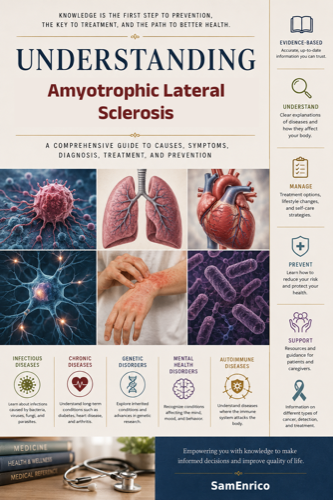 Understanding Amyotrophic Lateral SclerosisKinder Jaimee$17.99
You may also like
 Hong Kong Handover 1997Dunn Johnnie$11.99
 Zumba For Postnatal Recovery CourseNeal Christian$11.99
 Zumba for BeginnersLadner Nikia$11.99
 YouTube Comment Mining GuideHumes Pandora$12.99
 Worry Box MeditationCarlin Rudy$11.99
 Workplace Stress MeditationNguyen Lynn$11.99
 Workplace Stress and Sleep RepairHawley Ivory$11.99
 Workplace Perfectionism CureDelaney Jeffry$11.99
 Workplace Injustice Anger GuideWallen Isabelle$11.99
 Work Addiction and Burnout LinkGreenwood Ester$11.99
 Women in Yoga and WellnessBeattie Galina$11.99
 Women in Stand Up ComedyChun Evangeline$11.99