
Non-FictionStrategic AtlasHR Tech
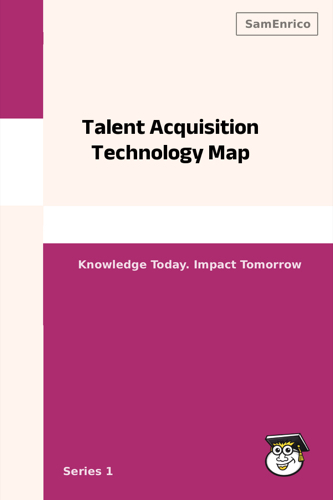
Talent Acquisition Technology Map eBook
Guide to ATS, CRM, and assessment platforms used b
by Harlan Lucie
Guide to ATS, CRM, and assessment platforms used by fast growing firms.
Formats
Free sample
Chapter 1: The Convergence Chaos--–- Maria had spent fourteen months and $470,000 building what she thought was a world-class talent acquisition stack. Her Saa S company had grown from 150 to nearly 600 employees in that time, and she had bought the best ATS on the market, added a separate CRM for pipeline management, and integrated two different assessment platforms. On paper, it was beautiful. In practice, it was a nightmare.The breaking point came on a Tuesday afternoon in March. Maria needed to fill a VP of Product role—a critical hire that had been open for six months.
Her ATS showed twelve candidates in the pipeline. But when she dug into the data, she discovered something alarming. Four of those candidates had accepted other offers weeks ago, and the system had never updated their status. Three had been ghosted by recruiters who didn't know they were still waiting for feedback. Two were duplicates of candidates already rejected under different email addresses.
And the remaining three? Their assessment results had been sitting in a separate platform, never integrated, waiting for someone to notice.Maria’s phone rang. It was her CEO. "Why did that product lead from Google just post on Linked In that our interview process is a black hole?" Maria didn't have an answer. She didn't have a dashboard.
She didn't even have a single source of truth for candidate data across her four systems.That night, Maria opened a spreadsheet. She manually exported data from her ATS, her CRM, her assessment platforms, and her scheduling tool. It took her six hours. She found 1,247 candidate records, of which 412 were duplicates. She found 89 candidates who had been waiting more than two weeks for feedback.
She found a compliance report that would have failed an audit miserably.The next morning, she walked into her CEO’s office and said, "We have a problem. Our technology is lying to us. And I don't know how to fix it."That problem is the subject of this book.The Myth of the Standalone ATSEvery week, Maria receives emails from ATS vendors promising to solve all her recruiting problems. "Track every applicant!" they say. "Never lose a candidate again!" they promise.
"Automate your workflow!" they insist.And every week, Maria watches her recruiters bypass the ATS entirely. They keep spreadsheets. They text candidates directly. They maintain their own shadow databases of "good people" that never make it into the system. Not because they are lazy, but because the ATS makes their jobs harder, not easier.Here is the truth that vendors won't tell you: an ATS was never designed to be the center of your talent acquisition universe.
It was designed for compliance. It was designed for storage. It was designed for a world where candidates applied through job boards and recruiters reviewed resumes one by one. That world no longer exists.The modern talent acquisition landscape has changed in four fundamental ways that the standalone ATS cannot handle.First, candidates now expect a consumer-grade experience. They want transparent status updates.
They want mobile-responsive portals. They want to know where they stand in real time. Most ATS platforms were built before mobile was dominant, and their candidate experience reflects that. Sixty percent of applications now come from mobile devices, yet the average ATS mobile portal was designed in 2014 and hasn't been updated since.Second, sourcing has become multi-channel and continuous. Ten years ago, most candidates came from job boards.
Today, they come from Linked In, Twitter, Git Hub, Stack Overflow, Slack communities, industry conferences, employee referrals, and a dozen other channels. Each channel requires different tracking, different messaging, and different follow-up. ATS platforms were built for inbound applications, not outbound sourcing.Third, the best candidates are not actively looking. The passive candidate market—people who are employed and not searching for jobs—represents 70% of the global workforce. These candidates will not fill out an application form.
They will not upload a resume to your career site. They will not click "Apply Now." They need to be nurtured, engaged, and persuaded over weeks or months. An ATS has no concept of nurturing. It only knows how to process applications.Fourth, hiring is no longer a linear process. Candidates now flow through multiple channels, multiple touchpoints, and multiple systems before they ever become an applicant.
They might first encounter your brand through a Linked In post, then attend a webinar six months later, then be referred by an employee, then apply, then complete an assessment, then interview, then receive an offer. Each of these touchpoints generates data. Most ATS platforms lose that data the moment it crosses a system boundary.Maria discovered all of this the hard way. Her standalone ATS was a filing cabinet, not a relationship tool. And filing cabinets don't hire people.The Three-System Ecosystem If an ATS alone cannot support fast-growing firms, what can?
This book answers that question with a clear, consistent architectural model: three core systems, plus an intelligence overlay that sits above them all.Let me define each component clearly, because understanding these distinctions is the foundation for everything that follows.System One: The ATS (Workflow and Compliance)The ATS remains essential. It is your system of record for active candidates—people who have applied for specific roles. It manages requisition approval chains, candidate disposition codes, interview feedback collection, offer letter generation, and compliance reporting. Without an ATS, you cannot scale your hiring process or pass a regulatory audit.But note the key phrase: system of record for active candidates. The ATS is not for passive candidates.
It is not for relationship nurturing. It is not for sourcing. It is for managing the workflow of people who have already raised their hands.System Two: The Recruitment CRM (Relationship and Pipeline)The CRM is your system of engagement for everyone else. It builds and nurtures talent pools before a requisition opens. It tracks passive candidates through email campaigns, content communities, and events.
It enables segmentation by skill, location, seniority, and engagement history. It scores candidates based on their interest and fit.When a candidate finally applies, their record moves from the CRM to the ATS. But crucially, the history of every touchpoint—every email opened, every webinar attended, every conversation with a recruiter—travels with them. The CRM is not a separate silo. It is a feeder system that makes the ATS smarter.System Three: Assessment Platforms (Prediction and Fit)Assessment platforms provide the data layer that reduces bias and improves predictive validity.
They measure skills, cognitive ability, personality, and work samples. They automate initial screening for high-volume roles. They generate data that predicts candidate success with far greater accuracy than unstructured interviews.When integrated correctly, assessment results flow into both the ATS (for active candidate evaluation) and the CRM (for passive candidate scoring). A candidate who scores highly on a skills assessment becomes a warmer lead in the CRM, even before they apply.The Intelligence Overlay: Analytics and AIAbove all three systems sits the intelligence overlay—analytics and AI that inform strategy, detect patterns, and make recommendations across the entire ecosystem. This is not a fourth system.
It is a layer that enhances the other three.The intelligence overlay answers questions like: Which sourcing channel produces our best…
This is the end of the free sample. Get the eBook to keep going. Buy now
About this book
Details
- Author
- Harlan Lucie
- Publisher
- SamEnrico
- Language
- English
- Genre
- Non-Fiction, Strategic Atlas, HR Tech
- Released
- 2026-06-11
- Pages (approx.)
- 126
- Available as
- eBook, Audiobook

Read better in the ZLOADR app
Your eBooks on your phone or tablet. Sign in with your SamEnrico account and start reading.
More by Harlan Lucie
 Napoleon's Exile And Return HandbookHarlan Lucie$11.99
 Michael Schumacher Red BaronHarlan Lucie$11.99
 The Child Sleepwalking GuideHarlan Lucie$11.99
 The Assertive Disagreement GuideHarlan Lucie$11.99
 Pandora's Curse: The Unseen Gift of the First WomanHarlan Lucie$11.99
 Understanding Swine Influenza (H1f1)Harlan Lucie$17.99
 Face Saving Chinese NegotiationHarlan Lucie$12.99
 Sensitivity Analysis for IPHarlan Lucie$12.99
 How to Start a Absorbable Haemostatics Business (Beginners Guide)Harlan Lucie$11.99
 Equipment Specialist LeaderHarlan Lucie$11.99
You may also like
 Hong Kong Handover 1997Dunn Johnnie$11.99
 Zumba For Postnatal Recovery CourseNeal Christian$11.99
 Zumba for BeginnersLadner Nikia$11.99
 YouTube Comment Mining GuideHumes Pandora$12.99
 Worry Box MeditationCarlin Rudy$11.99
 Workplace Stress MeditationNguyen Lynn$11.99
 Workplace Stress and Sleep RepairHawley Ivory$11.99
 Workplace Perfectionism CureDelaney Jeffry$11.99
 Workplace Injustice Anger GuideWallen Isabelle$11.99
 Work Addiction and Burnout LinkGreenwood Ester$11.99
 Women in Yoga and WellnessBeattie Galina$11.99
 Women in Stand Up ComedyChun Evangeline$11.99