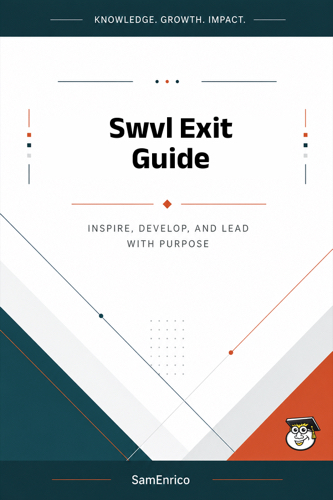
Swvl Exit Guide Audiobook
Study the Egyptian mass transit startup's SPAC mer
Study the Egyptian mass transit startup's SPAC merger as exit model.
Formats
Free sample
Chapter 1: The Cairo Calculus...--–- The bus lurched to a stop in the middle of a Cairo intersection, not at a designated station, because there were no designated stations. The fare collector, a teenage boy hanging off the open door, shouted a price that changed depending on how many passengers had already boarded. A woman clutching a grocery bag was told to wait for the next bus because there were no seats reserved for women on this route. The driver lit a cigarette, honked at a donkey cart, and accelerated into oncoming traffic to bypass a traffic jam that had no logical origin or end.This was Cairo mass transit in 2016. And for Mostafa Kandil, a twenty-something Egyptian engineer who had studied at the German University in Cairo and worked briefly at a family manufacturing business, this was not just an inconvenience.
It was a market inefficiency wrapped in a dignity crisis. Every day, millions of Cairenes endured the same degrading, unpredictable, and unsafe commute. The informal microbus system—thousands of privately owned vans operating with no schedules, no fixed prices, no safety standards, and no accountability—was the only option for middle-class commuters who could not afford a private car but refused to take buses that sometimes did not show up at all.Kandil began asking questions that no one in Cairo's transportation sector had bothered to ask. Why did the price change based on the passenger's perceived desperation? Why did no bus have a women's section when sexual harassment on public transit was a documented epidemic?
Why was there no way to know, before leaving your apartment, whether a bus would arrive in five minutes or fifty?The answers were not technical. They were structural. The microbus system was fragmented across thousands of owner-operators who had no incentive to coordinate. The government lacked the political will to regulate an informal economy that employed hundreds of thousands of drivers. And technology—the great solvent of market inefficiencies in the West—had not yet been applied to Cairo's streets because most venture capital ignored Africa entirely.Kandil saw what Silicon Valley did not: a mass transit market of twenty million daily riders with no digital infrastructure, no price transparency, and no quality standards.
This was not a niche. This was a continent-sized problem hiding in plain sight.He called the company Swvl.The Anatomy of a Broken System To understand why…
This is the end of the free sample. Get the Audiobook to keep going. Buy now
About this book
Details
- Author
- Dennison Charmain
- Publisher
- SamEnrico
- Language
- English
- Genre
- Non-Fiction, Business Brief, SPAC
- Released
- 2026-06-07
- Pages (approx.)
- 120
- Available as
- eBook, Audiobook

Listen in the VoxFlicks app
Audiobooks and audio dramas wherever you go. Sign in with your SamEnrico account and press play.
More by Dennison Charmain
 Sitting with Fear PracticeDennison Charmain$11.99
 Desk Breathing for AngerDennison Charmain$11.99
 Road Rage Prevention For RideshareDennison Charmain$11.99
 The Postpartum Hair Loss GuideDennison Charmain$11.99
 The Troll King's Last Lesson: A Nordic Sage's WisdomDennison Charmain$11.99
 Understanding Phenylalanine Hydroxylase DeficiencyDennison Charmain$17.99
 The Space Race: Moon Landing LegacyDennison Charmain$11.99
 Milestone Planning on One PageDennison Charmain$12.99
 Luxury Fashion Brand MapDennison Charmain$12.99
 How to Become a Communications CoordinatorDennison Charmain$11.99