

Non-FictionHealth & WellnessSwimming Training
Swimmer Shoulder Flexibility Course
Prevent swimmer's shoulder with targeted stretchin
Prevent swimmer's shoulder with targeted stretching routines for aquatic athletes using this sport specific guide.
Formats
About this book
Free sample
Chapter 1: The Million-Stroke Lie--– You have been told, probably since your first swim practice, that swimming is the perfect sport. It is low impact, they said. It builds full-body strength without destroying your joints, they said. It is something you can do for a lifetime, from age eight to eighty, without the knee problems of runners or the back problems of weightlifters. And on the surface, this is true.
Sort of. But there is a lie buried inside that promise, and it has been repeated so often that nearly everyone in the swimming world has stopped questioning it. The lie is this: swimming is inherently safe for the shoulder.Let me be direct. Swimming is not inherently safe for the shoulder. It is, in fact, one of the most demanding activities the human shoulder can perform—not because of high impact, but because of extreme repetition under load in a position of mechanical vulnerability.
The average competitive swimmer performs between 1,500 and 2,500 strokes per practice. Over a six-day training week, that is 9,000 to 15,000 strokes. Over a forty-week season, that is 360,000 to 600,000 strokes. Over a ten-year career, that is between four and seven million strokes. Each stroke places the glenohumeral joint in a position of abduction and internal rotation, which compresses the supraspinatus tendon against the acromion.
Each stroke requires the rotator cuff to fire with precision to keep the humeral head centered. Each stroke, if performed with even a one-degree deviation from ideal mechanics, adds another thread to the rope that will eventually snap.The lie persists because most swimmers do not get injured immediately. Shoulder injuries in swimming are not sudden, traumatic events like a torn ACL in soccer or a broken bone in football. They are cumulative. They build silently, over months and years, until one day—during a routine set of 100s on a moderate interval—something gives.
A tendon becomes inflamed. A bursa becomes impinged. A labrum begins to fray. And the swimmer is left wondering, “What did I do wrong? I didn’t feel anything yesterday.”This chapter is about understanding what you did wrong.
Not to assign blame, but to give you the knowledge you need to prevent the million-stroke injury from ever happening…
This is the end of the free sample. Get the eBook to keep going. Buy now
Contents
- Chapter 1
- Chapter 2
- Chapter 3
- Chapter 4
- Chapter 5
- Chapter 6
- Chapter 7
- Chapter 8
- Chapter 9
- Chapter 10
- Chapter 11
- Chapter 12
Details
- Author
- Burdette Marketta
- Publisher
- SamEnrico
- Language
- English
- Genre
- Non-Fiction, Health & Wellness, Swimming Training
- Released
- 2026-06-06
- Pages (approx.)
- 142
- Available as
- eBook, Audiobook

Read better in the ZLOADR app
Your eBooks on your phone or tablet. Sign in with your SamEnrico account and start reading.
More by Burdette Marketta
 The Shopping Cart HandleBurdette Marketta$11.99
 Hearst King FeaturesBurdette Marketta$11.99
 Food Addiction And Trauma ConnectionBurdette Marketta$11.99
 Gambling Cue Detection CourseBurdette Marketta$11.99
 The Library Overcrowding StressBurdette Marketta$11.99
 Remote Introvert Communication GuideBurdette Marketta$11.99
 Anticipatory Grief and MeaningBurdette Marketta$11.99
 Maternal Gatekeeping ChildhoodBurdette Marketta$11.99
 The Curse of the Cardinal: How a 31-Year Title Drought Shaped a DynastyBurdette Marketta$11.99
 The Golden Voice of Axum: The Hymns of King Ezana and the Birth of African Christian MusicBurdette Marketta$11.99
 Frozen Rivalry: The Race to the North Pole and the Men Who Defined ItBurdette Marketta$11.99
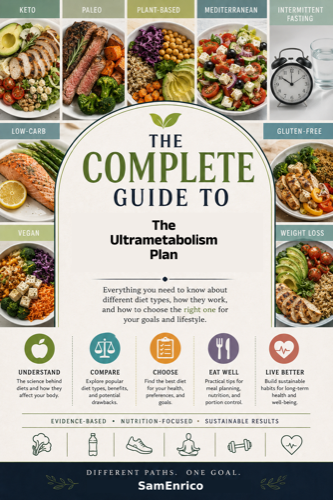 The Complete Guide to the Ultrametabolism PlanBurdette Marketta$11.99
You may also like
 Hong Kong Handover 1997Dunn Johnnie$11.99
 Zumba For Postnatal Recovery CourseNeal Christian$11.99
 Zumba for BeginnersLadner Nikia$11.99
 YouTube Comment Mining GuideHumes Pandora$12.99
 Worry Box MeditationCarlin Rudy$11.99
 Workplace Stress MeditationNguyen Lynn$11.99
 Workplace Stress and Sleep RepairHawley Ivory$11.99
 Workplace Perfectionism CureDelaney Jeffry$11.99
 Workplace Injustice Anger GuideWallen Isabelle$11.99
 Work Addiction and Burnout LinkGreenwood Ester$11.99
 Women in Yoga and WellnessBeattie Galina$11.99
 Women in Stand Up ComedyChun Evangeline$11.99