
Non-FictionSelf-HelpPeer Support
Support Group Attendance eBook
Finds online and in-person groups for food addicti
Finds online and in-person groups for food addiction.
Formats
Free sample
Chapter 1: The Lonely Feast...--–- The refrigerator hummed its steady, indifferent song, casting a pale, sterile glow across the kitchen floor. For the millionth time, you stood before its open door, not because you were hungry, but because you were lonely. The light was forgiving. The cold was numbing. And the food—the sugar, the flour, the salt—was the only voice in the room that wasn't judging you.
In that moment, the most dangerous place on earth wasn't a war zone or a dark alley. It was the space between your shame and your refrigerator.This is the landscape of food addiction. It is not a theater of grand, dramatic overdoses witnessed by worried friends. It is a quiet, repetitive, deeply private theater of one, performed nightly in kitchens, cars, and locked bedrooms. The curtain rises on a binge, and when it falls, the only witness is a pile of crumpled wrappers and a soul drowning in self-disgust.
For years, the medical establishment called this a lack of willpower. The diet industry called it a lack of discipline. Your family may have called it a lack of self-respect. But they were all wrong. They were looking at the symptom—the eating—and missing the engine.
The true engine of food addiction is not a craving for sugar. It is a craving for connection. And when connection is absent, the feast becomes a funeral.This book, Support Group Attendance, is built on a single, radical premise: You cannot recover from food addiction alone. Not because you are weak, but because addiction is a disease of isolation, and isolation cannot be cured by more isolation. The very thing your addiction wants—to hide, to eat in secret, to push people away—is the very thing that will kill you, slowly, one binge at a time.
You have tried the solo routes: the diets, the detoxes, the promises you made to yourself in the bathroom mirror at midnight. And here you are, still standing in front of that open refrigerator. It is time to try something different. It is time to join the feast of recovery—not a feast of food, but a feast of faces, voices, and hands reaching back.The Shame Cycle: A Carousel of Self-Destruction Let us name the beast. The food addiction shame cycle is a four-step carousel that spins so fast it feels like motion sickness, but so quietly you barely notice you are turning.
Step one is The Trigger. This can be anything: a stressful email, an argument with a partner, a memory of childhood trauma, or simply the unbearable weight of an empty Tuesday evening. Step two is The Binge. You consume sugar, flour, processed fats—substances scientifically engineered to bypass your stomach's fullness signals and flood your brain's reward center with dopamine. For ten glorious minutes, you feel nothing.
No pain, no loneliness, no anxiety. Just the blissful hum of neurological satiation. Step three is The Shame. As the dopamine recedes, the cortisol floods in. You look at the empty containers.
You feel the physical discomfort of overeating. A voice—harsh, familiar, and utterly convincing—whispers, "What is wrong with you? You have no control. You are disgusting." Step four is The Hiding. You hide the wrappers at the bottom of the trash can.
You brush your teeth aggressively. You promise yourself you will start fresh tomorrow. And because you are hiding, you are isolating. And because you are isolating, you are vulnerable. And because you are vulnerable, the next trigger—even a small one—will send you right back to step one.This is not a moral failure.
This is a neurological trap. And it cannot be broken by a diet plan. A diet plan tells you what to eat. It does not tell you what to do with the shame. A support group, however, does something miraculous: it interrupts the cycle at step three.
When you binge in secret, the shame festers in darkness. But when you binge and then walk into a room of people who have done the exact same thing, the shame loses its power. The first time you say, "I ate an entire cake last night and I don't know why," and the person next to you nods and says, "I ate two," the carousel stops spinning. You are not alone. And in that moment, the addiction trembles.The Myth of Willpower: Why Your Brain is Fighting You We have been sold a lie.
The lie is that food addiction is a contest between your better self (who wants kale) and your worse self (who wants cake). And if you just had more willpower, the better self would win. This lie is perpetuated by every magazine cover, every fitness influencer, and every well-meaning relative who says, "Just put the fork down." But the science tells a different story, and the science begins with Kathleen Des Maisons, a researcher who spent decades studying sugar-sensitive addiction.Des Maisons discovered that for a subset of the population—perhaps as many as 20%—sugar and processed flour do not function as food. They function as drugs. When a non-addicted person eats a cookie, their blood sugar rises, their pancreas releases insulin, and their brain registers satisfaction.
When a sugar-sensitive addict eats that same cookie, a cascade of biological chaos erupts. First, their blood sugar spikes dramatically, then crashes just as dramatically, creating a cycle of irritability and craving. Second, the sugar binds to opioid receptors in the brain—the same receptors targeted by heroin—producing a mild, addictive high. Third, over time, the brain downregulates its own serotonin production, making the addict chronically depressed unless they eat more sugar. You are not weak.
Your brain has been rewired to believe that sugar is as necessary as oxygen.Des Maisons' clinical data is staggering. In her studies, sugar-sensitive addicts who attempted to quit using dieting alone—simply eating less, exercising more, relying on willpower—had a long-term sobriety rate of just 12%. That means eighty-eight out of one hundred people failed. Not because they were bad people, but because their biology was fighting a war against sheer determination. However, when Des Maisons added two interventions, the numbers flipped.
The first intervention was a specific nutritional protocol: eating protein and complex carbohydrates every three hours to stabilize blood sugar. The second intervention, crucially, was weekly community support. When addicts had a group of peers to call, to attend meetings with, to confess their relapses to, the long-term sobriety rate soared to 92%. Ninety-two percent. That is not a slight improvement.
That is a revolution.The message is clear: willpower is a sprinter, not a marathon runner. It can get you through a single craving, maybe two. But it cannot get you through a month of withdrawal, a year of anniversaries, or a lifetime of triggers. Only connection can do that. Only a support group can provide the structural integrity that your broken dopamine pathways cannot.The Biology of Loneliness: Cortisol, Oxytocin, and the Neural Reset If willpower is a myth, loneliness is a poison.
And like any poison, it has a biological mechanism. When you are isolated—truly, chronically isolated—your body raises its baseline cortisol levels. Cortisol…
This is the end of the free sample. Get the eBook to keep going. Buy now
About this book
Details
- Author
- Mcintire Inocencia
- Publisher
- SamEnrico
- Language
- English
- Genre
- Non-Fiction, Self-Help, Peer Support
- Released
- 2026-06-06
- Pages (approx.)
- 128
- Available as
- eBook, Audiobook

Read better in the ZLOADR app
Your eBooks on your phone or tablet. Sign in with your SamEnrico account and start reading.
More by Mcintire Inocencia
 Isolation in Caregiving GuideMcintire Inocencia$11.99
 Feynman Particle Physics DiagramsMcintire Inocencia$11.99
 Stepfamily Dysfunction SurvivalMcintire Inocencia$11.99
 Bingo Slot Machine HybridMcintire Inocencia$11.99
 Anticipatory Grief WorkbookMcintire Inocencia$11.99
 Full Body Stretching for Beginners GuideMcintire Inocencia$11.99
 The Firefighter's Narcan StoryMcintire Inocencia$11.99
 The Silent Coup: How a Whistleblower Exposed the Pentagon’s Darkest SecretsMcintire Inocencia$11.99
 The Codebreaker's Secret: How a Young Girl Cracked the Enigma Before the NSAMcintire Inocencia$11.99
 Whispers in the Wilderness: The Vanishing of the Boy Scouts of Crystal LakeMcintire Inocencia$11.99
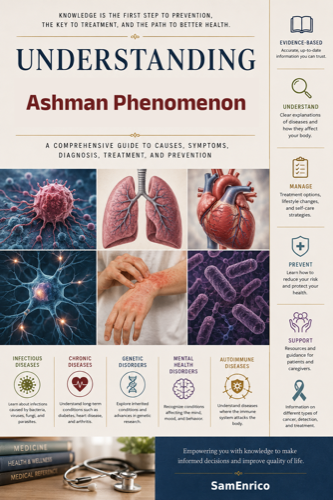 Understanding Ashman PhenomenonMcintire Inocencia$17.99
 The Complete Guide to the Stress Eater DietMcintire Inocencia$11.99
You may also like
 Hong Kong Handover 1997Dunn Johnnie$11.99
 Zumba For Postnatal Recovery CourseNeal Christian$11.99
 Zumba for BeginnersLadner Nikia$11.99
 YouTube Comment Mining GuideHumes Pandora$12.99
 Worry Box MeditationCarlin Rudy$11.99
 Workplace Stress MeditationNguyen Lynn$11.99
 Workplace Stress and Sleep RepairHawley Ivory$11.99
 Workplace Perfectionism CureDelaney Jeffry$11.99
 Workplace Injustice Anger GuideWallen Isabelle$11.99
 Work Addiction and Burnout LinkGreenwood Ester$11.99
 Women in Yoga and WellnessBeattie Galina$11.99
 Women in Stand Up ComedyChun Evangeline$11.99