
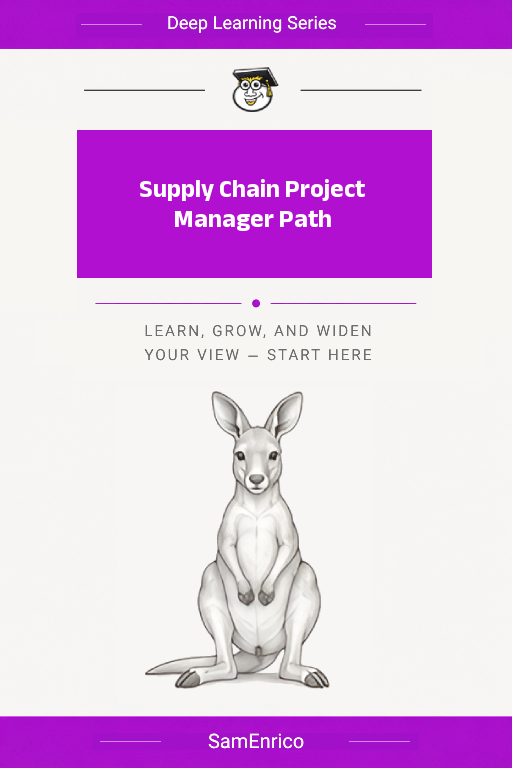
Non-FictionNon Obvious CareerProject Management
Supply Chain Project Manager Path Audiobook
Lead supply chain transformations, system implemen
Lead supply chain transformations, system implementations, and process improvements.
Formats
Free sample
Chapter 1: The Illusion of Control--The $200 million consumer goods company had done everything right.At least, that is what the project manager told the board during the final presentation. The new ERP system was live. The project had finished on time—fourteen months exactly. It had finished under budget by nearly 3 percent. The PMI-style status reports were green across the board.
Milestones had been met. Risk registers had been updated. The project team had followed every rule in the traditional project management playbook.The board applauded. The project manager received a bonus. The consultants packed up their laptops and moved on to the next engagement.Three months later, the supply chain was in freefall.On-time delivery had dropped from 94 percent to 71 percent.
Inventory write-offs had increased 40 percent. The warehouse manager had quietly reverted to manual spreadsheets because the new system could not tell her where anything was actually located. The sales team was quoting lead times that the supply chain could not meet. Customers were defecting.No one had seen it coming. Or rather, everyone had seen the pieces but no one had connected them.
The project had been measured by traditional metrics: schedule, budget, and technical milestones. No one had measured operational outcomes. No one had asked whether the new system would actually work in a living, breathing, chaotic supply chain.This is the illusion of control. It is the belief that if you follow a standardized methodology, complete the right templates, and hit your milestones, you have done your job. It is the belief that the tools designed for building bridges or installing software can be applied to supply chains without modification.They cannot.This chapter is not an indictment of traditional project management.
As we will see in Chapter 4, methods like Waterfall have legitimate uses in supply chain work—conveyor installations, rack reconfigurations, and any physical work with fixed sequences. The problem is not the tools themselves. The problem is applying those tools to problems they were never designed to solve, while believing that you are still in control.The reality is this: supply chains are living systems. Demand changes. Suppliers fail.
Ports close. Customers alter specifications mid-project. A methodology that treats change as an exception to be controlled rather than a reality to be embraced will fail. Not might fail. Will fail.The Supply Chain Project Manager—the SCPM—must operate differently.
The SCPM does not control the supply chain. No one does. The SCPM navigates it, adapts to it, and designs…
This is the end of the free sample. Get the Audiobook to keep going. Buy now
About this book
Details
- Author
- Carrier Trula
- Publisher
- SamEnrico
- Language
- English
- Genre
- Non-Fiction, Non Obvious Career, Project Management
- Released
- 2026-05-30
- Pages (approx.)
- 154
- Available as
- eBook, Audiobook

Listen in the VoxFlicks app
Audiobooks and audio dramas wherever you go. Sign in with your SamEnrico account and press play.
More by Carrier Trula
 Tech Sector Brand Value RankingCarrier Trula$11.99
 Framing Effect Persuasion GuideCarrier Trula$11.99
 Cocaine Addiction Understanding Triggers GuideCarrier Trula$11.99
 Lowitja O DonoghueCarrier Trula$11.99
 The Foster Care SmileCarrier Trula$11.99
 Metta for Withdrawal ManagementCarrier Trula$11.99
 Nobel Laureates in ExileCarrier Trula$11.99
 Legacy of IntegrityCarrier Trula$11.99
 The Siege of Tyre: Alexander's Unbreakable Will (332 BC)Carrier Trula$11.99
 The Golden Express Heist: Africa's Prohibition-Era Train RobberyCarrier Trula$11.99
 How to Start a Milk Converting Machinery Business (Beginners Guide)Carrier Trula$11.99
 A Collector's Handbook to the Mini MokeCarrier Trula$11.99
You may also like
 Hong Kong Handover 1997Dunn Johnnie$11.99
 Zumba For Postnatal Recovery CourseNeal Christian$11.99
 Zumba for BeginnersLadner Nikia$11.99
 YouTube Comment Mining GuideHumes Pandora$12.99
 Worry Box MeditationCarlin Rudy$11.99
 Workplace Stress MeditationNguyen Lynn$11.99
 Workplace Stress and Sleep RepairHawley Ivory$11.99
 Workplace Perfectionism CureDelaney Jeffry$11.99
 Workplace Injustice Anger GuideWallen Isabelle$11.99
 Work Addiction and Burnout LinkGreenwood Ester$11.99
 Women in Yoga and WellnessBeattie Galina$11.99
 Women in Stand Up ComedyChun Evangeline$11.99