
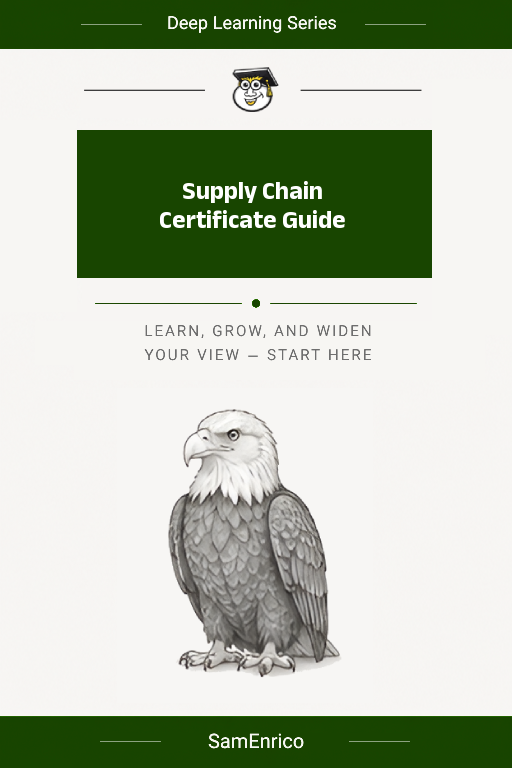
Non-FictionStudent's ShortcutSupply Chain
Supply Chain Certificate Guide eBook
Earn MIT, Rutgers, or University of Illinois Suppl
by Yoon Eufemia
Earn MIT, Rutgers, or University of Illinois Supply Chain certificates for logistics roles.
Formats
Free sample
Chapter 1: The $4,500 Mistake--Maria stared at her computer screen, the rejection email still glowing like a warning label. "Thank you for your application. We have decided to move forward with other candidates who more closely match the required qualifications..."It was the third rejection in two months. Same story every time: five years of logistics experience, a solid track record of keeping the warehouse running, and yet she kept losing out to candidates she knew she could outperform. Her coworker James – same title, same company, same number of years – had just landed a remote role paying 110,000.Mariamade110,000.
Maria made 110,000.Mariamade58,000.The only difference? James had a supply chain certificate from MIT. Maria had never even heard of the program until he showed her the digital badge on Linked In.That night, Maria opened her laptop and typed "supply chain certificate" into Google. What came back was overwhelming. MIT Micro Masters.
Rutgers Professional Certificate. University of Illinois Coursera. APICS CSCP. CPIM. CLTD.
Six Sigma Green Belt. Lean Certification. Each one had a different price tag, a different time commitment, a different exam format, and a different reputation among employers. Some cost 500.Otherscostnearly500. Others cost nearly 500.Otherscostnearly5,000.
Some promised to make her a "data analyst." Others promised "operations excellence." A few claimed to be the "gold standard" for executives.Maria had no idea which one to choose. And she was about to make a very expensive mistake.The Hidden Cost of Choosing the Wrong Certification Here is what Maria did not know that night, but what you will know by the end of this chapter: choosing the wrong certification costs more than the exam fee. It costs months of wasted study time, the opportunity cost of delayed promotions, and in many cases, the demoralizing experience of failing an exam that was never designed for your skill set in the first place.Let me put numbers on this.The average supply chain professional spends approximately 120 hours studying for a major certification like the MIT Micro Masters, Rutgers certificate, or UIUC program. If you value your time at 40perhour(roughlytheratefora Logistics Coordinatorearning40 per hour (roughly the rate for a Logistics Coordinator earning 40perhour(roughlytheratefora Logistics Coordinatorearning80,000 per year), those 120 hours represent nearly 5,000inopportunitycost.Addtheactualexamfees–whichrangefrom5,000 in opportunity cost. Add the actual exam fees – which range from 5,000inopportunitycost.Addtheactualexamfees–whichrangefrom1,500 to 3,000–andyouarelookingatatotalinvestmentof3,000 – and you are looking at a total investment of 3,000–andyouarelookingatatotalinvestmentof6,500 to $8,000 per certification attempt.Now consider that the average pass rate for first-time test-takers across these programs is only 65-70 percent.
That means nearly one in three people pays thousands of dollars and spends hundreds of hours studying only to fail. And here is the cruelest part: many of those failures are not because the test-taker was unprepared or unintelligent. They failed because they chose the wrong certification for their background, their career goals, and their learning style.Maria almost fell into this trap. She was leaning toward the Rutgers program because it was the most expensive, and she assumed expensive meant better. But Rutgers emphasizes operations management, procurement contracts, and Six Sigma – topics that Maria, a logistics coordinator in a small warehouse, had never encountered.
She would have spent months memorizing procurement law and lean manufacturing principles, only to sit for an exam that assumed she had years of experience negotiating supplier contracts.She would have failed. Not because she is not smart. Because she was studying for the wrong test.The Three Doors: MIT, Rutgers, and UIUCBefore we dive into the details of each program, let me give you the high-level map that Maria's mentor eventually shared with her. Think of the three major university supply chain certificates as three different doors leading to three different rooms.The MIT Door (The Data Door): Behind this door is a world of spreadsheets, forecasting models, optimization algorithms, and data analytics. MIT's Micro Masters program in Supply Chain Management is designed for people who are comfortable with numbers, enjoy solving puzzles, and want to become supply chain analysts or data-driven managers.
The exams are quantitative – lots of formulas, lots of calculations, lots of "given this data, what is the optimal decision?" If you like Excel, if you are not afraid of algebra, and if you want to work in roles like Supply Chain Analyst, Demand Planner, or Logistics Data Scientist, the MIT door is your door.The Rutgers Door (The Operations Door): Behind this door is a world of processes, procurement, contracts, lean manufacturing, and Six Sigma. Rutgers' Professional Certificate in Supply Chain Management is designed for people who thrive on improving how things work – reducing waste, streamlining workflows, negotiating better deals with suppliers, and managing daily operations. The exams are conceptual and scenario-based: "Given this procurement problem, which contract type should you use?" or "Which lean tool would eliminate this waste?" If you enjoy process improvement, if you are a natural negotiator, and if you want roles like Operations Manager, Procurement Specialist, or Warehouse Manager, the Rutgers door is your door.The UIUC Door (The Strategy Door): Behind this door is a world of global trade-offs, network design, risk management, and executive decision-making. The University of Illinois' Coursera-based Supply Chain Management specialization is designed for people who think at the system level – how do all the pieces (sourcing, manufacturing, warehousing, transportation) fit together to create competitive advantage? The exams are project-based and strategic: "Design a global supply chain for this product" or "Analyze the risks in this network and propose mitigation strategies." If you think holistically, if you enjoy case studies and strategic recommendations, and if you want roles like Supply Chain Director, Global Logistics Manager, or Strategic Sourcing Director, the UIUC door is your door.Here is the critical insight that saved Maria thousands of dollars and hundreds of hours: these three doors are not in competition.
They are a progression.Most successful supply chain professionals start at the MIT door (analyst roles), move to the Rutgers door (manager roles), and eventually step through the UIUC door (director roles). But if you try to enter through the wrong door for your current career stage, you will struggle. An analyst trying to pass the Rutgers exam will drown in procurement contracts they have never seen. A director trying to pass the MIT exam will waste time on Excel formulas they no longer need to calculate by hand.The Side-by-Side Comparison You Actually Need Let me give you the comparison matrix that every certification guide should start with but almost none do. This is the information Maria wished she had before she almost spent $3,000 on the wrong program.Cost Comparison (Real Dollars, Not Marketing Hype)Program Total Cost What That Includes Typical Employer Reimbursement MIT Micro Masters$1,5005 courses + proctored exams + verified certificate50-100% for logistics roles Rutgers Professional Certificate$3,0004 courses + final proctored exam + certificate50-75% for operations roles UIUC Coursera Specialization$2,0006 courses + projects + shareable certificate50-100% for management track**The 4,500Mistake(Yes,That Number Is Intentional):∗∗Ifyousignupforthewrongprogram,payforityourself,studyfor120hours,failtheexam,andthensignupfortherightprogram,youhavewastedapproximately4,500 Mistake (Yes, That Number Is Intentional):** If you sign up for the wrong program, pay for it yourself, study for 120 hours, fail the exam, and then sign up for the right program, you have wasted approximately 4,500Mistake(Yes,That Number Is Intentional):∗∗Ifyousignupforthewrongprogram,payforityourself,studyfor120hours,failtheexam,andthensignupfortherightprogram,youhavewastedapproximately4,500 in direct costs (exam fees + study materials) and indirect costs…
This is the end of the free sample. Get the eBook to keep going. Buy now
About this book
Details
- Author
- Yoon Eufemia
- Publisher
- SamEnrico
- Language
- English
- Genre
- Non-Fiction, Student's Shortcut, Supply Chain
- Released
- 2026-05-29
- Pages (approx.)
- 155
- Available as
- eBook, Audiobook

Read better in the ZLOADR app
Your eBooks on your phone or tablet. Sign in with your SamEnrico account and start reading.
More by Yoon Eufemia
 Jacqueline NovogratzYoon Eufemia$11.99
 Tunnel Phobia Driving ThroughYoon Eufemia$11.99
 Work Life Balance ComparisonYoon Eufemia$11.99
 Boundary Setting TrainingYoon Eufemia$11.99
 Mining Industry Stress GuideYoon Eufemia$11.99
 The Anxiety SleepoverYoon Eufemia$11.99
 The SWAT Team TargetYoon Eufemia$11.99
 Childhood Roots Of Low Self WorthYoon Eufemia$11.99
 The Velvet Conspiracy: Medici Power and the Birth of Modern FinanceYoon Eufemia$11.99
 The Alchemists of Oxford: Where Scholars Forged the FutureYoon Eufemia$11.99
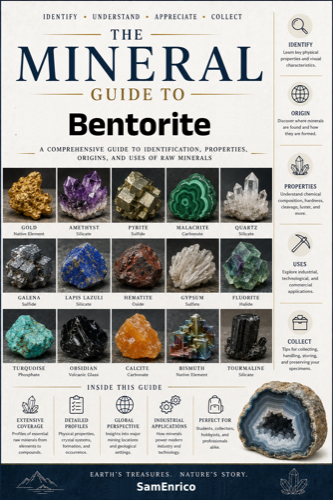 The Mineral Guide to BentoriteYoon Eufemia$11.99
 Growing Dendrochilum (An Orchid Genus)Yoon Eufemia$11.99
You may also like
 Hong Kong Handover 1997Dunn Johnnie$11.99
 Zumba For Postnatal Recovery CourseNeal Christian$11.99
 Zumba for BeginnersLadner Nikia$11.99
 YouTube Comment Mining GuideHumes Pandora$12.99
 Worry Box MeditationCarlin Rudy$11.99
 Workplace Stress MeditationNguyen Lynn$11.99
 Workplace Stress and Sleep RepairHawley Ivory$11.99
 Workplace Perfectionism CureDelaney Jeffry$11.99
 Workplace Injustice Anger GuideWallen Isabelle$11.99
 Work Addiction and Burnout LinkGreenwood Ester$11.99
 Women in Yoga and WellnessBeattie Galina$11.99
 Women in Stand Up ComedyChun Evangeline$11.99