
Non-FictionOperational Efficiency ManualSupplier Quality
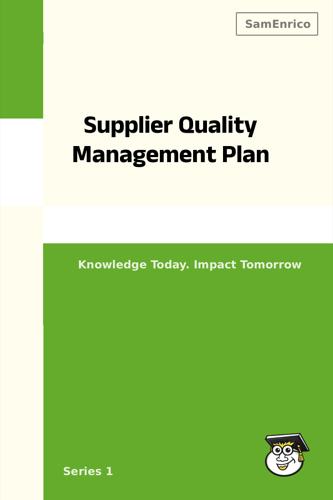
Supplier Quality Management Plan eBook
Select, monitor, and evaluate vendors based on per
Select, monitor, and evaluate vendors based on performance metrics.
Formats
Free sample
Chapter 1: The Hidden Calculus--It was 11:47 PM on a Tuesday when my phone buzzed with the text that would change how I thought about vendors forever.The message from my warehouse manager contained exactly four words: "We have no steering wheels."Four words that, over the next ninety days, would cost my company forty-seven million dollars in lost revenue, leave twenty-two hundred assembly line workers sitting idle, and trigger a shareholder lawsuit that named me personally. Four words that could have been prevented by a system I didn't have, using data I wasn't collecting, from a vendor I had never once visited.The vendor in question was a family-owned stamping operation in Monterrey, Mexico. We had bought from them for eleven years. They had never missed a shipment. Their prices were consistently three percent below their nearest competitor.
On paper, they were the perfect supplier. But paper, I learned the hard way, is where supplier quality goes to hide.The problem started six months before that text message. A junior quality technician noticed that steering wheel column brackets were arriving with hairline cracks—one out of every ten thousand units. The defect rate was 0.01 percent. Our specification allowed 0.02 percent.
By the numbers, the vendor was still within tolerance. The technician filed a report. The report was filed in a folder. The folder was never opened again.Three months later, the defect rate climbed to 0.03 percent—just above tolerance. The quality manager sent an email to the vendor.
The vendor replied that they would "look into it." No one followed up. No one visited. No one asked to see their process capability data. Because no one had ever defined what "follow up" actually meant in our supplier quality management system. Because we didn't have a supplier quality management system.
We had a purchasing department that bought things and a quality department that inspected things and never the two shall meet.The week before the shutdown, the defect rate hit 0.4 percent. Forty times the original tolerance. But no one noticed because we had stopped tracking the trend. We were looking at monthly averages, not daily deviations. Averages lie.
Averages hide the story of a process slowly, quietly, and fatally falling apart.On that Tuesday, the line stopped because a steering wheel column bracket fractured during assembly. Then another. Then seventeen more. The root cause? The Monterrey stamping press had a worn bearing that introduced a vibration into the forming process.
The vibration had been present for eight months. It had been measured by the vendor's own maintenance logs. But no one had ever required the vendor to share those logs. No one had ever required anything, really. Because we had never built a real supplier quality management plan.The Cost of Doing Nothing Let me be brutally honest with you.
That forty-seven million dollar loss was not a supply chain failure. It was a leadership failure. My failure. I had treated supplier quality as a technical problem to be solved by inspectors and technicians, when it was actually a strategic problem to be owned by executives and managers. I had believed that if a vendor had been reliable for a decade, they would remain reliable forever.
I had confused the absence of failure with the presence of quality.Here is what I learned in the ninety days after that text message, as I sat through internal investigations, customer cancelations, and a deposition where a lawyer asked me, "Mr. Chen, would you say you were asleep at the wheel?"—a pun I did not appreciate at the time.The average manufacturer loses between two and five percent of annual revenue to supplier quality problems. That number includes scrap, rework, expedited freight, line downtime, and the invisible cost of management attention diverted from growth to firefighting. For a mid-sized company with one hundred million in revenue, that is two to five million dollars vanishing every year. Not as a single dramatic explosion like my steering wheel disaster, but as a thousand small cuts.
A delayed shipment here. A batch of off-spec material there. A quality manager spending three days a week on the phone instead of improving processes.These costs are almost never tracked as a single line item. They hide in freight budgets, overtime accounts, and the vague category of "miscellaneous operating expenses." Which means most leaders have no idea how much supplier quality problems are actually costing them. They feel the pain—the firefighting, the stress, the last-minute crises—but they cannot see the number.
And what you cannot measure, you cannot manage.The Strategic Case You Haven't Heard Most executives view supplier quality management as a defensive necessity. You do it because customers demand ISO certifications, because regulators require traceability, because the legal department wants indemnification clauses. This is like saying you exercise because your doctor told you to. It is technically correct but strategically empty.Here is the case I wish someone had made to me five years before that text message.Your suppliers are not vendors. A vendor is a transactional relationship.
You pay money, they deliver goods, the relationship ends at the dock. A supplier is a strategic asset. They hold in their hands your ability to serve customers, launch new products, and compete in your market. When Toyota decided to challenge Mercedes and BMW in the luxury sedan market, they did not build new factories. They spent three years developing their suppliers' quality systems.
When Apple needed a sapphire glass screen that did not exist, they did not send out a request for quotation. They co-located engineers at their supplier's facility for eighteen months.These companies understand something that the rest of us learn the hard way: supplier quality is not a cost to be minimized. It is a capability to be built.Let me give you the numbers that changed my mind. A study of the automotive supply chain found that companies with mature supplier quality management systems had:Forty percent lower total cost of quality (scrap, rework, warranty)Sixty percent fewer line stoppages Fifty percent faster new product introduction cycles And, critically, thirty percent higher supplier willingness to share innovation That last one is the hidden gold. When suppliers trust you—when they believe your quality system is fair, transparent, and focused on improvement rather than blame—they share their best ideas with you first.
They offer you new materials before your competitors. They alert you to potential problems before they become crises. They become, in the truest sense, partners.The Toyota Case That Changed an Industry In 1986, Toyota faced a problem. Their rapid growth was straining their supply base. Small family-owned suppliers could not keep up with Toyota's quality demands.
The conventional solution, the one General Motors and Ford used, was to play hardball: threaten to switch suppliers, demand price concessions, and inspect incoming parts to death.Toyota did the opposite. They created the Toyota Supplier Support Center. They sent their own production engineers to work inside supplier facilities—for free. They taught suppliers the Toyota Production System. They shared their cost data.
They helped suppliers redesign their processes.The conventional wisdom said Toyota was being naive. Why would you help your suppliers become more efficient?…
This is the end of the free sample. Get the eBook to keep going. Buy now
About this book
Details
- Author
- Villalobos Suzann
- Publisher
- SamEnrico
- Language
- English
- Genre
- Non-Fiction, Operational Efficiency Manual, Supplier Quality
- Released
- 2026-06-09
- Pages (approx.)
- 133
- Available as
- eBook, Audiobook

Read better in the ZLOADR app
Your eBooks on your phone or tablet. Sign in with your SamEnrico account and start reading.
More by Villalobos Suzann
 Handling Angry CustomersVillalobos Suzann$11.99
 Twelve Step Chips and Medallions MeaningVillalobos Suzann$11.99
 Upwork Agency Formation GuideVillalobos Suzann$11.99
 John Stuart Mill HumanismVillalobos Suzann$11.99
 Grief and Travel After Parent LossVillalobos Suzann$11.99
 Parenting Self Talk RewiringVillalobos Suzann$11.99
 Mid Career Salary JumpVillalobos Suzann$11.99
 The Battle of Diu: Portugal's Naval Gambit That Secured the Spice RouteVillalobos Suzann$11.99
 The Red River Campaign: Grant’s Bloody Gambit in the Bayou (1864)Villalobos Suzann$11.99
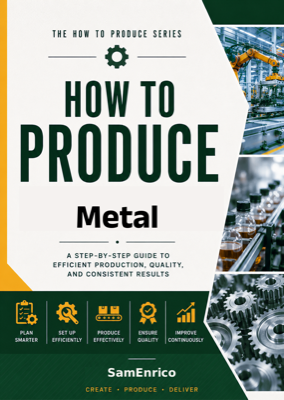 How to Produce MetalVillalobos Suzann$11.99
 How to Become a Production-supply-equipment TenderVillalobos Suzann$11.99
 Growing AloinopsisVillalobos Suzann$11.99
You may also like
 Hong Kong Handover 1997Dunn Johnnie$11.99
 Zumba For Postnatal Recovery CourseNeal Christian$11.99
 Zumba for BeginnersLadner Nikia$11.99
 YouTube Comment Mining GuideHumes Pandora$12.99
 Worry Box MeditationCarlin Rudy$11.99
 Workplace Stress MeditationNguyen Lynn$11.99
 Workplace Stress and Sleep RepairHawley Ivory$11.99
 Workplace Perfectionism CureDelaney Jeffry$11.99
 Workplace Injustice Anger GuideWallen Isabelle$11.99
 Work Addiction and Burnout LinkGreenwood Ester$11.99
 Women in Yoga and WellnessBeattie Galina$11.99
 Women in Stand Up ComedyChun Evangeline$11.99