
Non-FictionSelf-HelpNeuroscience
Sugar Cravings Decoded eBook
Understand the brain chemistry behind sugar addict
Understand the brain chemistry behind sugar addiction and how to rewire it.
Formats
Free sample
Chapter 1: The 17-Second Hijack--It happens in the time it takes to tie a shoelace.You are standing in your kitchen. The cabinet door is open. Your hand is already reaching for the box before your conscious brain has finished asking the question: Should I? The sugar touches your tongue. For exactly seventeen seconds, everything feels right.
The stress of the day dissolves. The argument you had this morning fades. The deadline looming tomorrow becomes manageable. Then you swallow. And the crash begins—not immediately, but you will feel it in a few hours.
By then, you will already be reaching for the next hit.This is not a metaphor. This is neuroscience.The premise of this entire book rests on a single, uncomfortable truth: your brain has been held hostage, and the ransom is paid in sugar within seventeen seconds. You did not sign up for this hostage situation. You did not lack willpower when it started. You were simply born with a human brain—a beautiful, ancient machine that was never designed to coexist with modern processed sugar.
And the food industry has known about your brain's vulnerability for decades. They have patented it. They have optimized it. They have built a trillion-dollar empire on the seventeen seconds between your tongue and your reward center.This chapter will do three things. First, it will introduce you to the Nucleus Accumbens—the small cluster of neurons that acts as your brain's pleasure conductor.
Second, it will walk you through the exact neurochemical cascade that occurs the moment sugar touches your tongue, faster than many recreational drugs. Third, and most importantly, it will permanently reframe how you think about cravings. By the end of this chapter, you will never again call yourself "weak-willed" or "addicted to sweets." You will understand that you have been the victim of a biological ambush—and that understanding is the first step to freedom.Let us begin inside your skull.The Geography of Desire Close your eyes for a moment. Actually, keep them open—you are reading. But imagine, if you can, the inside of your brain.
Not the wrinkly outer layer (the cortex) where your conscious thoughts live. Go deeper. Buried near the center of your brain, beneath layers of evolutionary history, lies a structure about the size and shape of an almond. This is the Nucleus Accumbens. Neuroscientists call it the "reward center." You might call it the engine of desire.The Nucleus Accumbens does not care about your diet goals.
It does not care about your New Year's resolution. It does not care that you promised yourself you would quit sugar this time. What the Nucleus Accumbens cares about is survival—or rather, what evolution trained it to think survival looks like. For millions of years, the things that triggered a dopamine release in this tiny region were genuinely life-saving: finding a ripe piece of fruit, discovering a honeycomb, successfully hunting an animal. These foods were rare and energy-dense.
Your brain rewarded you for finding them so that you would keep seeking them out.That was the deal. That was the ancient contract between your ancestors and their environment.Then everything changed.About two hundred years ago—a blink in evolutionary time—humans learned to refine sugar from sugarcane and beets. Fifty years ago, high-fructose corn syrup entered the food supply. And in the past three decades, sugar has been added to eighty percent of packaged foods in the average supermarket. Your brain, still operating under the ancient rules, has no idea what hit it.Here is what happens when sugar lands on your tongue.
Taste receptors on your tongue send a signal through the cranial nerves to your brainstem. From there, the signal races to the Nucleus Accumbens. Within seventeen seconds—faster than it takes for caffeine to enter your bloodstream, faster than the effects of nicotine—a flood of dopamine is released. Dopamine is not the "pleasure chemical" that pop psychology makes it out to be. It is something more insidious: the anticipation chemical.
It is the signal that says, Do that again. That was good. Seek more.Seventeen seconds. That is the hijack window.The Speed of Addiction Let me put seventeen seconds into perspective.A typical cup of coffee takes about twenty minutes to reach peak caffeine levels in your bloodstream. A cigarette delivers nicotine to your brain in roughly ten to fifteen seconds—slightly faster than sugar.
Cocaine, when smoked, reaches the brain in about five to eight seconds. In other words, sugar's seventeen-second dopamine release is not merely "fast." It is competitive with drugs that we classify as dangerously addictive.Consider the implications of that speed.When a reward arrives slowly, your brain has time to engage other regions—the prefrontal cortex, where rational decision-making happens. You can think, I probably do not need another cookie, and that thought has a chance to override the impulse. But when the reward arrives in seventeen seconds, the Nucleus Accumbens has already flooded your system with "seek more" signals before your prefrontal cortex has even finished processing the question. The hijack happens below the level of conscious awareness.This is why every sugar addict knows the experience of staring at an empty box of cookies with no memory of eating the last six.
You were not "zoned out." You were neurologically bypassed. The sugar hit your reward system so quickly that your conscious brain never got a vote.One of the most powerful studies on this topic came from Dr. Nicole Avena at the University of Florida. In her landmark research, she gave rats intermittent access to sugar and then watched their brains. The results were striking.
The rats developed tolerance (needing more sugar to get the same effect), withdrawal (showing physical signs of distress when sugar was removed), and craving (seeking sugar even when it meant enduring electric shocks). The pattern was indistinguishable from cocaine addiction. When Avena examined the rats' brains, she found downregulated dopamine receptors—the same structural change seen in human drug addicts.The rats were not "weak." They were not "lacking willpower." They were experiencing the predictable neurochemical consequences of a supernormal stimulus. So are you.The Pleasure Trap There is a term in addiction medicine that applies perfectly to sugar: the "pleasure trap."The pleasure trap works like this. You experience something pleasurable.
Your brain releases dopamine. That dopamine makes you want to repeat the experience. You repeat it. Over time, your brain adapts by reducing the number of dopamine receptors (a process called downregulation, which we will explore in depth in Chapter 2). Now you need more of the substance to get the same feeling.
So you consume more. The cycle accelerates. Eventually, you are no longer seeking pleasure at all—you are seeking relief from the pain of not having the substance. The pleasure has become a trap.Here is the cruel irony. The immediate pleasure of sugar—those seventeen seconds of relief—is real.
I am not here to tell you that sugar tastes bad or that you are imagining the comfort it provides. Sugar does provide comfort. That is precisely the problem. The comfort is real, and it is fleeting, and…
This is the end of the free sample. Get the eBook to keep going. Buy now
About this book
Details
- Author
- Trinidad Quentin
- Publisher
- SamEnrico
- Language
- English
- Genre
- Non-Fiction, Self-Help, Neuroscience
- Released
- 2026-06-07
- Pages (approx.)
- 154
- Available as
- eBook, Audiobook

Read better in the ZLOADR app
Your eBooks on your phone or tablet. Sign in with your SamEnrico account and start reading.
More by Trinidad Quentin
 Meditation Resistance AngerTrinidad Quentin$11.99
 Menopause Gum Bleeding GuideTrinidad Quentin$11.99
 SEAL Dog Handler MemoirTrinidad Quentin$11.99
 Creative Team Simulation DrillsTrinidad Quentin$11.99
 Golden Shadows: The Untold Story of the First Indigenous Olympic ChampionTrinidad Quentin$11.99
 The Lost Kingdoms of Borneo: Uncovering the Medieval Jungle CivilizationsTrinidad Quentin$11.99
 ESL Tax Guide for TeachersTrinidad Quentin$12.99
 Tesla Energy AI PrimerTrinidad Quentin$12.99
 Cloud Support SpecialistTrinidad Quentin$11.99
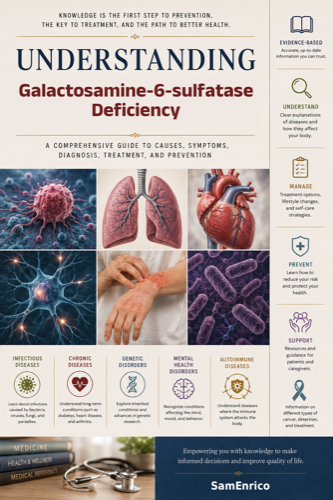 Understanding Galactosamine-6-sulfatase DeficiencyTrinidad Quentin$17.99
 How to Start a Small Arms Manufacturing BusinessTrinidad Quentin$11.99
You may also like
 Hong Kong Handover 1997Dunn Johnnie$11.99
 Zumba For Postnatal Recovery CourseNeal Christian$11.99
 Zumba for BeginnersLadner Nikia$11.99
 YouTube Comment Mining GuideHumes Pandora$12.99
 Worry Box MeditationCarlin Rudy$11.99
 Workplace Stress MeditationNguyen Lynn$11.99
 Workplace Stress and Sleep RepairHawley Ivory$11.99
 Workplace Perfectionism CureDelaney Jeffry$11.99
 Workplace Injustice Anger GuideWallen Isabelle$11.99
 Work Addiction and Burnout LinkGreenwood Ester$11.99
 Women in Yoga and WellnessBeattie Galina$11.99
 Women in Stand Up ComedyChun Evangeline$11.99