
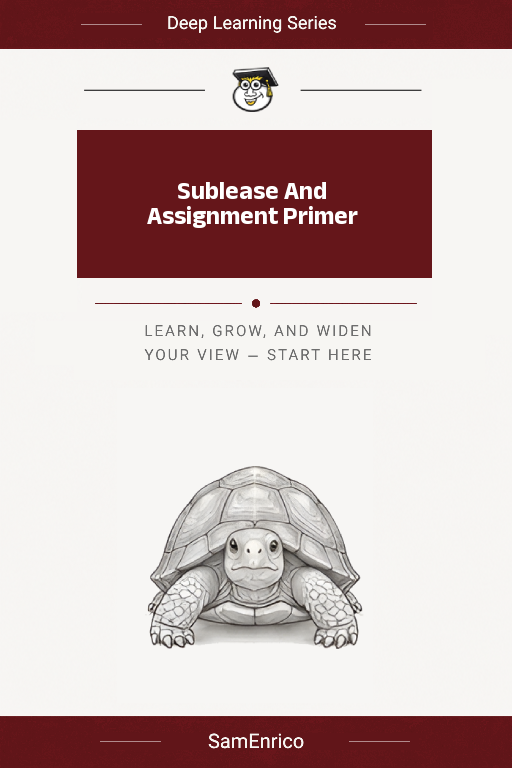
Non-FictionAnnual CheckupReal EstateSublease Guide
Sublease And Assignment Primer eBook
Navigate 2025 subleasing rights, assignment clause
Navigate 2025 subleasing rights, assignment clauses, and landlord consent laws post-COVID. Covers sublease agreement templates, recoupment strategies for excess space, and reduced footprint negotiations.
Formats
Free sample
Chapter 1: The Leverage Shift...--The first thing you need to understand about commercial real estate in 2025 is that almost everything you think you know about landlord power is wrong. Not outdated. Not slightly exaggerated. Wrong.For the better part of four decades—from the early 1980s through 2019—commercial landlords held nearly all the cards. Vacancy rates hovered in the single digits in most major markets.
Tenants competed for space. Leases were documents of adhesion: take it or leave it, sign here for ten years, and by the way, you have no right to sublease without our absolute, unfettered, sole discretion. Landlords drafted these clauses with the confidence of a casino owner who knows the house always wins.Then came 2020. And everything flipped.Between March 2020 and December 2025, the commercial real estate market experienced a structural transformation more profound than anything since the Great Depression. Hybrid work models went from experimental to default.
The "Flight to Quality" saw companies abandoning Class B and C spaces for premium amenities, leaving a trail of obsolete leases behind them. By early 2025, over 30% of commercial leases signed between 2015 and 2019 were financially "underwater"—meaning the tenant was paying significantly more than current market rates for space they no longer needed or wanted.This chapter is not a history lesson. It is a power transfer document. It will teach you exactly how the legal landscape shifted between 2023 and 2025, why courts in major jurisdictions have fundamentally changed their approach to landlord consent, and—most critically—how to diagnose whether you operate in a tenant-friendly jurisdiction or a landlord-friendly one. Because the single biggest mistake tenants make in 2025 is assuming that what works for a tenant in San Francisco will work for a tenant in Dallas.
It won't. And that misunderstanding has already cost companies millions.We begin with the most important legal development of the post-COVID era: the death of absolute prohibition.The Death of "Absolute Discretion": What Changed and Why For decades, commercial leases contained a clause that looked something like this:"Tenant shall not assign this Lease or sublet the Premises, or any part thereof, without Landlord's prior written consent, which consent may be withheld in Landlord's sole and absolute discretion."These seven words—"sole and absolute discretion"—gave landlords veto power over any sublease or assignment, for any reason or no reason at all. Don't like the subtenant's business? Denied. Don't like the subtenant's name?
Denied. Just woke up on the wrong side of the bed? Denied. Courts routinely enforced these clauses as written, refusing to second-guess a landlord's subjective judgment.That era is over. Not completely—jurisdictions still vary—but the trend line is unmistakable.Between 2023 and 2025, appellate courts in California, New York, Illinois, Washington, Oregon, and Massachusetts issued a series of rulings that collectively eviscerated the "absolute discretion" defense.
The legal reasoning varies by state, but the practical outcome is the same: landlords can no longer withhold consent unreasonably, even if the lease says "sole and absolute discretion." Courts are now reading an implied reasonableness standard into every commercial lease, regardless of language.The landmark case driving this shift is Third Avenue Associates v. 222 Third Avenue Tenant LLC (NY App. Div., 2024), in which the court held that "a landlord's contractual right to withhold consent in its sole discretion does not immunize it from a claim of unreasonable withholding when the landlord's refusal serves no legitimate commercial purpose." In plain English: you can put "absolute discretion" in your lease all you want. A judge can still find you acted unreasonably.But here is where most tenants get into trouble. They read about these cases and assume the legal revolution is universal.
It is not. The following section is the most important in this chapter.The Jurisdictional Divide: Know Your State Before You Act The "death of absolute prohibition" has a very specific geography. Understanding this map is the difference between a winning strategy and a costly lawsuit.Tenant-Friendly Jurisdictions (Judicial Hostility to Unreasonable Withholding)In the following states, courts have clearly shifted toward a reasonableness standard. Landlords in these states cannot withhold consent arbitrarily, even with "sole and absolute discretion" language:California: California Civil Code § 1995.270 (as amended 2024) now explicitly states that a landlord may not unreasonably withhold consent to an assignment or sublease, regardless of lease language. The amendment closed a loophole that previously applied only to residential leases.
Commercial tenants now have statutory protection.New York: The Third Avenue Associates case (2024) was followed by a series of trial court rulings applying its logic broadly. New York Real Property Law § 226-B, originally residential, has been cited in commercial cases as persuasive authority for a public policy favoring alienability of leasehold interests.Illinois: The Illinois Appellate Court held in River North Tower LLC v. Creative Media Group (2025) that "absolute discretion" clauses are enforceable only when the landlord provides a commercially reasonable basis for denial. The burden of proof shifted to the landlord.Washington and Oregon: Both states have adopted the "reasonableness standard" through a combination of statutory amendments and case law. Washington's commercial landlord-tenant act (RCW 59.18) was extended to cover assignment consent in 2024.Massachusetts: The Supreme Judicial Court held in Boston Commercial Realty Trust v.
Fin Tech Solutions (2025) that an unreasonably withheld consent constitutes a material breach of the implied covenant of good faith and fair dealing.Landlord-Friendly Jurisdictions (Absolute Discretion Still Enforceable)In the following states, courts continue to enforce "sole and absolute discretion" clauses as written. Tenants in these states cannot rely on judicial intervention:Texas: Texas courts have consistently rejected implied reasonableness standards. The Texas Business and Commerce Code contains no equivalent to California's § 1995.270. Holloway v. Texas Property Management (2023) reaffirmed that "absolute discretion means what it says."Georgia: Georgia follows the traditional common law rule.
Atlanta Office Partners v. Regional Bank (2024) enforced an absolute discretion clause, noting that "the parties are free to contract as they wish."Florida: Florida district courts are split, but the majority enforce absolute discretion clauses. Miami Tower Holdings v. Digital Media Corp (2025) held that "absent statutory intervention, a landlord's sole discretion remains enforceable."Tennessee, Alabama, Mississippi, South Carolina: These states have no reported appellate decisions modifying the traditional rule. Absolute discretion clauses remain enforceable.Mixed or Undecided Jurisdictions Pennsylvania: Trial courts are divided.
No controlling appellate decision as of 2025.Ohio: Some districts have adopted reasonableness standards; others have not.Arizona: Pending legislation (HB 2025-134) would adopt a reasonableness standard, but not yet law.The Practical Takeaway: If you are a tenant in New York, California, or Illinois, you have significant leverage. If you are a tenant in Texas, Georgia, or Florida, you must negotiate consent proactively—you cannot rely on a judge to save you. This book will refer back to this jurisdictional divide repeatedly. When you see the phrase "as established in Chapter 1," remember: your strategy depends entirely on where your property is located.Key 2025 Statutory Amendments You Must Know Beyond case law, several state legislatures have passed or amended statutes affecting sublease and assignment rights. These are not academic curiosities.
They are weapons in your negotiation arsenal.California Civil Code § 1995.270 (Effective January 1, 2025)This is the most tenant-friendly statute in the country. Key provisions:Subsection (a): "A landlord may not unreasonably withhold consent to an assignment…
This is the end of the free sample. Get the eBook to keep going. Buy now
About this book
Details
- Author
- Polanco Ofelia
- Publisher
- SamEnrico
- Language
- English
- Genre
- Non-Fiction, Annual Checkup, Real Estate, Sublease Guide
- Released
- 2026-05-29
- Pages (approx.)
- 158
- Available as
- eBook, Audiobook

Read better in the ZLOADR app
Your eBooks on your phone or tablet. Sign in with your SamEnrico account and start reading.
More by Polanco Ofelia
 Flying Dream Interpretation CoursePolanco Ofelia$11.99
 Austrian Klimaaktiv ProgramPolanco Ofelia$11.99
 Post Purchase Email FlowsPolanco Ofelia$11.99
 Self Esteem After InfidelityPolanco Ofelia$11.99
 The Timbuktu Manuscripts: Africa's Hidden Treasure of KnowledgePolanco Ofelia$11.99
 The Last Whisper: How Ancient Sheep Herders Predicted Climate CollapsePolanco Ofelia$11.99
 Ultimate Handbook Guide to Tyumen : (Russia) Travel GuidePolanco Ofelia$11.99
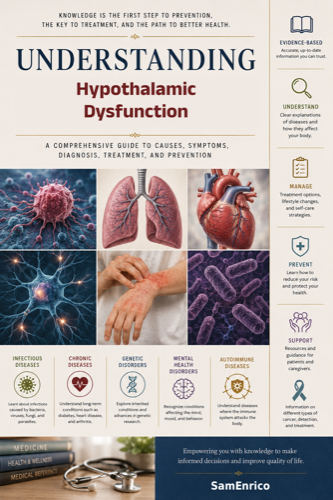 Understanding Hypothalamic DysfunctionPolanco Ofelia$17.99
 AI Tutor Chatbots GuidePolanco Ofelia$12.99
 Ghost HunterPolanco Ofelia$11.99
You may also like
 Hong Kong Handover 1997Dunn Johnnie$11.99
 Zumba For Postnatal Recovery CourseNeal Christian$11.99
 Zumba for BeginnersLadner Nikia$11.99
 YouTube Comment Mining GuideHumes Pandora$12.99
 Worry Box MeditationCarlin Rudy$11.99
 Workplace Stress MeditationNguyen Lynn$11.99
 Workplace Stress and Sleep RepairHawley Ivory$11.99
 Workplace Perfectionism CureDelaney Jeffry$11.99
 Workplace Injustice Anger GuideWallen Isabelle$11.99
 Work Addiction and Burnout LinkGreenwood Ester$11.99
 Women in Yoga and WellnessBeattie Galina$11.99
 Women in Stand Up ComedyChun Evangeline$11.99