
Study Skills Quiz eBook
undefined
undefined
Formats
Free sample
Chapter 1: The Diagnostic Trap--–- You have probably opened this book because something is not working. Perhaps you spent ten hours studying for an exam last week and still scored below the class average. Perhaps you reread the same textbook chapter three times, only to realize you cannot explain it to anyone. Perhaps you have been told your whole life that you are “smart but unfocused” or that you would succeed if you just “applied yourself more.” These are not character flaws. They are symptoms of a deeper, more fixable problem: you have never been taught how to learn.The education system assumes that studying is a natural skill, like breathing or walking.
It is not. No one hands a baby a textbook and says, “Figure it out.” Yet by the time students reach high school or college, teachers expect them to know how to manage time, take notes, read actively, retain information, and perform under pressure. This is like handing someone a violin and expecting a symphony because they have listened to Mozart. Studying is a learned skill. And like any skill, it can be diagnosed, practiced, and mastered.This chapter is not a collection of study tips.
You will not find advice like “get a good night’s sleep” or “stay organized” here. Those are not wrong, but they are trivial. Instead, this chapter introduces a diagnostic framework that will serve as the backbone of everything that follows. You will take a quiz that reveals your current learning identity. You will learn why metacognition—thinking about your own thinking—is a better predictor of academic success than IQ.
And you will build a personalized Study Playbook that tells you exactly which chapters of this book to prioritize based on your specific weaknesses.Let us begin with a confession: most study advice is useless because it is generic. A time management strategy that works for a student with test anxiety will fail for a student who procrastinates out of boredom. A note-taking method that helps a passive learner will bore an active learner. The reason this book exists is that you are different from every other reader. Your strengths are different.
Your blind spots are different. And your path to mastery must be different.The first step is diagnosis.The Opening Quiz: Discovering Your Learning Identity Before you read another word, you will take a quiz. This is not a pass-fail test. There are no wrong answers. The purpose is to reveal how you currently study, where your habits help you, and where they hurt you.
Set a timer for ten minutes. Answer each question honestly, not as you wish you would answer.Section A: Active Versus Passive Learning For each statement, rate yourself from 1 (strongly disagree) to 5 (strongly agree).When I finish reading a textbook chapter, I can summarize the main ideas without looking back at the pages.I regularly test myself on material before an exam, using flashcards, practice questions, or verbal recitation.When I do not understand a concept, I stop and look for an explanation rather than highlighting and moving on.I ask questions in class or write them down to research later.I can explain what I studied yesterday to a friend without checking my notes.Section B: Procrastination and Time Management Rate yourself from 1 (strongly disagree) to 5 (strongly agree).I start studying for exams at least five days in advance.I use a calendar or planner to block specific study times.When I sit down to study, I usually know exactly what I will work on.I rarely submit assignments close to the deadline.I break large projects into smaller tasks with their own deadlines.Section C: Distraction and Concentration Rate yourself from 1 (strongly disagree) to 5 (strongly agree).I can study for twenty-five minutes without checking my phone or opening a new browser tab.My study environment is quiet, organized, and free from visual clutter.I rarely multitask while studying (listening to music with lyrics, watching videos, or texting).When I lose focus, I have a strategy to regain it within a minute or two.I do not feel anxious or overwhelmed when I sit down to study.Section D: Retention and Recall Rate yourself from 1 (strongly disagree) to 5 (strongly agree).I remember what I studied one week ago without re-reading my notes.I use spaced repetition (reviewing material at increasing intervals) rather than cramming.I can answer application questions like “What would happen if X changed?” not just fact-based questions.I regularly close my book and recite what I have learned from memory.I rarely feel surprised by exam questions because I have already tested myself on similar material.Section E: Exam Performance Rate yourself from 1 (strongly disagree) to 5 (strongly agree).I finish exams with time to review my answers.I read all instructions and questions carefully before answering.On multiple-choice exams, I can eliminate wrong answers strategically.On essay exams, I outline my answer before writing.I experience manageable nervousness during exams, not paralyzing panic.Scoring Your Quiz Add your scores for each section separately. Then record them below.Active Learning Score (Section A): ___ out of 25Time Management Score (Section B): ___ out of 25Concentration Score (Section C): ___ out of 25Retention Score (Section D): ___ out of 25Exam Performance Score (Section E): ___ out of 25Now interpret each score using this scale:21–25: Strong. This is a pillar of your learning. Maintain it.16–20: Developing.
You have some good habits but significant room for growth.11–15: Weak. This is a primary obstacle to your success.5–10: Critical. This is actively harming your academic performance.Your lowest score is your primary learning gap. This is not a failure. It is a starting point.
A doctor does not shame a patient for having high blood pressure; the doctor measures it and prescribes a treatment. Your quiz scores are measurements. They tell you exactly where to begin.What Your Scores Mean: The Four Learning Profiles Based on decades of research into self-regulated learning, students typically fall into one of four profiles. Identify which profile matches your scores.Profile 1: The Passive Memorizer (Low Active Learning, Low Retention)You study by re-reading, highlighting, and watching videos. You assume that familiarity equals understanding.
You are often surprised by exam questions because you recognized the material but could not recall it. Your primary mistake is confusing input (reading) with output (retrieval). You need to replace passive habits with active recall. Your priority chapters are Chapter 4 (Active Reading) and Chapter 8 (The Science of Retention).Profile 2: The Chaotic Grinder (Low Time Management, Low Concentration)You study for long hours but accomplish little. You multitask constantly.
You start assignments the night before they are due. You feel exhausted after studying but cannot identify what you learned. Your primary mistake is confusing effort with effectiveness. You need systems that protect your time and focus. Your priority chapters are Chapter 3 (Designing Your Time and Environment) and Chapter 7 (Concentration in the Age of Distraction).Profile 3: The Anxious Achiever (Low Exam Performance, Normal Other Scores)You know the material.
You studied effectively. But when the exam starts, your mind goes blank, your heart races, and you second-guess every answer. Your primary mistake is allowing anxiety to override your preparation. You need strategies…
This is the end of the free sample. Get the eBook to keep going. Buy now
About this book
Details
- Author
- Timm Latrisha
- Publisher
- SamEnrico
- Language
- English
- Genre
- Non-Fiction, Self-Help
- Released
- 2026-06-09
- Pages (approx.)
- 160
- Available as
- eBook, Audiobook

Read better in the ZLOADR app
Your eBooks on your phone or tablet. Sign in with your SamEnrico account and start reading.
More by Timm Latrisha
 Bipolar And Metabolic SyndromeTimm Latrisha$11.99
 The Stress Proof Relationship GuideTimm Latrisha$11.99
 Accountant Distraction ManagementTimm Latrisha$11.99
 Parent Child Listening GuideTimm Latrisha$11.99
 The Quit Smoking Dental HealthTimm Latrisha$11.99
 Telegram Saved MessagesTimm Latrisha$11.99
 The Last Red EnvelopeTimm Latrisha$11.99
 EQ for Job Interviews GuideTimm Latrisha$11.99
 Wings of the First Dawn: The Arctic's Forgotten NavigatorsTimm Latrisha$11.99
 Tower of Terror: The Hidden Truth Behind the Drop of DoomTimm Latrisha$11.99
 The Poet of Exile: Mohsen Makhmalbaf's Cinematic RevolutionTimm Latrisha$11.99
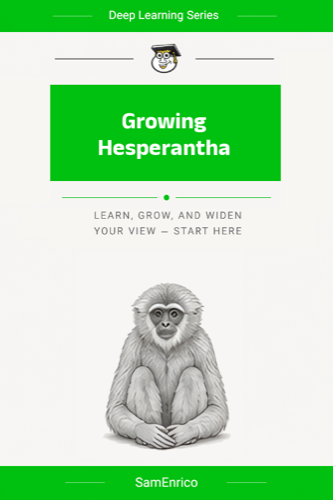 Growing HesperanthaTimm Latrisha$11.99
You may also like
 Hong Kong Handover 1997Dunn Johnnie$11.99
 Zumba For Postnatal Recovery CourseNeal Christian$11.99
 Zumba for BeginnersLadner Nikia$11.99
 YouTube Comment Mining GuideHumes Pandora$12.99
 Worry Box MeditationCarlin Rudy$11.99
 Workplace Stress MeditationNguyen Lynn$11.99
 Workplace Stress and Sleep RepairHawley Ivory$11.99
 Workplace Perfectionism CureDelaney Jeffry$11.99
 Workplace Injustice Anger GuideWallen Isabelle$11.99
 Work Addiction and Burnout LinkGreenwood Ester$11.99
 Women in Yoga and WellnessBeattie Galina$11.99
 Women in Stand Up ComedyChun Evangeline$11.99