
Non-FictionHealth & WellnessStress Physiology
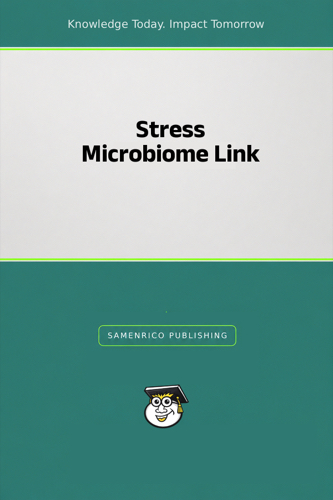
Stress Microbiome Link eBook
Reveals how chronic stress alters gut bacteria com
by Grimm Reatha
Reveals how chronic stress alters gut bacteria composition and vice versa.
Formats
Free sample
Chapter 1: The Second Brain--–- The email arrived at 3:47 AM. Sarah, a 34-year-old litigation attorney, had been awake for an hour, her mind racing through depositions, deadlines, and a vague sense of dread she couldn't attach to any specific thought. Her heart pounded against her ribs. Her stomach churned. She had already taken two antacids, done a breathing exercise from You Tube, and scrolled mindlessly through Instagram.
Nothing helped. This was the fourth night that week. Her primary care doctor had prescribed a mild sedative. Her therapist suggested journaling. Neither addressed the knot in her gut that seemed to have taken up permanent residence just below her ribcage.What Sarah didn't know—what almost no one tells you in a doctor's office—was that her anxiety wasn't originating in her brain at all.
It was originating in her gut. And her gut was screaming for help.This is the central revelation of modern neurogastroenterology: the gut is not a passive digestive tube. It is a sensory organ, a chemical factory, a neural network, and a command center all in one. It contains over 500 million neurons—more than the spinal cord, more than the peripheral nervous system. It produces 90% of your body's serotonin and 50% of its GABA, the brain's primary calming neurotransmitter.
And it talks to your brain constantly, sending up to 90% of the signals along the vagus nerve, the information superhighway that connects your two brains.Your gut feelings are not metaphors. They are biochemical facts.The Discovery That Changed Everything For most of medical history, the gut was considered a simple digestive organ. It absorbed nutrients. It expelled waste. It occasionally produced embarrassing sounds at inopportune moments.
The brain was the seat of thought, emotion, and consciousness. The gut was, at best, a servant.That model began to crumble in the late 1990s when researchers made a startling discovery: the enteric nervous system (ENS)—the mesh of neurons lining the gastrointestinal tract—can operate independently of the brain. Remove a segment of intestine from a living animal, place it in a warm saline bath, and it will continue to contract and relax in coordinated waves. It will respond to nutrients, toxins, and stretching. It will even "remember" previous patterns of stimulation.
The gut has its own brain.But the gut's intelligence goes far beyond simple reflexes. The ENS produces over 30 different neurotransmitters, every single one found in the brain. It communicates with the immune system, releasing signaling molecules that affect inflammation throughout the body. It houses 70-80% of your immune cells. It is the largest interface between your internal environment and the outside world.And it is exquisitely sensitive to stress.The Vagus Nerve: The Body's Information Superhighway The connection between your two brains is the vagus nerve, the tenth cranial nerve, a winding bundle of fibers that runs from your brainstem down through your neck, chest, and abdomen, branching out to touch every major organ along the way.
It is the longest nerve in the body. It is also, crucially, asymmetric in its traffic.Approximately 80-90% of vagal nerve fibers are afferent, meaning they carry signals from the body to the brain. Only 10-20% are efferent, carrying signals from the brain to the body. Your gut is not listening to your brain most of the time. Your brain is listening to your gut.This anatomical fact has profound implications for how we understand anxiety, depression, and chronic stress.
When you feel "butterflies" before a presentation, that is your gut sensing a threat and reporting it upward. When you feel nauseated after bad news, that is your gut responding to stress hormones and sending an urgent message: something is wrong. When you have a "gut feeling" about a person or situation, that is your enteric nervous system processing information—about facial expressions, tone of voice, past experiences—and reaching a conclusion before your conscious brain has even caught up.Your gut knows things before you know them.Under chronic stress, however, this elegant communication system breaks down. Stress hormones like cortisol and adrenaline alter gut motility, speeding up or slowing down the passage of food. They increase intestinal permeability—the infamous "leaky gut"—allowing bacterial fragments and partially digested food particles to enter the bloodstream.
They change the composition of your gut microbiome, favoring pathogenic bacteria that thrive on inflammation while starving beneficial species that produce calming neurotransmitters.And then your gut reports all of this chaos upward. Your brain receives a constant stream of distress signals: inflammation, pain, bloating, urgency. It interprets these signals the only way it knows how—as a threat. Your amygdala activates. Your hypothalamus releases corticotropin-releasing hormone.
Your adrenal glands pump out more cortisol. Your heart rate increases. Your breathing quickens.Your gut, receiving these new stress hormones, gets worse.The loop is now complete.The Anatomy of a Gut Feeling To understand how this works, we need to look inside the gut itself. The enteric nervous system is organized into two primary networks: the myenteric plexus, which controls the rhythmic contractions that move food through your digestive tract, and the submucosal plexus, which regulates blood flow, fluid exchange, and the absorption of nutrients.Between these networks are the enterochromaffin cells—specialized cells that line the intestinal wall and act as sensory receptors. When these cells detect nutrients, toxins, or mechanical stretching, they release neurotransmitters that activate nearby vagal nerve endings.
The signal travels up the vagus nerve to the brainstem, then to the thalamus, then to the insula—a region of the brain that integrates bodily sensations with emotional experience.This is why a gut feeling feels like a feeling: because your brain is literally interpreting a gut signal as an emotion.The insula is also connected to the anterior cingulate cortex, which processes pain and discomfort, and to the prefrontal cortex, which handles decision-making and social judgment. When your gut sends a strong signal—"this food is bad," "this person is dangerous," "this situation is unsafe"—your entire brain gets involved. You don't just think something is wrong. You feel it in your bones.This system evolved to protect you. Your ancestors who had strong gut reactions to spoiled food or predatory threats survived longer than those who didn't.
The problem is that the system cannot distinguish between a literal predator and a metaphorical one. Your gut reacts to a looming deadline, a difficult conversation, or a passive-aggressive email the same way it reacts to a tiger: with full-throttle alarm.And when that alarm never turns off, your gut begins to break down.Chronic Stress: The Silent Assassin of Gut Health Acute stress—the kind that lasts minutes or hours—is actually beneficial for your gut. It increases blood flow, enhances motility, and primes the immune system. This is the stress response your body evolved for: short bursts of high alert followed by complete recovery.Chronic stress is a different beast entirely. When cortisol and adrenaline remain elevated for weeks or months, they begin to damage the very systems they were designed to protect.Motility: Chronic stress can either speed up transit time (leading to diarrhea) or slow it down (leading to constipation).
In many people, it alternates between both. This is the hallmark of stress-induced IBS.Permeability: Stress hormones increase the production of…
This is the end of the free sample. Get the eBook to keep going. Buy now
About this book
Details
- Author
- Grimm Reatha
- Publisher
- SamEnrico
- Language
- English
- Genre
- Non-Fiction, Health & Wellness, Stress Physiology
- Released
- 2026-06-08
- Pages (approx.)
- 147
- Available as
- eBook, Audiobook

Read better in the ZLOADR app
Your eBooks on your phone or tablet. Sign in with your SamEnrico account and start reading.
More by Grimm Reatha
 Surrendering to What IsGrimm Reatha$11.99
 Body Doubling for FocusGrimm Reatha$11.99
 Alcoholism in the Music IndustryGrimm Reatha$11.99
 Affirmations For FriendshipGrimm Reatha$11.99
 The Ponca Chief Standing BearGrimm Reatha$11.99
 Caregiver Resentment GuideGrimm Reatha$11.99
 Cataract Surgery GuideGrimm Reatha$11.99
 The Great Escape of John Wilkes Booth: The Assassin’s TunnelGrimm Reatha$11.99
 The Trial of the First Empress: Wu Zetian's Rise and FallGrimm Reatha$11.99
 The Essential Guide to MetalGrimm Reatha$11.99
 B2B Sales for ManufacturingGrimm Reatha$12.99
 Quantifying Your Promotion ValueGrimm Reatha$12.99
You may also like
 Hong Kong Handover 1997Dunn Johnnie$11.99
 Zumba For Postnatal Recovery CourseNeal Christian$11.99
 Zumba for BeginnersLadner Nikia$11.99
 YouTube Comment Mining GuideHumes Pandora$12.99
 Worry Box MeditationCarlin Rudy$11.99
 Workplace Stress MeditationNguyen Lynn$11.99
 Workplace Stress and Sleep RepairHawley Ivory$11.99
 Workplace Perfectionism CureDelaney Jeffry$11.99
 Workplace Injustice Anger GuideWallen Isabelle$11.99
 Work Addiction and Burnout LinkGreenwood Ester$11.99
 Women in Yoga and WellnessBeattie Galina$11.99
 Women in Stand Up ComedyChun Evangeline$11.99