Stress Management for Optometrists
Manage precise work and patient anxiety without ne
Manage precise work and patient anxiety without neck and eye strain.
Formats
About this book
Free sample
Chapter 1: The 0.25D Dilemma--–- Dr. Maya Chen had just finished her third consecutive routine refraction when the patient asked a question that stopped her cold. “Doctor, is it normal that I can’t see the clock on the wall after you put those lenses on?” Maya blinked, looked up at the wall clock—which she had just checked twenty minutes earlier—and realized with a start that she couldn’t read the numbers either. Her own vision had blurred. Her neck ached.
And she still had fourteen patients to see before lunch.This moment—this precise collision of professional demand and physical collapse—is not a sign of weakness, burnout, or “bad habits.” It is the 0.25D Dilemma, the unique stress signature of optometric practice. And until you understand it, no amount of yoga, meditation, or coffee will fix what actually wears you down.The Stress No One Talks About General stress management books describe burnout as exhaustion, cynicism, and reduced efficacy. They offer breathing exercises, time management tips, and advice to “set boundaries.” These are not wrong, but they miss what makes optometric stress fundamentally different from the stress of a surgeon, a teacher, or a software engineer.Surgeons experience high-stakes intensity—life-or-death decisions—but those moments are relatively brief and separated by periods of lower cognitive demand. Teachers experience high-frequency interruptions but rarely face split-second decisions with permanent visual consequences. Software engineers experience deep focus but without the physical demands of near-work posture and instrument manipulation.Optometrists live in a third zone: high-stakes tedium.For ninety percent of your day, the work follows predictable patterns.
You perform refractions, check lens centration, review visual fields, adjust phoropters, and discuss dry eye treatments. These tasks require attention but not hypervigilance. Then, in a fraction of a second, you must decide: is this patient’s best vision at -2.25 or -2.50? Should you add +0.25 to the right eye or leave it? Is that retinal finding an artifact or early diabetic change?That 0.25 diopter—less than the thickness of two credit cards—can mean the difference between a patient seeing 20/20 or 20/30.
It can mean the difference between a satisfied patient who returns and a frustrated patient who seeks care elsewhere. It…
This is the end of the free sample. Get the eBook to keep going. Buy now
Contents
- Chapter 1
- Chapter 2
- Chapter 3
- Chapter 4
- Chapter 5
- Chapter 6
- Chapter 7
- Chapter 8
- Chapter 9
- Chapter 10
- Chapter 11
- Chapter 12
Details
- Author
- Martindale Lizbeth
- Publisher
- SamEnrico
- Language
- English
- Genre
- Non-Fiction, Self-Help, Optometry
- Released
- 2026-06-12
- Pages (approx.)
- 145
- Available as
- eBook, Audiobook

Read better in the ZLOADR app
Your eBooks on your phone or tablet. Sign in with your SamEnrico account and start reading.
More by Martindale Lizbeth
 Ireland EV Home Charger GrantMartindale Lizbeth$11.99
 Gambling Harm ReductionMartindale Lizbeth$11.99
 Weight Loss For Busy PeopleMartindale Lizbeth$11.99
 Creative Conflict Facilitation ManualMartindale Lizbeth$11.99
 Echoes of the Underground: The Secret Songs of the Paris CatacombsMartindale Lizbeth$11.99
 The Iron Fist of the Seas: How One Man Built a Maritime Empire from ScratchMartindale Lizbeth$11.99
 Zapier Free Automation TestMartindale Lizbeth$12.99
 Business Plan Financial ProjectionsMartindale Lizbeth$12.99
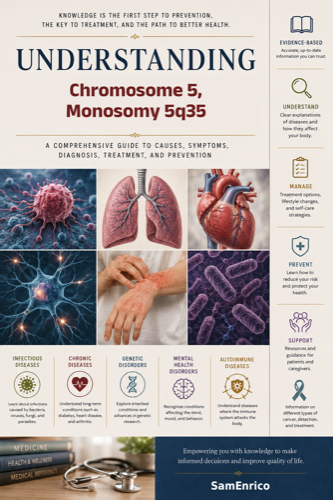 Understanding Chromosome 5, Monosomy 5q35Martindale Lizbeth$17.99
 How to Become a Cadmium BurnerMartindale Lizbeth$11.99
 Package Machine OperatorMartindale Lizbeth$11.99