
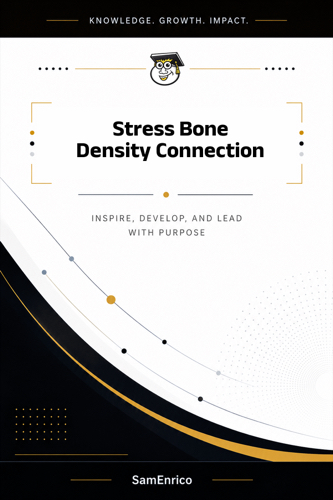
Non-FictionSelf-HelpBone Health
Stress Bone Density Connection eBook
Learn how chronic stress and cortisol affect bone
Learn how chronic stress and cortisol affect bone remodeling and osteoporosis risk.
Formats
Free sample
Chapter 1: The Silent Fracture--The first time Jennifer sneezed and felt a sharp stab in her lower back, she assumed she had simply pulled a muscle. She was forty-seven years old, a successful corporate lawyer working eighty-hour weeks, sleeping five hours per night, and surviving on coffee and takeout. Her doctor ordered an X-ray, then a DEXA scan. The results arrived on a Tuesday afternoon: Jennifer had the spine of a seventy-two-year-old woman. Her T-score was -2.6, firmly in the range of osteoporosis.
She had not fallen. She had not been in a car accident. She had simply sneezed, and her lumbar vertebrae had nearly collapsed.Jennifer is not an outlier. She is every stressed professional who believes bone loss is an old person's problem, a post-menopausal condition, or something that happens to other people. This book exists because Jennifer—and millions like her—are being failed by conventional medicine.
Her doctors prescribed calcium and vitamin D, told her to walk more, and sent her on her way. No one asked about her work hours. No one measured her cortisol. No one explained that chronic stress was quietly, systematically dismantling her skeleton from the inside.This chapter will change what you believe about bone health. It will introduce the foundational biology of bone remodeling, define what we mean by "chronic stress" in measurable, clinical terms, and explain why most people discover osteoporosis only after it is too late.
You will also meet the core tension of this book: bone is a living organ that constantly rebuilds itself, but stress hijacks that process. By the end of this chapter, you will understand why Jennifer's story could become your story—and why it does not have to.The Living Skeleton: Beyond Calcium and Milk Most people think of bones as dry, white, dead structures—like the plastic skeletons hung on classroom walls during October. This misconception is dangerous. Your skeleton is the most metabolically active organ system in your body after the liver and bone marrow. Every three to six months, your body completely replaces its old bone tissue with new bone.
To put that in perspective, you get a new skeleton roughly eight times in a single decade.This constant renewal process is called bone remodeling, and it relies on a delicate dance between two specialized cell types: osteoclasts and osteoblasts.Osteoclasts are the demolition crew. These large, multi-nucleated cells attach to the surface of your bones and secrete acid and enzymes that dissolve old or damaged bone matrix. This process is called resorption. It sounds destructive, but it is essential. Osteoclasts clear away microscopic cracks, remove bone that is no longer structurally sound, and release calcium and phosphorus back into your bloodstream to maintain critical bodily functions like nerve transmission and muscle contraction.Osteoblasts are the construction workers.
These cells synthesize new bone matrix—a combination of collagen (which provides flexibility) and calcium phosphate (which provides hardness). They fill in the cavities left behind by osteoclasts, a process called formation. When osteoclasts and osteoblasts are balanced, your skeleton remains strong and resilient.Here is the analogy we will use throughout this book: think of your skeleton as a calcium bank account. Every day, you make withdrawals (osteoclasts breaking down bone) and deposits (osteoblasts building new bone). As long as withdrawals and deposits are roughly equal, your bone density remains stable.
But if withdrawals exceed deposits for months or years, your bone density drops. You develop osteopenia (mild bone loss), then osteoporosis (severe bone loss), and finally, you become one of the fifty-four million Americans who will fracture a bone from a standing height or less.What determines whether withdrawals exceed deposits? Mechanical load, nutrition, hormones, inflammation, and—the central focus of this book—chronic stress.Defining the Invisible Assassin: What Is Chronic Stress?The word "stress" has become so overused that it has nearly lost its meaning. We say we are "stressed" about traffic, deadlines, family obligations, and the news cycle. But not all stress is equal, and not all stress damages your bones.
To write this book, we need a precise, measurable definition.Acute stress is a short-term, time-limited response to an immediate threat. Your ancestors experienced acute stress when a predator appeared. Your body releases cortisol and adrenaline, your heart rate increases, your pupils dilate, and you either fight or flee. Once the threat passes, your hormone levels return to baseline within hours. Acute stress is not only harmless—it is beneficial.
It sharpens your focus, mobilizes energy, and even enhances immune function.Chronic stress is different. Chronic stress occurs when your body's stress response system remains activated for weeks, months, or years. The threat is not a predator but an endless stream of emails, financial insecurity, caregiving demands, sleep deprivation, perfectionism, and social isolation. Your HPA axis (hypothalamus-pituitary-adrenal axis) never fully shuts off. Cortisol remains elevated when it should be falling, especially at night.For the purposes of this book, we define chronic stress operationally:Chronic stress means either:Salivary cortisol >3.5 ng/m L at 8 AM on three or more consecutive days, ORSalivary cortisol >1.0 ng/m L at 10 PM (normal is
This is the end of the free sample. Get the eBook to keep going. Buy now
About this book
Details
- Author
- Poindexter Helaine
- Publisher
- SamEnrico
- Language
- English
- Genre
- Non-Fiction, Self-Help, Bone Health
- Released
- 2026-06-07
- Pages (approx.)
- 156
- Available as
- eBook, Audiobook

Read better in the ZLOADR app
Your eBooks on your phone or tablet. Sign in with your SamEnrico account and start reading.
More by Poindexter Helaine
 The Workaholic's Family Recovery GuidePoindexter Helaine$11.99
 Emotional Intelligence for MusiciansPoindexter Helaine$11.99
 Hillary Philanthropy LegacyPoindexter Helaine$11.99
 Chiropractic WorkbookPoindexter Helaine$11.99
 Twelve Step Prayer List GuidePoindexter Helaine$11.99
 Trance For MindfulnessPoindexter Helaine$11.99
 The Chazon Ish ImpactPoindexter Helaine$11.99
 Cash Flow Dashboard DesignPoindexter Helaine$11.99
 The Riemann Hypothesis: The Unsolved Riddle That Captivated the WorldPoindexter Helaine$11.99
 The Ghost in the Machine: How AI Outsmarted the CIAPoindexter Helaine$11.99
 The Alchemists of Steam: Unleashing the Atom of IndustryPoindexter Helaine$11.99
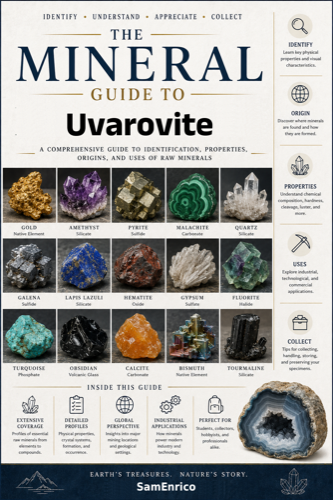 The Mineral Guide to UvarovitePoindexter Helaine$11.99
You may also like
 Hong Kong Handover 1997Dunn Johnnie$11.99
 Zumba For Postnatal Recovery CourseNeal Christian$11.99
 Zumba for BeginnersLadner Nikia$11.99
 YouTube Comment Mining GuideHumes Pandora$12.99
 Worry Box MeditationCarlin Rudy$11.99
 Workplace Stress MeditationNguyen Lynn$11.99
 Workplace Stress and Sleep RepairHawley Ivory$11.99
 Workplace Perfectionism CureDelaney Jeffry$11.99
 Workplace Injustice Anger GuideWallen Isabelle$11.99
 Work Addiction and Burnout LinkGreenwood Ester$11.99
 Women in Yoga and WellnessBeattie Galina$11.99
 Women in Stand Up ComedyChun Evangeline$11.99