
Non-FictionSelf-HelpEye Health
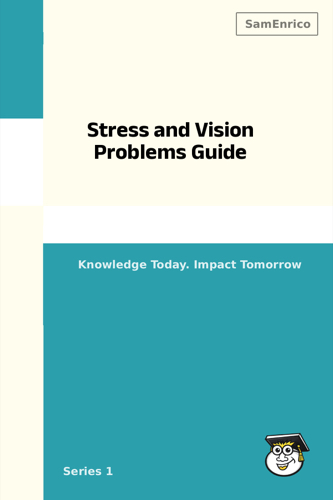
Stress and Vision Problems Guide eBook
Understand how stress causes eye strain and blurre
Understand how stress causes eye strain and blurred vision using this scientific ophthalmology guide.
Formats
Free sample
Chapter 1: The Gaslighting Epidemic--–- Three eye exams. Three different doctors. Three times the same answer: "Your eyes are perfectly healthy. 20/20 vision." And yet, every afternoon around 2 PM, Sarah’s world dissolved into a foggy, straining blur. Words on her computer screen seemed to shimmer.
The fluorescent lights above her cubicle felt like knives. She started taking ibuprofen daily for the headaches that lived behind her eyes. She bought blue-blocking glasses, then stronger prescription glasses she didn't need, then eye drops, then a second monitor, then a different chair. Nothing worked. Her optometrist, kind but clearly frustrated, finally said the six words that would send Sarah into a six-month spiral of self-doubt: "Maybe it's just stress.
Try relaxing."Try relaxing. As if she hadn't been trying. As if the very command to "relax" didn't spike her cortisol further. As if her blurry, aching, twitching eyes were somehow her fault for not being calm enough.Sarah is not a real person. But her story is real.
It is the story of approximately 15 to 20 percent of all patients who walk into eye clinics complaining of visual disturbances—blur, strain, double vision, light sensitivity, twitching, fog—only to be told that their eyes are structurally normal. No cataracts. No glaucoma. No macular degeneration. The exam is pristine.
The prescription is unchanged. And yet, the patient is suffering.In the absence of an organic diagnosis, the medical system often defaults to a psychological one. "It's stress." But what does that mean? Is stress simply a wastebasket diagnosis—a polite way of saying "I can't find anything wrong, so the problem must be in your head"? Or is stress a genuine, measurable, physiological cause of visual dysfunction that deserves the same rigorous investigation as any retinal tear or corneal abrasion?This book exists because the answer is emphatically the second one.
Stress is not just a feeling. It is a neurochemical event. It is a hormonal cascade. It is a neuromuscular signal. And it directly, measurably, and sometimes dramatically alters how you see the world.
The problem is not that "it's stress." The problem is that most eye doctors are trained to treat the eyeball as a camera—a beautiful, complex, but essentially mechanical device that either works or doesn't. They are not trained to treat the visual system as a part of the nervous system, which it is. They are not trained to diagnose the 15 conditions where the eye itself is perfect but the brain's interpretation of visual information has gone awry. And they are certainly not trained to explain to a suffering patient how their morning commute, their looming deadline, or their sleepless night might be causing their afternoon vision to fail.This chapter will introduce you to a different framework. It will explain why conventional eye care has a blind spot—literally and figuratively—when it comes to stress.
It will give you a new language to describe your symptoms. It will provide a simple diagnostic tool to help you distinguish between seven different types of visual disturbance, only some of which require an emergency room visit. And it will begin the process of undoing the gaslighting. Because your symptoms are real. Your suffering is valid.
And the connection between your stressed nervous system and your failing vision is not a metaphor. It is biology.The 300-Billion-Dollar Blind Spot Let's start with a number that should shock you: approximately 50 million adults in the United States alone suffer from chronic dry eye disease, computer vision syndrome, binocular vision dysfunction, or functional vision loss—all conditions that are directly exacerbated or caused by stress. That is roughly one in every six adults. And yet, in 2024, only about 4,000 optometrists in the US (out of roughly 45,000) are trained in the assessment and treatment of binocular vision disorders. Only about 1,500 offer precision tinted lens testing for pattern glare.
Only a handful regularly ask patients about their stress levels, sleep quality, or caffeine intake—all of which are clinically significant data points for the stressed visual system.The numbers tell a story of neglect. The average optometry school curriculum devotes approximately 2 to 4 hours to "visual stress" or "psychosomatic ophthalmology" over four years of training. Compare that to the 200+ hours devoted to glaucoma, a disease that affects a similar number of patients. There is no conspiracy here. It is simply a matter of medical culture: if you can see it on an OCT scan, it is real.
If you cannot measure it with a device, it is relegated to the vague territory of "functional" or "psychosomatic"—words that, in clinical practice, often function as synonyms for "we don't know" or "we don't treat that."This is the blind spot. And it has real consequences.Patients with undiagnosed binocular vision dysfunction wait an average of 3.5 years and see an average of 4.2 doctors before receiving a correct diagnosis. During that time, they are often prescribed unnecessary glasses, referred to neurologists for "possible migraines," or told to see psychiatrists for "somatic symptom disorder." They spend thousands of dollars. They miss work. They develop secondary anxiety and depression—not because they are psychologically weak, but because their untreated visual symptoms have made their lives genuinely difficult.The most heartbreaking cases are children.
A 9-year-old who cannot read for more than 10 minutes without her eyes hurting is not "resistant to homework." She is not "lazy." She is not "seeking attention." She has a stressed, overworked visual system that is failing under the demands of modern education. And when she is misdiagnosed with ADHD and put on stimulants that make her anxiety worse, the system has failed her completely.This book exists to close that gap. Not to replace your eye doctor—you absolutely need a good one—but to give you the knowledge to ask the right questions, to recognize when your symptoms are stress-related versus structural, and to implement the specific techniques that calm a stressed visual system.The Eye Is Not a Camera. Vision Is Not a Photograph.The single most important concept in this book is also the simplest, and yet it is the one most frequently misunderstood by patients and doctors alike. Here it is:The eye is a biological camera.
Vision is a perceptual construction created by the brain.These are not the same thing. They are not even close.Your eye—the cornea, the lens, the retina, the optic nerve—is a sophisticated light-gathering device. It captures photons, converts them into electrical signals, and sends those signals up the optic nerve to the back of your brain. In that sense, it is like a camera. But a camera does not "see." A camera records data.
Seeing happens when your brain takes that raw electrical data and constructs a meaningful, stable, useful representation of the world.That construction process is active, not passive. It requires energy. It requires attention. It requires the coordination of multiple brain regions—the visual cortex, the parietal lobe, the frontal eye fields, the superior colliculus, the cerebellum. And it is exquisitely sensitive to the state of your nervous system.When you are calm, rested, and safe, your brain constructs vision efficiently.
It suppresses noise. It fills in gaps. It stabilizes the image despite the constant micro-movements of your eyes. You don't…
This is the end of the free sample. Get the eBook to keep going. Buy now
About this book
Details
- Author
- Dubois Twanna
- Publisher
- SamEnrico
- Language
- English
- Genre
- Non-Fiction, Self-Help, Eye Health
- Released
- 2026-06-09
- Pages (approx.)
- 158
- Available as
- eBook, Audiobook

Read better in the ZLOADR app
Your eBooks on your phone or tablet. Sign in with your SamEnrico account and start reading.
More by Dubois Twanna
 Pablo Escobar Drug Lord ChildhoodDubois Twanna$11.99
 Self Hypnosis For BadmintonDubois Twanna$11.99
 Nanoparticle Exposure PreventionDubois Twanna$11.99
 Fence Network After HeistDubois Twanna$11.99
 The Silk Road of Knowledge: Ancient China's Mechanical Marvels and the Birth of Information NetworksDubois Twanna$11.99
 Frostborn and the Hollow KingDubois Twanna$11.99
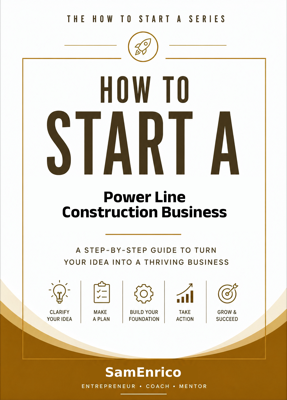 How to Start a Power Line Construction Business (Beginners Guide)Dubois Twanna$11.99
 UAE VAT for Small BusinessDubois Twanna$12.99
 Strategy Meeting Best Practices for Non Native SpeakersDubois Twanna$12.99
 Understanding Fealty SyndromeDubois Twanna$17.99
 Scholarship Application ConsultantDubois Twanna$11.99
You may also like
 Hong Kong Handover 1997Dunn Johnnie$11.99
 Zumba For Postnatal Recovery CourseNeal Christian$11.99
 Zumba for BeginnersLadner Nikia$11.99
 YouTube Comment Mining GuideHumes Pandora$12.99
 Worry Box MeditationCarlin Rudy$11.99
 Workplace Stress MeditationNguyen Lynn$11.99
 Workplace Stress and Sleep RepairHawley Ivory$11.99
 Workplace Perfectionism CureDelaney Jeffry$11.99
 Workplace Injustice Anger GuideWallen Isabelle$11.99
 Work Addiction and Burnout LinkGreenwood Ester$11.99
 Women in Yoga and WellnessBeattie Galina$11.99
 Women in Stand Up ComedyChun Evangeline$11.99