
Non-FictionSelf-HelpValidation
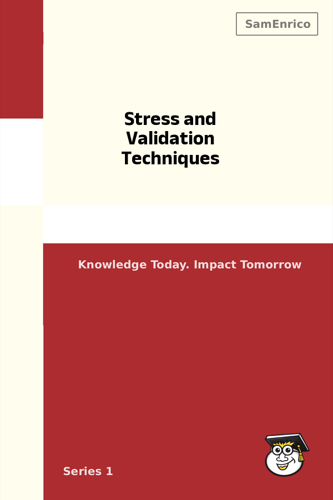
Stress and Validation Techniques eBook
Shows how to validate partner under pressure.
by Odonnell Ji
Shows how to validate partner under pressure.
Formats
Free sample
Chapter 1: The Fix-It Trap--–- The first time Mara came home from work crying, her husband David did exactly what any reasonable, loving partner would do. He listened for thirty seconds, identified the problem, and offered three logical solutions. He was confused when she cried harder. The second time, he tried empathy first—“That sounds really hard”—then offered two solutions. She thanked him coldly and went to bed early.
The third time, frustrated and exhausted himself, he snapped: “Do you want to be upset, or do you want to fix this?” That night, they slept on opposite sides of the bed, and neither one knew what had gone wrong.David is not a bad partner. He is not emotionally stunted or uncaring. He is a highly competent software engineer who spends his days debugging complex systems. When something breaks, he finds the error and fixes it. This has made him successful, respected, and well-paid.
And it is systematically destroying his marriage.This book is for every David. And for every Mara who has ever felt worse after being “helped.” It is for the executive who cannot understand why her calm, logical breakdown of a problem makes her husband shut down. It is for the therapist who uses her clinical skills at home and wonders why her partner feels analyzed rather than loved. It is for anyone who has ever been told “You’re overreacting” when they were drowning, or who has bitten back the words “I’m just trying to help” after watching their partner walk away.This chapter dismantles the single most destructive pattern in stressed relationships: the fix-it reflex. It will explain why your brain fights against validation, why your best intentions become your partner’s deepest wounds, and how to rewire your first response to stress.
By the end of this chapter, you will understand the difference between validation and all the things that look like validation but are not. You will learn the “Stop. Drop. Validate.” protocol. And you will never again wonder why logic failed when love was on the line.The Neuroscience of Why Logic Feels Like an Attack Let us begin with a simple biological fact.
When a human being experiences acute stress—a fight with a boss, a scary medical test result, a child’s tantrum, financial bad news—their brain does not process information the way it does during calm. This is not a character flaw. It is not immaturity. It is neurochemistry.The amygdala, an almond-shaped cluster of nuclei deep in the temporal lobe, acts as the brain’s smoke detector. When it perceives a threat (and stress, even non-physical stress, registers as a threat), it sounds an alarm.
Within milliseconds, the hypothalamic-pituitary-adrenal (HPA) axis activates. Cortisol and adrenaline flood the bloodstream. The heart rate increases. Breathing becomes shallow. Blood flows away from the prefrontal cortex—the part of the brain responsible for logic, planning, impulse control, and complex reasoning—and toward the muscles and limbs, preparing the body to fight, flee, or freeze.Here is what this means for your relationship.
When your partner is stressed, their prefrontal cortex is literally under-resourced. They cannot process multi-step solutions. They cannot evaluate the pros and cons of your suggestions. They cannot “calm down and think rationally” because the biological machinery for rational thought has been temporarily deprioritized in favor of survival.Now imagine you, the well-intentioned partner, hear their distress. You are probably calmer than they are (though not always—more on that in Chapter 10).
Your prefrontal cortex is online. You can see the problem clearly. You have a solution. You offer it with love.What happens next is a neurological tragedy. Your logical solution arrives in their flooded brain as an attack.
They do not hear “Here is a way forward.” They hear “You are too stupid to have thought of this yourself.” They do not hear “I want to help.” They hear “Your emotion is the problem, and it needs to be eliminated.” They do not hear “Let me fix this for you.” They hear “You are broken, and I am here to repair you.”This is not an interpretation. Functional MRI studies of couples in conflict show that when one partner offers unsolicited solutions to a distressed partner, the distressed partner’s amygdala activates as if they had been physically threatened. Their insula—a region associated with pain perception—lights up. Being “helped” before being heard literally hurts.This is the fix-it trap. You try to help.
They feel attacked. You try harder. They withdraw further. You become frustrated because your help is rejected. They become hopeless because they feel unfixable.
Both of you are right. Both of you are suffering. And neither of you knows how to stop.The Four Toxic Autopilot Responses (What We Mistake for Validation)Before we teach you what validation is, we must first name what it is not. Most people who fail at validation are not failing because they are mean or careless. They are failing because their autopilot responses are faster than their intentional responses, and those autopilot responses are culturally reinforced.
We hear them everywhere: from parents, from movies, from well-meaning friends. They sound helpful. They are not.Drawing on the work of Harriet Lerner (Why Won’t You Apologize?) and Douglas Stone (Difficult Conversations), this chapter identifies four toxic autopilot responses that people consistently mistake for validation.Response One: Minimizing“It’s not that bad.” “You’re making a mountain out of a molehill.” “In the grand scheme of things, this is nothing.” “Other people have real problems.”Minimizing sounds like comfort. It is not. It is emotional erasure.
When you minimize your partner’s distress, you are not helping them see perspective; you are telling them that their internal experience is wrong. The implicit message is: “Your feelings are an overreaction. Trust my assessment of reality, not yours.” This is disorienting and shaming. A person who is already stressed now has to defend the legitimacy of their own distress before they can even begin to address the original problem.Response Two: One-Upping“You think your day was bad? Let me tell you about mine.” “That’s nothing compared to what happened to me.” “Oh, you’re tired?
I’ve been running on four hours of sleep for a week.”One-upping is often disguised as solidarity. The speaker believes they are saying, “I understand because I have suffered too.” But what the stressed partner hears is: “Your suffering is not special enough to deserve attention. My suffering is bigger, therefore more valid. You do not get to be the focus right now.” This response hijacks the conversation and centers the speaker. It is competitive suffering, and it leaves the original distressed partner feeling invisible and alone.Response Three: Fixing“Here’s what you should do.” “Have you tried…?” “If you would just…” “The solution is simple.”Fixing is the signature response of the competence-as-liability personality described in Chapter 2.
It feels active, useful, and efficient. It is the opposite of validation. Fixing bypasses the emotional experience entirely and jumps to outcome. The implicit message is: “Your feeling is an inconvenience that needs to be resolved as quickly as possible.…
This is the end of the free sample. Get the eBook to keep going. Buy now
About this book
Details
- Author
- Odonnell Ji
- Publisher
- SamEnrico
- Language
- English
- Genre
- Non-Fiction, Self-Help, Validation
- Released
- 2026-06-05
- Pages (approx.)
- 156
- Available as
- eBook, Audiobook

Read better in the ZLOADR app
Your eBooks on your phone or tablet. Sign in with your SamEnrico account and start reading.
More by Odonnell Ji
 Emotional Sobriety in Twelve StepsOdonnell Ji$11.99
 Body Scan for Healthcare WorkersOdonnell Ji$11.99
 The Iron Discipline: Prussia's March to MasteryOdonnell Ji$11.99
 How to Produce Book CoversOdonnell Ji$11.99
 Cheese MakingOdonnell Ji$11.99
 Global Brand Voice GuideOdonnell Ji$12.99
 How to Become a Heel ScorerOdonnell Ji$11.99
You may also like
 Hong Kong Handover 1997Dunn Johnnie$11.99
 Zumba For Postnatal Recovery CourseNeal Christian$11.99
 Zumba for BeginnersLadner Nikia$11.99
 YouTube Comment Mining GuideHumes Pandora$12.99
 Worry Box MeditationCarlin Rudy$11.99
 Workplace Stress MeditationNguyen Lynn$11.99
 Workplace Stress and Sleep RepairHawley Ivory$11.99
 Workplace Perfectionism CureDelaney Jeffry$11.99
 Workplace Injustice Anger GuideWallen Isabelle$11.99
 Work Addiction and Burnout LinkGreenwood Ester$11.99
 Women in Yoga and WellnessBeattie Galina$11.99
 Women in Stand Up ComedyChun Evangeline$11.99