
Non-FictionSelf-HelpStrategic Planning
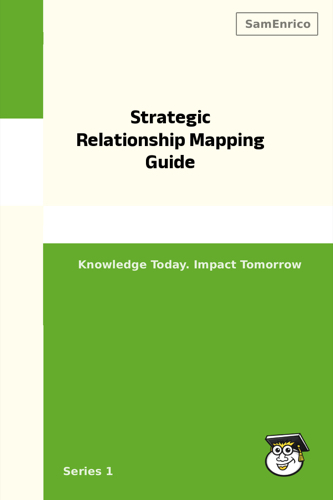
Strategic Relationship Mapping Guide eBook
Identify key influencers and decision-makers in yo
Identify key influencers and decision-makers in your industry to prioritize connection efforts.
Formats
Free sample
Chapter 1: The Invisible Web--–- In the winter of 2019, a mid-sized enterprise software company called Logi Core lost a deal worth $4.2 million. The loss was not due to an inferior product, a higher price, or a better competitor. The loss occurred because Logi Core’s sales team had spent eleven months courting the Chief Technology Officer, believing him to be the sole decision-maker. On the final day of negotiations, a director of business operations whom no one on the Logi Core team had ever met exercised a previously undisclosed veto power embedded in an obscure governance process. The deal died in thirty minutes.
The CTO, genuinely apologetic, later admitted, “I assumed you knew about Margaret. Everyone inside knows you have to get past Margaret.”This story illustrates the central problem that this book exists to solve: you cannot build effective relationships if you do not know who truly matters. The era of the lone decision-maker signing off on major deals or initiatives is over. In its place has emerged a complex, often invisible web of influence—a hidden architecture of relationships, dependencies, and power dynamics that determines how decisions actually get made.The traditional image of business influence is seductively simple. It looks like an organizational chart: clean boxes, straight lines, clear reporting relationships.
The CEO at the top, vice presidents below, directors beneath them. In this world, power flows downward, and decisions are made by whoever holds the highest title. But this image has never been fully accurate, and today it is dangerously misleading.Consider the research. According to the Corporate Executive Board, the average B2B buying group now involves between six and ten stakeholders, and in complex enterprise sales, that number can exceed fifteen. Yet in study after study, sales professionals and project leaders report that they initially identify only two or three of these stakeholders.
The rest emerge over time—often too late, often after the damage is done.More alarming is the statistic that 67 percent of strategic initiatives fail due to poor stakeholder alignment, according to research from the Project Management Institute. Not technical failure. Not budget overruns. Not schedule slippage. Relational failure.
Someone with unaddressed concerns, unrecognized authority, or undisclosed influence derails the effort from inside. The person who says yes in the meeting and then quietly undermines the work afterward. The stakeholder who never speaks but whose silence signals disapproval to everyone else. The gatekeeper who controls information flow and simply stops forwarding your emails.These are not rare edge cases. They are the norm.
And they persist because most professionals operate with a fundamental misunderstanding of how influence actually works in organizations.The Myth of the Org Chart Organizational charts serve a useful purpose. They clarify reporting lines, establish accountability, and provide a sense of structure. But they are not maps of influence. They are maps of formal authority, and formal authority and actual influence often diverge dramatically.The vice president of engineering may have a dozen direct reports, but the senior architect who has been with the company for fifteen years and holds the institutional memory may have more real influence over technical decisions. The chief financial officer may control the budget, but the director of strategic planning who has the CEO’s ear may shape which projects even reach the budget discussion.
The executive assistant to the head of sales may have no formal title but may determine who gets thirty minutes on the calendar and who receives a polite “we will keep your information on file.”This divergence between formal and informal influence is not a bug in organizational design; it is a feature. Organizations run on trust, relationships, and unspoken understandings. People listen to those who have proven reliable, who have demonstrated good judgment, who have built social capital over years of collaboration. These people do not always hold senior titles. Sometimes they hold no titles at all.The Logi Core case study is instructive because it reveals a common pattern: the hidden influencer often occupies a role that appears ancillary to the core decision.
Margaret, the director of business operations, was not on any org chart that Logi Core could access. She did not attend sales meetings. She did not appear on the meeting agenda. But she had been given veto authority over any deal exceeding $3 million because of a process implemented after a previous procurement disaster. Every internal stakeholder knew about Margaret.
No external stakeholder did.This is the invisible web. It is the collection of relationships, dependencies, and power dynamics that determines how decisions actually get made. And until you learn to see it, you will continue to lose deals, stall initiatives, and wonder why your best efforts keep falling short.The Five Hidden Dimensions of Network Health Before you can begin mapping the influence landscape around you, you need to assess the current health of your own relationship network. Most professionals overestimate the quality of their networks. They confuse quantity with quality, activity with productivity, and familiarity with trust.The Network Health Scorecard introduced in this chapter provides a diagnostic tool for evaluating your relationship portfolio across five critical dimensions.
Take a few minutes to honestly assess yourself on each.Dimension One: Diversity Are you connected to multiple functions and levels within your target organizations? Or do your relationships cluster around a single department or seniority band?The diversity problem manifests in predictable ways. The sales professional who knows everyone in the IT department but no one in procurement, finance, or legal. The project manager who has strong relationships with frontline staff but has never spoken to the program director. The entrepreneur who has the CEO’s cell phone number but has never met the chief of staff who actually manages the CEO’s attention.Diversity is not about collecting business cards from every function.
It is about ensuring that your network reflects the full range of stakeholders who influence decisions. If your relationships are concentrated in one area, you have a blind spot. And blind spots get exploited.Dimension Two: Depth Do you have genuine trust with your contacts, or just surface familiarity? The difference is the difference between a contact who will return your call and a contact who will advocate for you when you are not in the room.Surface relationships are characterized by transactional exchanges: information for information, meeting for meeting, favor for favor. Deep relationships are characterized by mutual investment, shared vulnerability, and demonstrated care over time.
You can have a thousand surface relationships and still have no one to champion your cause when it matters most.Assess your top ten relationships honestly. How many of them would you feel comfortable calling with a problem, not just a request? How many have shared something vulnerable with you? How many have advocated for you without being asked? The answers to these questions reveal the true depth of your network.Dimension Three: Access Within two connections, can you reach the key players who matter most in your industry?
Or are you separated from them by multiple degrees of separation that you have no clear path to bridge?Access is about the efficiency of your network. In a well-constructed relationship map, you should…
This is the end of the free sample. Get the eBook to keep going. Buy now
About this book
Details
- Author
- Edmond Jesenia
- Publisher
- SamEnrico
- Language
- English
- Genre
- Non-Fiction, Self-Help, Strategic Planning
- Released
- 2026-06-11
- Pages (approx.)
- 155
- Available as
- eBook, Audiobook

Read better in the ZLOADR app
Your eBooks on your phone or tablet. Sign in with your SamEnrico account and start reading.
More by Edmond Jesenia
 Loneliness After Trauma HealingEdmond Jesenia$11.99
 Wholesaling Dialer Systems GuideEdmond Jesenia$11.99
 Pedestrian Crossing RageEdmond Jesenia$11.99
 The Robotics Capital ForecastEdmond Jesenia$11.99
 CrossFit Injury Prevention GuideEdmond Jesenia$11.99
 Mentorship for Nonprofit FundraisersEdmond Jesenia$11.99
 Smoky Mountain DisappearancesEdmond Jesenia$11.99
 OCD Breath for Urge SurfingEdmond Jesenia$11.99
 The Lost Tapes of Sun Ra: Cosmic Jazz and the Birth of AfrofuturismEdmond Jesenia$11.99
 Odysseus: The Spy of IthacaEdmond Jesenia$11.99
 The Ballot Hackers: How a Small Town Exposed a Global Cyber ThreatEdmond Jesenia$11.99
 Worker Comp Legal Traps First Time BossesEdmond Jesenia$12.99
You may also like
 Hong Kong Handover 1997Dunn Johnnie$11.99
 Zumba For Postnatal Recovery CourseNeal Christian$11.99
 Zumba for BeginnersLadner Nikia$11.99
 YouTube Comment Mining GuideHumes Pandora$12.99
 Worry Box MeditationCarlin Rudy$11.99
 Workplace Stress MeditationNguyen Lynn$11.99
 Workplace Stress and Sleep RepairHawley Ivory$11.99
 Workplace Perfectionism CureDelaney Jeffry$11.99
 Workplace Injustice Anger GuideWallen Isabelle$11.99
 Work Addiction and Burnout LinkGreenwood Ester$11.99
 Women in Yoga and WellnessBeattie Galina$11.99
 Women in Stand Up ComedyChun Evangeline$11.99