
Sternum Rub Pacifying eBook
Teaches reading chest touching as self-soothing du
Teaches reading chest touching as self-soothing during stress.
Formats
Free sample
Chapter 1: The Hand That Knows--–- The first time I noticed my hand on my chest, I was thirty-two years old, sitting in a crumbling parking garage, having just hung up on a phone call that felt like a car accident in slow motion. My heart was slamming against my ribs. My vision had narrowed to a tunnel. And my right palm was pressed flat against my sternum, fingers splayed, as if trying to hold myself together from the outside. I had no memory of putting it there.
I only knew that when I tried to lower my hand, a wave of raw alarm told me not to.That was the moment I realized I had been speaking a language my whole life without knowing a single word of its vocabulary.You have done this too. Maybe this morning. Maybe last week. Maybe right now, as you read this sentence, your hand is resting somewhere on your chest without your permission. You might be sitting in a chair, elbow propped on the armrest, fingers grazing your collarbone.
You might be lying in bed, one palm over your heart, the other holding your phone. You might be standing in a kitchen, waiting for water to boil, and your hand has drifted to the center of your chest like a homing pigeon finding its loft.This is not random. This is not a nervous tic. This is not something to train yourself out of.This is your body trying to save your life.The Gesture We Were Never Taught No one teaches a child to put their hand on their chest when they are scared. And yet, watch a playground long enough, and you will see it happen naturally.
A toddler falls and scrapes a knee. Before the tears fully arrive, before the wail reaches full volume, that small hand goes to the chest. A child hears a loud argument between adults. The face goes still, the shoulders rise, and the palm presses inward. An adolescent opens an acceptance or rejection letter from a college.
The hand goes to the heart before the eyes finish reading the first sentence.We are born knowing how to do this. And then we are taught, slowly and thoroughly, to forget.The forgetting happens in a thousand small ways. Don't be so dramatic. Stop touching yourself. Sit up straight.
Keep your hands to yourself. Toughen up. Mind over matter. You're fine. You're fine.
You're fine. These messages arrive from parents who meant well, from teachers who valued composure, from a culture that has historically treated the body as a vehicle for the mind rather than a source of wisdom in its own right. By the time we reach adulthood, most of us have learned to override the hand-before-heart reflex entirely. We clamp down. We brace.
We hold our breath and square our shoulders and pretend that we are not afraid.But the reflex never truly disappears. It goes underground. It becomes the hand that hovers near the chest but does not quite land. The fingers that tap the upper ribs as if searching for a doorbell. The palm that cups the side of the neck, just adjacent to the sternum, close enough to feel the heat but not close enough to count as self-soothing.
The gesture becomes partial, shame-adjacent, hidden.This book is about bringing it back into the light.What This Chapter Will Do for You Before we go any further, let me be clear about what this chapter is and what it is not. This chapter is not a scientific deep dive—that comes in Chapter 2. This chapter is not a how-to guide—that begins in Chapter 4. This chapter is not a psychological exploration of why you resist self-soothing—that waits for Chapter 7.This chapter is an invitation to notice something you have been doing your entire life without permission, without instruction, and without shame.By the end of this chapter, you will have done three things. First, you will have identified at least three recent moments when your hand went to your chest without your conscious direction.
Second, you will have practiced a simple, thirty-second observation exercise that requires nothing more than your palm and your sternum. And third, you will have begun the process of separating attention from analysis—learning to notice what your body is doing without immediately judging, fixing, or suppressing it.The most important sentence in this entire book is coming right now. Read it slowly.You do not need to understand why you are stressed to soothe your body.That is the core promise of this book and the central insight of this chapter. Your thinking mind—the part of you that analyzes, categorizes, and solves problems—is often the last part to arrive at the scene of a stress response. By the time your thoughts catch up, your nervous system has already launched a full biochemical cascade.
Trying to calm yourself by thinking your way out of panic is like trying to stop a moving train by standing on the tracks and explaining physics. It is not that your thoughts are useless. It is that they are late.Your hand, on the other hand, is never late. Your hand is already there.The Story of the Parking Garage Let me return to that parking garage, because the details matter. I was a graduate student at the time, finishing a doctorate in a field that had nothing to do with nervous systems or self-regulation.
I was studying something abstract and cerebral—the kind of thing that allows a person to live entirely in their head while their body slowly falls apart beneath them. I had been having panic attacks for about two years by then, though I did not call them that. I called them "bad moments" or "weird spells" or "times when I can't quite catch my breath." I had seen a doctor who prescribed something that made me feel numb. I had seen a therapist who taught me breathing techniques that worked about half the time. I had tried meditation apps and herbal supplements and cutting out caffeine and running until my legs gave out.Nothing stuck.
Because none of it addressed the fundamental fact that I had stopped listening to my body long before the panic attacks started.The phone call that day was with my dissertation advisor. The conversation was not especially harsh or critical. It was just the latest in a long line of conversations that made me feel small, inadequate, and perpetually on the verge of being exposed as a fraud. When I hung up, I sat in my car for what felt like an eternity. And then I looked down.My hand was on my chest.Not near my chest.
Not hovering. Not tapping nervously at my collarbone. Flat, firm, deliberate—my entire palm pressed against the flat bone between my collarbones, fingers spread wide, as if I were trying to feel my own heartbeat from the outside. I had no memory of putting it there. And when I tried to move it, my body rebelled.
A fresh spike of anxiety shot through me. My hand stayed where it was.That was the first time I ever…
This is the end of the free sample. Get the eBook to keep going. Buy now
About this book
Details
- Author
- Fulmer Rosita
- Publisher
- SamEnrico
- Language
- English
- Genre
- Non-Fiction, Self-Help, Pacifying
- Released
- 2026-06-07
- Pages (approx.)
- 137
- Available as
- eBook, Audiobook

Read better in the ZLOADR app
Your eBooks on your phone or tablet. Sign in with your SamEnrico account and start reading.
More by Fulmer Rosita
 Spending Addiction Support GroupsFulmer Rosita$11.99
 Great Smoky Mountains MysteriesFulmer Rosita$11.99
 Nobel Women In Science HandbookFulmer Rosita$11.99
 Rewire After Divorce TalkFulmer Rosita$11.99
 The CRISPR Nobel StoryFulmer Rosita$11.99
 John Mulaney KidFulmer Rosita$11.99
 Jeffrey Gundlach DoubleLineFulmer Rosita$11.99
 The Silk Road's Forgotten Queen: Wu Zetian's Shadow EmpireFulmer Rosita$11.99
 The Harpists of Meroë: Africa’s Forgotten Royal MusiciansFulmer Rosita$11.99
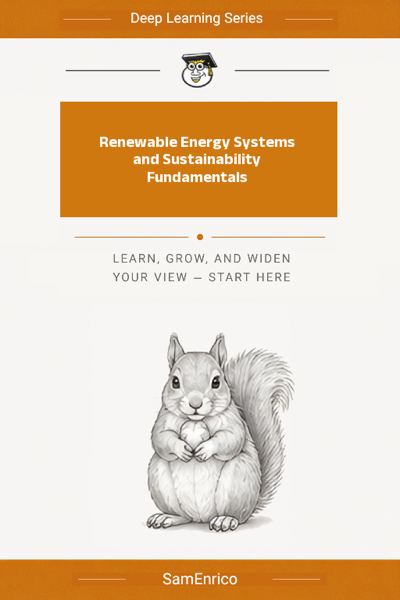 Renewable Energy Systems and Sustainability FundamentalsFulmer Rosita$11.99
 BOI Reporting RequirementsFulmer Rosita$12.99
 Systematic Literature Review Without PublicationFulmer Rosita$12.99
You may also like
 Hong Kong Handover 1997Dunn Johnnie$11.99
 Zumba For Postnatal Recovery CourseNeal Christian$11.99
 Zumba for BeginnersLadner Nikia$11.99
 YouTube Comment Mining GuideHumes Pandora$12.99
 Worry Box MeditationCarlin Rudy$11.99
 Workplace Stress MeditationNguyen Lynn$11.99
 Workplace Stress and Sleep RepairHawley Ivory$11.99
 Workplace Perfectionism CureDelaney Jeffry$11.99
 Workplace Injustice Anger GuideWallen Isabelle$11.99
 Work Addiction and Burnout LinkGreenwood Ester$11.99
 Women in Yoga and WellnessBeattie Galina$11.99
 Women in Stand Up ComedyChun Evangeline$11.99