
Non-FictionSelf-HelpOpen MindednessAgnostic
Step Two Open Mindedness Exercises eBook
Build willingness to believe through daily open mi
Build willingness to believe through daily open mindedness practices for agnostics.
Formats
Free sample
Chapter 1: The Automatic No...--–- You are not as open-minded as you think. Neither am I. Neither is anyone who reads this sentence and immediately feels a flash of defense. That flash—the quick “No, I’m different”—is exactly what this chapter is about.Let me describe a scene. You are at a dinner party.
Someone across the table mentions that they’ve started meditating. Not in a religious way, they say. Just ten minutes a morning of sitting in silence, watching the breath. Before you can stop yourself, a thought appears: That’s self-help nonsense. Or: I don’t have time for that.
Or: Meditation is just placebo. You didn’t choose to think that. The thought arrived fully formed, like a message from a part of you that wasn’t consulted.That is an Automatic No.Now imagine a different scene. You are alone at night, scrolling through a feed. An article appears: “Near-death experiencers report encountering a presence of unconditional love.” You feel a small tug of curiosity.
And then, faster than a blink, another thought: Brain chemistry. Hallucination. Wish fulfillment. The curiosity vanishes. You keep scrolling.Another Automatic No.One more.
A friend tells you they’ve started attending a Quaker meeting. Not because they’ve found God, they say. Because they needed a place to sit in silence with other people. Your internal response: I don’t need a group to be silent. Or: That sounds cult-adjacent.
Or simply: Not for me.Automatic No.These are not failures of intelligence. They are not character flaws. They are the default setting of the human brain—a setting that has been reinforced, for many of us, by years of proud skepticism, intellectual identity, and the quiet fear that openness might cost us something we cannot afford to lose.This chapter has one goal: to help you see your Automatic No before it disappears. Not to stop it. Not to shame it.
Just to notice it. Because you cannot change what you cannot see.The Architecture of the Instant Rejection In his Nobel Prize-winning work, Daniel Kahneman described two systems in the brain. System 1 is fast, automatic, emotional, and unconscious. System 2 is slow, deliberate, logical, and effortful. System 1 is the brain’s default.
It scans for threats, makes snap judgments, and delivers conclusions before you’ve even finished reading the sentence that triggered them.System 1 is not stupid. It is efficient. If you had to consciously reason about every single stimulus—every sound, every face, every unfamiliar idea—you would never make it through breakfast. System 1 is the reason you can drive a familiar route without remembering the turns. It is also the reason you can reject a belief-adjacent idea before you have given it five seconds of genuine attention.For people who value rationality—who identify as skeptics, agnostics, scientists, or simply “too smart to be fooled”—System 1 gets reinforced by identity.
You learn to trust your quick rejections because they have kept you from falling for scams, bad ideas, and manipulative rhetoric. Over time, the Automatic No becomes a badge of honor. I see through things. I’m not gullible. I’m not one of those people who believes in crystals or angels or life after death.But here is the problem that this entire book is built on: the Automatic No does not distinguish between genuine threats and merely unfamiliar possibilities.
It treats “That meditation thing is silly” the same way it treats “That wire is live.” It treats “Prayer is delusional” the same way it treats “That stove is hot.”One of those judgments might save your life. The other might close a door you never even knew was there.Three Biases That Masquerade as Rationality Let me name three cognitive biases that hide inside the Automatic No. Each one feels like clear thinking. Each one is actually a shortcut your brain takes without your permission.1. Negativity Bias Your brain remembers failed beliefs more vividly than successful ones.
Think about it. If you once prayed for something as a child and it didn’t happen, that memory sticks. If you once trusted a spiritual teacher who turned out to be a fraud, that memory is indelible. But the times you took a small risk on an unfamiliar idea and found something useful? Those memories fade.
The brain is wired to prioritize negative experiences because they might kill you. A predator you didn’t see is a greater threat than a berry you didn’t eat.Applied to open-mindedness, negativity bias means that every new idea arrives carrying the weight of every past disappointment. The brain says: Remember the last time you hoped? Remember how that turned out? Let’s not do that again.2.
Confirmation Bias You notice evidence that supports your current worldview while ignoring evidence that challenges it. If you believe that all spiritual experiences are explainable by brain chemistry, you will find endless articles confirming that. If you believe that religious people are less intelligent, you will notice every example that fits and explain away every counterexample.Confirmation bias is not dishonesty. It is cognitive efficiency. The brain does not want to rebuild its model of reality from scratch every morning.
It wants to confirm what it already knows. But for the agnostic who wants to cultivate willingness, confirmation bias is a silent jailer. It locks the door from the inside and calls it freedom.3. Scientific Skepticism as Ego Defense This is the most subtle bias of all. Genuine scientific skepticism is a method: withhold judgment until evidence is available.
But many people use the language of skepticism to avoid emotional risk. They say “I’m just being rational” when what they mean is “I’m afraid of hoping and being disappointed.”How can you tell the difference? Ask yourself: would I apply the same standard of evidence to something I already believe? If you require double-blind studies for meditation but none for the idea that your political opponents are wrong, that is not skepticism. That is ego defense.
The Automatic No wears a lab coat, but underneath it is wearing the same fear as everyone else.The Cost of a Closed Mind Before we go any further, let me be clear about what is at stake. The Automatic No is not merely an interesting cognitive quirk. It has real costs.Cost One: You become an open-minded person who never changes.This is the great tragedy of intellectual identity. You can genuinely believe that you are open to new ideas while systematically rejecting every idea that would require you to change. The test is not whether you can entertain a thought.
The test is whether you can be changed by a thought. The Automatic No prevents the second.Cost Two: Your relationships stay shallow.Intimacy requires openness. Not agreement—openness. To truly hear someone who believes differently than you, you must temporarily suspend your own certainty. The Automatic No says “I already know what they believe, and I already know why it’s wrong.” That is not intimacy.
That is a monologue.Cost Three: You face death, loss, or crisis with no psychological flexibility.You do not need to believe in an…
This is the end of the free sample. Get the eBook to keep going. Buy now
About this book
Details
- Author
- Stubblefield Verena
- Publisher
- SamEnrico
- Language
- English
- Genre
- Non-Fiction, Self-Help, Open Mindedness, Agnostic
- Released
- 2026-06-09
- Pages (approx.)
- 153
- Available as
- eBook, Audiobook

Read better in the ZLOADR app
Your eBooks on your phone or tablet. Sign in with your SamEnrico account and start reading.
More by Stubblefield Verena
 The Plagiarism Fear GuideStubblefield Verena$11.99
 Anticipatory Grief and Palliative CareStubblefield Verena$11.99
 Curie Daughter IreneStubblefield Verena$11.99
 Upwork Portfolio OptimizationStubblefield Verena$11.99
 Remote Project Management CommunicationStubblefield Verena$11.99
 Murdoch Sky TVStubblefield Verena$11.99
 Gaslighted Childhood RecoveryStubblefield Verena$11.99
 Pharmaceutical GH vs Natural BoostStubblefield Verena$11.99
 The Vanishing Highway: The Phantom of I-70Stubblefield Verena$11.99
 The Midnight Swap: The Untold Story of the 1996 NBA Blockbuster That Changed Two DynastiesStubblefield Verena$11.99
 Rum Runners & Royalty: The Untold Story of Queen Elizabeth’s Secret Caribbean EspionageStubblefield Verena$11.99
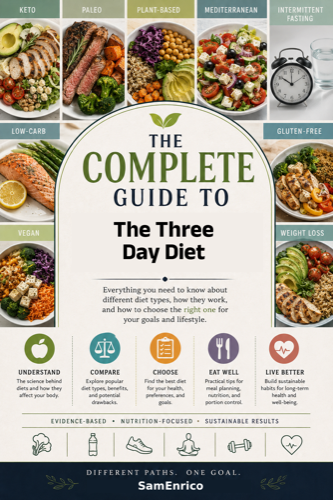 The Complete Guide to the Three Day DietStubblefield Verena$11.99
You may also like
 Hong Kong Handover 1997Dunn Johnnie$11.99
 Zumba For Postnatal Recovery CourseNeal Christian$11.99
 Zumba for BeginnersLadner Nikia$11.99
 YouTube Comment Mining GuideHumes Pandora$12.99
 Worry Box MeditationCarlin Rudy$11.99
 Workplace Stress MeditationNguyen Lynn$11.99
 Workplace Stress and Sleep RepairHawley Ivory$11.99
 Workplace Perfectionism CureDelaney Jeffry$11.99
 Workplace Injustice Anger GuideWallen Isabelle$11.99
 Work Addiction and Burnout LinkGreenwood Ester$11.99
 Women in Yoga and WellnessBeattie Galina$11.99
 Women in Stand Up ComedyChun Evangeline$11.99