
Step One Honesty Workbook eBook
Practical exercises admitting powerlessness and un
Practical exercises admitting powerlessness and unmanageability.
Formats
Free sample
Chapter 1: The Locked Doors...--–- You have said the words before. Maybe you have sat in a meeting, a therapist’s office, or alone in a parked car and whispered, “I am powerless.” The syllables left your mouth. The air carried them. Someone else might have even nodded. But here is the question this chapter will not let you outrun: did you mean it?
Not intellectually. Not because you have memorized the script. Did your chest drop when you said it? Did your stomach turn? Or did you say it the way you say “I’m fine” to a cashier who did not ask?
There is a vast, dangerous distance between knowing a truth and admitting it. Knowing lives in the head. Admission lives in the gut. Knowing keeps you dry. Admission might save your life.This chapter exists to close that distance.
It is not about defining the word “admitted.” It is about the physical, emotional, and spiritual act of letting something in that you have spent years pushing out. You have built an elaborate system of locks, bolts, and deadbolts. You have called that system many things: coping, survival, privacy, strength. This chapter will call it what it is: a prison. And the first key to the lock is not willpower.
It is honesty of a kind you have probably never practiced.The Three Doors of Admission Before you can admit anything to anyone else, you must understand where you have been refusing to admit it to yourself. The metaphor used throughout this workbook is the house with three locked doors. You live in this house. You have furnished it, painted it, and told guests it is comfortable. But there are rooms you do not enter.
Let us name them.The Mental Door. Behind this door are facts you refuse to face. Not opinions. Not interpretations. Verifiable, measurable data.
The amount of money you spent last month. The number of hours you lost to the behavior. The weight you gained. The appointment you missed. The text you sent that you deleted immediately.
The mental door is locked with a specific tool: rationalization. Your addicted mind is a brilliant architect of “because.” I did it because I was stressed. Because I deserved it. Because everyone else does it. Because it was a holiday.
Because it was a Tuesday. The mental door stays locked because facts are inconvenient. This chapter will ask you to stand in front of that door and name three facts you have refused to look at for more than a year.The Emotional Door. Behind this door are the feelings you numb instead of feel. Addiction is not primarily about pleasure.
It is about escape. The pleasure is real, but it is the anesthetic property that keeps you coming back. The emotional door contains everything you have not let yourself experience: grief, rage, terror, loneliness, shame so old you cannot remember its origin. You have locked this door because you believe you would die if you opened it. But here is the paradox: you are already dying.
Slowly. By degrees. The emotional door does not need to be thrown open in a single dramatic crash. It needs to be cracked. One inch.
This chapter will ask you to name one emotion you have not allowed yourself to feel since childhood.The Spiritual Door. This word makes some readers flinch. If you are secular, substitute “values door” or “integrity door.” Behind this door are the promises you made to yourself that you have broken so many times you stopped making them. The person you said you would become. The parent, partner, or professional you swore you would be.
The spiritual door contains the gap between your stated values and your actual behavior. You say you value honesty, but you lie daily. You say you value health, but you destroy your body. You say you love your children, but you choose the behavior over them when the craving hits. This is not a moral failing.
It is a spiritual unmanageability that every addict shares. The spiritual door stays locked because opening it would require admitting you are not the person you told yourself you were. This chapter will ask you to write down three values you have violated in the past seven days.The Inventory of Unwilling Consequences Now we move from metaphor to paper. The single most important exercise in this chapter is called the Inventory of Unwilling Consequences. The word “unwilling” is chosen carefully.
You have consequences. Everyone does. But some consequences you have accepted. You know you lost money. You know you damaged a relationship.
The unwilling consequences are the ones you have refused to fully register. You have seen them from the corner of your eye and looked away.Take out a notebook or open a new document. You are going to create three columns.Column One: The Consequence. Write it plainly. No adjectives.
No excuses. Just the fact. “I missed my daughter’s school play.” “I was late to work seventeen times last quarter.” “I lied to my partner about where I was.” “I drove after drinking.” “I spent money I did not have.”Column Two: How Long I Have Known. Be honest. Did you know the day it happened?
A week later? Have you known for years but never said it out loud? Write a specific timeframe. “Three years.” “Eleven months.” “I knew immediately but told myself it was fine.”Column Three: What I Told Myself Instead. This is the most important column.
What was the rationalization? What was the minimizing phrase? What did the Addicted Lawyer argue? “It was only one time.” “Everyone makes mistakes.” “I’ll make it up to them.” “They’ll never find out.” “I deserved a break.” Write the exact sentence you used to lock the door on that consequence.Do not stop until you have at least ten consequences. Most people find twenty or thirty once they start.
If you feel nothing while writing, you are probably dissociating. That is common. Go back and read each consequence slowly. If you still feel nothing, you have just identified your most powerful defense mechanism. Write that down too: “I feel nothing while reading this list.”The Difference Between Knowing and Admitting Let us pause on the central distinction of this entire workbook.
Knowing is cognitive. Admission is somatic. Knowing lives in the prefrontal cortex, the part of your brain that can recite facts without being changed by them. Admission lives in the insula, the part of your brain that registers visceral sensation. You can know you have a problem while eating lunch, watching television, and falling asleep.
Knowing does not require anything from you. Admission requires surrender.Here is a test. Read one consequence from your list out loud. Not in your head. Out loud, in a room by yourself.
“I missed my daughter’s school play.” Now notice what happened in your body. Did your throat tighten? Did your chest drop? Did your eyes sting? Did your stomach turn?
That is admission beginning. That physical sensation is the lock starting to turn. If nothing happened in your body, you are still in knowing. You have said…
This is the end of the free sample. Get the eBook to keep going. Buy now
About this book
Details
- Author
- Fishman Petrina
- Publisher
- SamEnrico
- Language
- English
- Genre
- Non-Fiction, Self-Help, Step Work
- Released
- 2026-06-05
- Pages (approx.)
- 130
- Available as
- eBook, Audiobook

Read better in the ZLOADR app
Your eBooks on your phone or tablet. Sign in with your SamEnrico account and start reading.
More by Fishman Petrina
 NVC For Police ReformFishman Petrina$11.99
 Czech Tank CommanderFishman Petrina$11.99
 Canva Brand Identity for PaintersFishman Petrina$11.99
 The Republic of Letters: How Enlightenment Thinkers Reshaped the WorldFishman Petrina$11.99
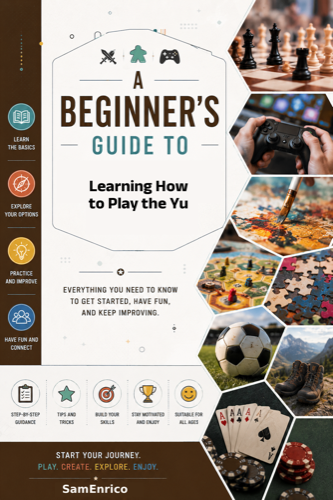 Learn to Play the YuFishman Petrina$11.99
 AI for Compliance Risk ScoringFishman Petrina$12.99
 GunsmithingFishman Petrina$11.99
 How to Start a Carding Machinery for Textiles Business (Beginners Guide)Fishman Petrina$11.99
You may also like
 Hong Kong Handover 1997Dunn Johnnie$11.99
 Zumba For Postnatal Recovery CourseNeal Christian$11.99
 Zumba for BeginnersLadner Nikia$11.99
 YouTube Comment Mining GuideHumes Pandora$12.99
 Worry Box MeditationCarlin Rudy$11.99
 Workplace Stress MeditationNguyen Lynn$11.99
 Workplace Stress and Sleep RepairHawley Ivory$11.99
 Workplace Perfectionism CureDelaney Jeffry$11.99
 Workplace Injustice Anger GuideWallen Isabelle$11.99
 Work Addiction and Burnout LinkGreenwood Ester$11.99
 Women in Yoga and WellnessBeattie Galina$11.99
 Women in Stand Up ComedyChun Evangeline$11.99