
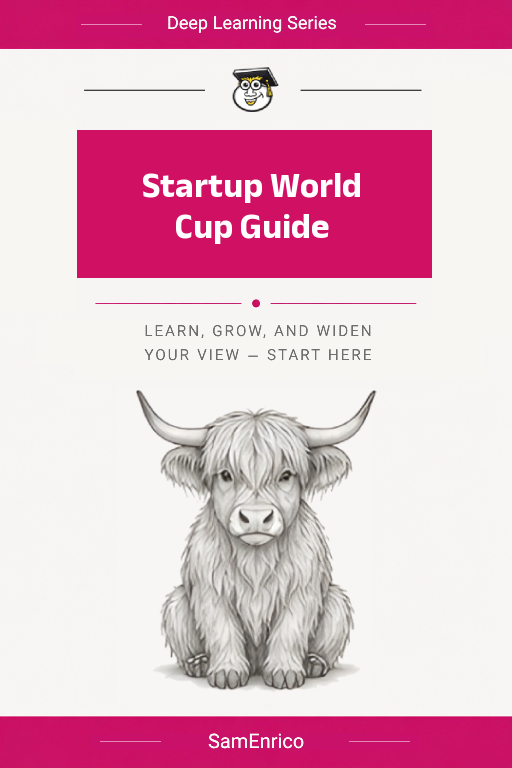
Non-FictionStartup GuideNon-Dilutive Grants
Startup World Cup Guide eBook
Compete in Startup World Cup. Global competition w
Compete in Startup World Cup. Global competition with 1M investment prize.
Formats
Free sample
Chapter 1: The $1M Illusion--–- Most founders enter the Startup World Cup believing they are competing for a glorified grant. They imagine a million-dollar check arriving by Fed Ex, no strings attached, to be spent on salaries, marketing campaigns, or perhaps a celebratory office party. This belief is the first and most dangerous mistake you will make on your journey to the SWC finals.The $1 million prize is not a grant. It is an investment. And the difference between those two words has destroyed the dreams of more than one winner who thought they had crossed the finish line, only to discover they had merely reached the starting line of a much longer race.This chapter shatters the $1 million illusion.
You will learn exactly what the prize really is, who is writing the check and why, how the money flows from regional qualifiers to the San Francisco finals, and—most importantly—how to shift your mindset from "contestant" to "term sheet negotiator" before you ever set foot on stage.The Fed Ex Fantasy: Why Founders Get the Prize Wrong Every year, a hundred regional winners fly to San Francisco believing they understand the prize. They have read the website: "$1 million investment." They have heard the testimonials from past winners. Yet somehow, the gravitational pull of the word "prize" distorts their preparation.The Fed Ex Fantasy sounds like this: "We win. They wire the money. We hire three engineers and double our marketing budget.
Done."This fantasy is seductive because it aligns with how most startup competitions work. Demo days offer grants. University pitch contests offer no-strings-attached cash. Government innovation awards offer non-dilutive funding. Founders become conditioned to think of competition money as free fuel.SWC is different because SWC is not organized by a university or a government agency.
It is organized by Pegasus Tech Ventures, a Top 25 Silicon Valley venture capital firm with over $2 billion in assets under management. Pegasus is not a philanthropic organization. It is not a foundation dedicated to supporting entrepreneurs out of the goodness of its corporate heart. Pegasus is a for-profit investment firm with limited partners who expect returns.When Pegasus offers $1 million to a winner, they are doing what VCs do: deploying capital into a company they believe will return multiples of that investment. The stage is a competition.
The underlying transaction is a term sheet.The Anatomy of the $1 Million Prize Let us read the fine print that most founders skip. The official SWC rules state that the $1 million prize is awarded as an investment "structured as a convertible note or equity financing, subject to due diligence and standard investment documents."Those seven words—"subject to due diligence and standard investment documents"—are where the Fed Ex Fantasy dies.Here is what actually happens when you win:Step 1: You are declared champion on stage. Confetti falls. Photos are taken. You cry, hug your co-founders, and call your mother.Step 2: Pegasus sends you a term sheet.
This document outlines the structure of the investment. Will it be a convertible note with a valuation cap and discount? Will it be a priced equity round? What percentage of your company are they buying? What rights do they receive—board observer?
pro-rata rights for future rounds? information rights?Step 3: You negotiate. Yes, negotiate. The term sheet is not a take-it-or-leave-it offer. Previous winners have successfully negotiated valuation caps, removed onerous clauses, and adjusted the timing of the investment.
Others have accepted the first term sheet and later regretted it.Step 4: Due diligence begins. Pegasus will review your cap table, your intellectual property, your contracts, your financial statements, and your compliance with regulations. If they find something they do not like, the investment can be delayed, renegotiated, or withdrawn.Step 5: You sign and close. Only after all documents are signed does the money hit your bank account.The entire process typically takes 60 to 120 days after the finals. During that time, you are not celebrating.
You are responding to diligence requests and negotiating legal documents.The Convertible Note versus Equity Decision The structure of the $1 million investment matters enormously, yet most founders never think about it until a term sheet lands in their inbox. This section explains the two most common structures so you can prepare before you win.Convertible Note: Pegasus lends your company $1 million. That loan converts into equity during your next priced funding round, typically at a discount to the valuation set by the lead investor in that round, and subject to a valuation cap that limits how high the conversion price can go.Convertible notes are common for early-stage companies that do not yet have a clear valuation. The advantage for you: you delay the valuation discussion until you have more traction. The advantage for Pegasus: they get a discount (typically 20%) and a cap (e.g., $10 million valuation) that protects their downside.Priced Equity Round: Pegasus invests 1milliondirectlyinexchangeforaspecificpercentageofyourcompany,usuallybetween51 million directly in exchange for a specific percentage of your company, usually between 5% and 20%, implying a post-money valuation of 1milliondirectlyinexchangeforaspecificpercentageofyourcompany,usuallybetween55 million to $20 million.Priced rounds are common for companies that already have a lead investor or a clear valuation from a recent funding round.
The advantage for you: you know exactly how much ownership you are giving up. The advantage for Pegasus: they get immediate board rights and a clear ownership stake.Which structure is better? It depends on your traction. If you have a recent funding round at a healthy valuation, push for a priced round that matches or improves that valuation. If you have no clear valuation, a convertible note with a reasonable cap (8millionto8 million to 8millionto12 million for most SWC winners) is usually preferable.The chapter includes a decision matrix in the appendix of this book, but the core rule is simple: never accept a convertible note without a cap, and never accept a priced round at a valuation below your last round.Who Is Pegasus Tech Ventures and What Do They Want?To negotiate effectively, you must understand the party on the other side of the table.
Pegasus Tech Ventures is not a generic VC. It has a specific investment thesis, a specific partnership structure, and specific strategic goals that shape how they evaluate SWC candidates.The Firm: Pegasus was founded in 2011 by Anis Uzzaman, a serial entrepreneur and engineer. The firm manages over $2 billion across multiple funds and has invested in more than 150 companies, including Space X, Air Map, and Nuvia. Unlike many VCs that focus exclusively on software or biotech, Pegasus invests across deep tech, enterprise software, healthcare, and consumer.The Limited Partners: Pegasus's money comes from corporate limited partners, including Mercedes-Benz, Panasonic, Saudi Aramco, and other global industrial giants. These corporations do not invest in Pegasus out of generosity.
They invest because Pegasus provides them with strategic returns—access to innovative startups that can become acquisition targets, pilot partners, or supply chain solutions.The Strategic Goal: When Pegasus runs SWC, they are not running a marketing stunt. They are running a scouting mechanism for their corporate partners. Mercedes-Benz wants to see automotive tech. Panasonic wants to see battery and electronics innovation. Saudi Aramco wants to see energy and industrial tech.This explains why SWC winners tend to be deep-tech…
This is the end of the free sample. Get the eBook to keep going. Buy now
About this book
Details
- Author
- Royer Alejandra
- Publisher
- SamEnrico
- Language
- English
- Genre
- Non-Fiction, Startup Guide, Non-Dilutive Grants
- Released
- 2026-05-30
- Pages (approx.)
- 148
- Available as
- eBook, Audiobook

Read better in the ZLOADR app
Your eBooks on your phone or tablet. Sign in with your SamEnrico account and start reading.
More by Royer Alejandra
 Papua New Guinea TrekRoyer Alejandra$11.99
 The Sleep Apnea Brain ConnectionRoyer Alejandra$11.99
 Remote Commute ReplacementRoyer Alejandra$11.99
 Lonely Musician On TourRoyer Alejandra$11.99
 The High Cortisol Management GuideRoyer Alejandra$11.99
 Blood on the Andes: Pizarro's Betrayal at Cajamarca (1532)Royer Alejandra$11.99
 Learn to Play the Bass ClarinetRoyer Alejandra$11.99
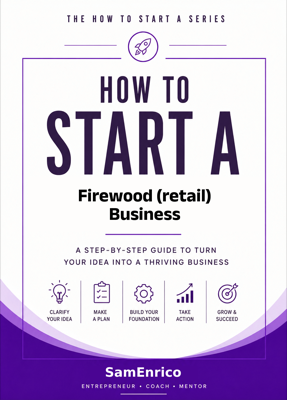 How to Start a Firewood (retail) Business (Beginners Guide)Royer Alejandra$11.99
 Barytocalcite MiningRoyer Alejandra$11.99
 EE for RA TA ExperienceRoyer Alejandra$12.99
You may also like
 Hong Kong Handover 1997Dunn Johnnie$11.99
 Zumba For Postnatal Recovery CourseNeal Christian$11.99
 Zumba for BeginnersLadner Nikia$11.99
 YouTube Comment Mining GuideHumes Pandora$12.99
 Worry Box MeditationCarlin Rudy$11.99
 Workplace Stress MeditationNguyen Lynn$11.99
 Workplace Stress and Sleep RepairHawley Ivory$11.99
 Workplace Perfectionism CureDelaney Jeffry$11.99
 Workplace Injustice Anger GuideWallen Isabelle$11.99
 Work Addiction and Burnout LinkGreenwood Ester$11.99
 Women in Yoga and WellnessBeattie Galina$11.99
 Women in Stand Up ComedyChun Evangeline$11.99