

Non-FictionStrategic AtlasTools
Stanley Black Decker eBook
Evaluate tools and storage, security business, out
by Lorenz Reva
Evaluate tools and storage, security business, outdoor products, and demand cyclicality in housing.
Formats
Free sample
Chapter 1: More Than a Hammer--The first time I met a man who had spent $4,000 on a toolbox, I thought he was either lying or insane.It was a humid Tuesday morning in Phoenix, July, 110 degrees in the shade, and I was standing on a jobsite that looked like a war zone. Rebar poking out of half-poured concrete, copper tubing coiled like snakes, the smell of fresh lumber and hotter asphalt. The foreman—a wiry fifty-something named Dave with a DEWALT tattoo on his forearm (yes, an actual tattoo of a power tool brand)—was showing me his rig. He opened the lid of a rolling cabinet the size of a small refrigerator. Inside, organized like surgical instruments, were thirty-seven cordless tools, forty-two batteries, six chargers, and a radio that could probably call Mars."How much?" I asked."Four grand, easy," he said, patting the metal side.
"But that's not the point. The point is, if I wanted to switch to Milwaukee, it would cost me twelve."I did the math. "Twelve thousand dollars?""Twelve thousand," he confirmed. "Because I'd have to replace every tool, every battery, every charger, and—here's the kicker—every organizer. The Milwaukee boxes don't fit in my truck the same way.
The drawers are a different size. I'd lose three inches of bed space and gain a month of frustration. So yeah. I'm a DEWALT guy for life."That conversation changed how I think about business.Stanley Black & Decker is not a tool company. Not really.
Tools are just the visible layer, the part that scratches the itch of physical creation. Underneath, SWK is a masterclass in customer captivity—a portfolio of brands designed not just to sell you a hammer today, but to make it financially ruinous to buy a different hammer tomorrow. It is a lesson in brand architecture, switching costs, and the quiet mathematics of loyalty. And it begins with a simple truth: the money is not in the thing you buy. The money is in the ecosystem that makes leaving painful.The Myth of the Simple Tool Company Ask the average person what Stanley Black & Decker makes, and they will say "hammers" or "drills" or maybe "those yellow power tools." Ask them to name a competitor, and they will say "Milwaukee" or "Makita" or "Ryobi." Ask them to explain the difference between a DEWALT hammer drill and a CRAFTSMAN hammer drill, and their eyes will glaze over.This is the first barrier to understanding the company.
SWK sells identity, not tools.Consider the jobsite where I met Dave. There were fifteen electricians, plumbers, and framers working that day. Every single one of them carried DEWALT. Not because DEWALT is objectively better in every metric—though it is excellent—but because DEWALT signals something to other tradesmen. Yellow and black says, "I am a professional.
I do this for a living. I have invested in my craft." It is the tool equivalent of a master mechanic wearing a Snap-on jacket instead of a Harbor Freight hoodie. The tool is a credential.Now walk into a suburban garage on a Saturday morning. There, a dad is hanging a shelf. His drill is black and orange—CRAFTSMAN.
He is not a professional. He is a pro-sumer, a serious amateur who wants quality but doesn't need jobsite durability. He grew up watching his father use Craftsman tools, and that memory carries weight. His drill is not a credential. It is a inheritance.Now walk into a college apartment where a recent graduate is assembling IKEA furniture.
Her screwdriver is BLACK+DECKER. She bought it at Target for $29.99. She will use it three times a year, lose it in a move, and replace it with whatever is cheapest at the nearest store. She does not think about brand loyalty. She thinks about getting the shelf on the wall before her parents visit.Three customers.
Three brands. One company.This is the genius of SWK's brand architecture: each label occupies a distinct psychological territory with minimal overlap. DEWALT owns the professional jobsite. CRAFTSMAN owns the serious homeowner and light tradesman. BLACK+DECKER owns the casual DIYer and the apartment dweller.
STANLEY owns hand tools and storage—the boring, reliable, high-margin products that professionals buy by the dozen.But architecture is just the blueprint. The real magic is in the walls that prevent customers from walking into another brand's room.The House of Brands: No Sibling Rivalry One of the hardest problems in multi-brand strategy is cannibalization. If you own both the premium brand and the mid-tier brand, how do you stop the mid-tier brand from stealing sales from the premium brand? How do you ensure that a customer who could afford DEWALT doesn't "trade down" to CRAFTSMAN and save $50, robbing you of margin?SWK's answer is a masterclass in segmentation through friction.Distribution channels: DEWALT sells primarily through industrial suppliers (Grainger, MSC Direct, construction supply houses) and the pro desks at Home Depot. CRAFTSMAN sells through the main aisles of Lowe's, Ace Hardware, and Amazon.
A professional electrician does not wander into a Lowe's on a Tuesday morning to browse. A homeowner does not have an account at an industrial supplier. The channels themselves filter the customer.Features and specifications: DEWALT uses brushless motors, which are more efficient, more durable, and more expensive to manufacture. CRAFTSMAN uses brushed motors in many tools—perfectly adequate for a homeowner who drills ten holes a month, but insufficient for a professional who drills ten holes an hour. The performance gap is real, not artificial.
A professional who buys CRAFTSMAN will notice the difference immediately. A homeowner who buys DEWALT will pay for capability they will never use.Pricing and promotion: DEWALT rarely discounts. CRAFTSMAN runs frequent promotions (buy a drill, get a battery free). This is not random. It reflects the price sensitivity of each segment.
A professional is buying a tool to make money; the tool pays for itself in a week. Price is secondary. A homeowner is buying a tool to save money on repairs; every dollar matters. Promotion is essential.Warranty and service: DEWALT offers a three-year limited warranty and a network of service centers that will repair a tool overnight. CRAFTSMAN offers a one-year warranty and encourages replacement over repair.
The professional cannot afford a week of downtime waiting for a replacement tool. The homeowner can.The result is a portfolio where each brand reinforces the others. A young electrician starts with CRAFTSMAN because that's what his father used. Five years later, when he needs more power and faster service, he graduates to DEWALT. He never considers Milwaukee because he already owns ten CRAFTSMAN batteries—and here we arrive at the true heart of the moat.The Battery Trap: How a $50 Power Cell Locks You In for Life The single most important product Stanley Black & Decker has ever made is not a tool.
It is the DEWALT 20V MAX lithium-ion battery.A battery costs about 50tomanufacture.Itsellsfor50 to manufacture. It sells for 50tomanufacture.Itsellsfor99 to $149, depending on capacity. By itself, it is a decently profitable accessory. But its real value is not in the margin. Its real value is in the switching cost it creates.Here is the logic:A professional…
This is the end of the free sample. Get the eBook to keep going. Buy now
About this book
Details
- Author
- Lorenz Reva
- Publisher
- SamEnrico
- Language
- English
- Genre
- Non-Fiction, Strategic Atlas, Tools
- Released
- 2026-06-01
- Pages (approx.)
- 143
- Available as
- eBook, Audiobook

Read better in the ZLOADR app
Your eBooks on your phone or tablet. Sign in with your SamEnrico account and start reading.
More by Lorenz Reva
 Brain Training Games Evaluation GuideLorenz Reva$11.99
 Winter Fireplace GuideLorenz Reva$11.99
 Sober Podcast Listening GuideLorenz Reva$11.99
 Project Quality Assurance Across ProjectsLorenz Reva$11.99
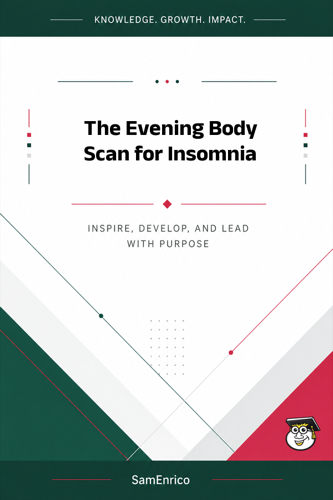 The Evening Body Scan for InsomniaLorenz Reva$11.99
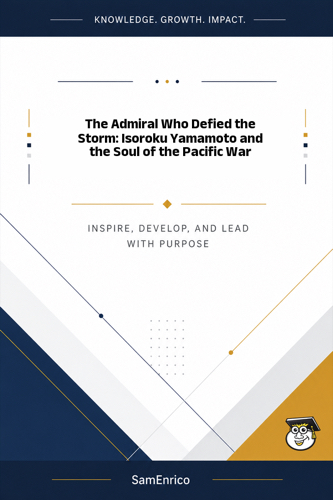 The Admiral Who Defied the Storm: Isoroku Yamamoto and the Soul of the Pacific WarLorenz Reva$11.99
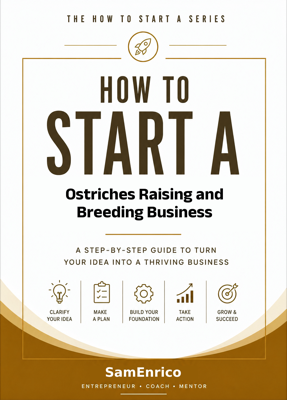 How to Start a Ostriches Raising and Breeding Business (Beginners Guide)Lorenz Reva$11.99
 College Essay Sensory Details GuideLorenz Reva$12.99
 Understanding Noonan Like SyndromeLorenz Reva$17.99
 Rubber TradingLorenz Reva$11.99
You may also like
 Hong Kong Handover 1997Dunn Johnnie$11.99
 Zumba For Postnatal Recovery CourseNeal Christian$11.99
 Zumba for BeginnersLadner Nikia$11.99
 YouTube Comment Mining GuideHumes Pandora$12.99
 Worry Box MeditationCarlin Rudy$11.99
 Workplace Stress MeditationNguyen Lynn$11.99
 Workplace Stress and Sleep RepairHawley Ivory$11.99
 Workplace Perfectionism CureDelaney Jeffry$11.99
 Workplace Injustice Anger GuideWallen Isabelle$11.99
 Work Addiction and Burnout LinkGreenwood Ester$11.99
 Women in Yoga and WellnessBeattie Galina$11.99
 Women in Stand Up ComedyChun Evangeline$11.99