
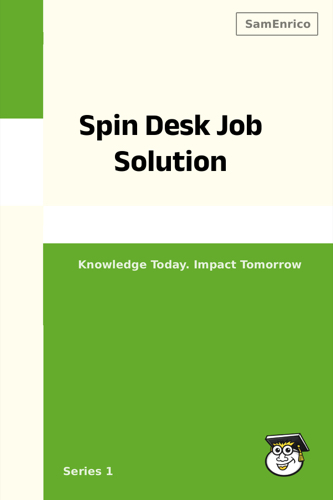
Non-FictionHealth & WellnessPosture
Spin Desk Job Solution eBook
Counteract sitting all day with specific posture a
Counteract sitting all day with specific posture and pedaling techniques.
Formats
Free sample
Chapter 1: The Sitting Lie--–- By the time you finish reading this sentence, you will have been sitting for approximately four seconds longer than your spine was designed to tolerate. That is not an exaggeration or a scare tactic. It is biomechanical fact. The human lumbar spine, when subjected to sustained seated pressure, begins to lose its natural curvature within ninety seconds. Within five minutes, the discs between your vertebrae start hydraulically pumping fluid out into surrounding tissues—fluid that will not return until you stand, walk, or perform any movement that reintroduces spinal loading through the natural upright column.
And yet, most of you reading this book have been sitting for hours. Perhaps decades. And every single one of you has been sold a lie.The lie is simple, seductive, and entirely wrong. It goes like this: Standing is the solution to sitting.Standing desks have become a billion-dollar industry. Corporations install them by the hundreds.
Wellness influencers preach their gospel. Magazine covers promise that if you simply elevate your workstation, you will cure your back pain, burn more calories, and live forever. None of this is true. Or rather, it is true only for a tiny fraction of people under very specific conditions that almost no office worker actually meets. For the rest of you, the standing desk is not a solution.
It is a different problem dressed in nicer furniture.This chapter will dismantle everything you think you know about the chair at your back and the floor beneath your feet. It will explain, with precision and evidence, why sitting is not merely uncomfortable but actively pathological. It will show you why standing, despite its popularity, fails the vast majority of people who try it. And it will introduce the only solution that actually works: dynamic seated movement. Not sitting.
Not standing. Pedaling while seated, with specific posture and technique. This is the Spin Desk Solution.The Quiet Catastrophe of the Office Chair Let us begin with a thought experiment. Imagine, for a moment, that you were designed by an engineer. Your skeleton has 206 bones.
Your muscles contain approximately 600 separate named structures. Your nervous system can transmit signals at nearly 300 miles per hour. You possess the remarkable ability to balance on two legs while turning your head 180 degrees and manipulating objects with fingers that have nineteen individual bones each. This is not a machine built for static loading. This is a machine built for motion.And yet, somewhere around 1950, we collectively decided to imprison this miraculous machine in molded foam and plastic for eight to twelve hours per day.The physiology of sitting is not merely uncomfortable.
It is actively degenerative. Here is what happens to your body within the first hour of seated work.First, your hip flexors—specifically the psoas major and iliacus muscles—begin to shorten. These are deep muscles that attach from your lumbar spine to the inside of your thigh bone. In a standing position, they are at their natural resting length. In a seated position, they are compressed into a shortened state.
After one hour of sitting, this shortening becomes plastic, meaning the muscle fibers begin to reorganize themselves around the shorter length. After eight hours, the change is measurable. After months and years, the psoas becomes permanently shortened, pulling your lumbar spine into an excessive arch when you stand, or worse, creating a cascade of compensations that manifest as lower back pain, hip pain, and knee problems.Second, your gluteal muscles—the largest and most powerful muscles in your body—completely shut off. Electromyography studies have shown that gluteus maximus activity drops by approximately 85 percent during seated work compared to standing. This is not a small change.
This is the equivalent of turning off the main engine of your body while expecting it to perform. The glutes are responsible for hip extension, external rotation, and maintaining pelvic stability. When they turn off, everything above and below them compensates. Your lower back takes over hip extension—it was never designed for this—and your hamstrings become chronically overactive, pulling on the sits bones and contributing to the very hip tightness we just discussed.Third, your metabolism slows. This is not merely about calories.
The enzyme lipoprotein lipase (LPL), which is responsible for breaking down fats in the bloodstream, drops by approximately 90 percent in the legs during prolonged sitting. This is not a typo. Ninety percent. Your legs essentially become metabolically inert. The triglycerides and fatty acids that would normally be processed for energy instead circulate in your bloodstream, contributing to inflammation, insulin resistance, and the gradual stiffening of your arteries.
Standing restores some LPL activity. Walking restores more. But pedaling? Pedaling at even the slowest cadence—we will discuss exact numbers in Chapter 7—restores near-normal LPL activity in the legs because the rhythmic compression and decompression of the leg muscles acts as a metabolic pump.Fourth, your spine begins to deform. The intervertebral discs are not solid structures.
They are hydrated gel-filled cushions that rely on a hydraulic pumping mechanism for nutrient exchange. When you sit, you load the discs unevenly—more pressure on the posterior (back) side of the disc than the anterior (front) side. Over time, this uneven loading causes the disc to bulge posteriorly. This is not theoretical. Magnetic resonance imaging studies of office workers have shown measurable disc height loss and posterior bulging after just one day of prolonged sitting.
The discs do not heal quickly either. They are among the slowest-healing tissues in the body because they lack direct blood supply. Every hour of unnecessary sitting is an hour of disc degeneration that may take weeks to reverse—if it reverses at all.This is the quiet catastrophe. It happens invisibly, without pain at first, while you answer emails and attend meetings and feel productive. By the time the pain arrives—usually in the form of low back tightness, sciatica, or gluteal tendinopathy—the damage has been accumulating for years.The Standing Desk Delusion Given this grim physiology, it is no surprise that standing desks have become popular.
The logic seems unassailable: if sitting is bad, standing must be good. This is the kind of binary thinking that sells products but does not survive contact with human biology.Standing desks fail for three reasons, each of which exposes the flaw in the "sitting versus standing" framing.Reason One: Standing Is Still Static The problem with sitting is not primarily the angle of your joints. The problem is the absence of movement. This is a crucial distinction that most wellness advice misses entirely. A standing desk, used in the conventional way, simply exchanges one static posture for another.
Your hip flexors are no longer shortened, but they are still motionless. Your glutes are no longer inhibited by the chair, but they are still inactive. Your spine is no longer flexed, but it is still not moving through its natural ranges of motion.The research on standing desks is surprisingly disappointing. A systematic review published in the journal Applied Ergonomics found that standing desks reduce sitting time by an average of only thirty minutes per day. The remaining seven and a half hours are still static—just vertical static instead…
This is the end of the free sample. Get the eBook to keep going. Buy now
About this book
Details
- Author
- Mccaffrey Thomasina
- Publisher
- SamEnrico
- Language
- English
- Genre
- Non-Fiction, Health & Wellness, Posture
- Released
- 2026-06-08
- Pages (approx.)
- 147
- Available as
- eBook, Audiobook

Read better in the ZLOADR app
Your eBooks on your phone or tablet. Sign in with your SamEnrico account and start reading.
More by Mccaffrey Thomasina
 Email Distraction Management HandbookMccaffrey Thomasina$11.99
 Digital Study ToolsMccaffrey Thomasina$11.99
 The Quit Smoking Affirmation GuideMccaffrey Thomasina$11.99
 Parent Loss Memorial PlanningMccaffrey Thomasina$11.99
 Trello Card RemindersMccaffrey Thomasina$11.99
 The Death Anxiety MeditationMccaffrey Thomasina$11.99
 Motivation EQ Enhancement CourseMccaffrey Thomasina$11.99
 Foster Child Death GriefMccaffrey Thomasina$11.99
 The White Death: The Swiss Mercenaries Who Shaped Renaissance WarfareMccaffrey Thomasina$11.99
 Zero Day: The Untold Story of Stuxnet’s Shadow WarMccaffrey Thomasina$11.99
 The Bridge That Defied the Desert: The Visionary Designs of Yacoub the EngineerMccaffrey Thomasina$11.99
 How to Become a Acid-plant HelperMccaffrey Thomasina$11.99
You may also like
 Hong Kong Handover 1997Dunn Johnnie$11.99
 Zumba For Postnatal Recovery CourseNeal Christian$11.99
 Zumba for BeginnersLadner Nikia$11.99
 YouTube Comment Mining GuideHumes Pandora$12.99
 Worry Box MeditationCarlin Rudy$11.99
 Workplace Stress MeditationNguyen Lynn$11.99
 Workplace Stress and Sleep RepairHawley Ivory$11.99
 Workplace Perfectionism CureDelaney Jeffry$11.99
 Workplace Injustice Anger GuideWallen Isabelle$11.99
 Work Addiction and Burnout LinkGreenwood Ester$11.99
 Women in Yoga and WellnessBeattie Galina$11.99
 Women in Stand Up ComedyChun Evangeline$11.99