
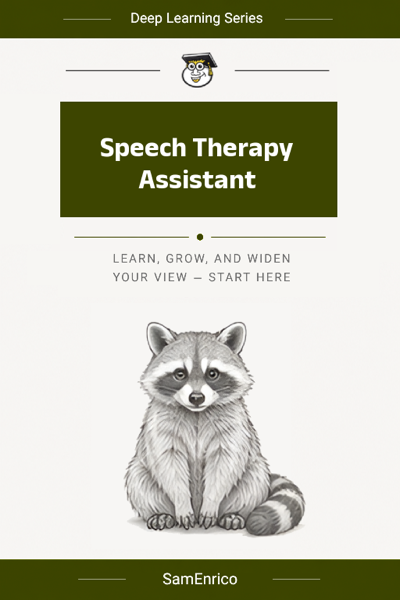
Non-FictionInformativeEducational
Speech Therapy Assistant Audiobook
A Coursebook on Speech Therapy Assistant
A Coursebook on Speech Therapy Assistant
Formats
Free sample
Chapter 1: The Skilled Technician...--The first time Maria walked into a speech therapy clinic as an assistant, she assumed her job was to help the therapist—carrying materials, comforting waiting children, and maybe running a quick game of Go Fish while the Speech-Language Pathologist (SLP) finished paperwork. Six months into her training, after a near-miss where she almost altered a treatment goal without realizing it, she learned a harder truth: the Speech-Language Pathology Assistant (SLPA) is not a "helper." It is a skilled technical position requiring precise implementation, rigorous data collection, and an unwavering commitment to working within a defined scope of practice. This chapter establishes the SLPA as exactly that: a trained paraprofessional who executes clinical plans with fidelity, operates under mandatory supervision, and navigates a complex landscape of state regulations, certification requirements, and employment settings. By the end of this chapter, you will understand not only what an SLPA does, but also the legal and professional boundaries that define the role—boundaries that protect you, your supervising SLP, and the clients you serve.1.1 Defining the SLPA: History and Evolution of the Paraprofessional Role The role of the speech-language pathology assistant did not emerge from a single moment of regulatory clarity. Instead, it evolved over decades in response to a practical problem: as the scope of speech-language pathology expanded and caseloads grew, licensed SLPs could not be everywhere at once.
In the 1970s, school districts and rehabilitation centers began hiring untrained aides to supervise drill work, organize materials, and provide additional practice time for clients. These early aides operated in a legal gray zone—no standardized training, no defined scope of practice, and no mandatory supervision requirements. Some aides worked effectively under close supervision; others, left alone, made clinical decisions they were never trained to make.The turning point came in the 1980s, when the American Speech-Language-Hearing Association (ASHA) began formalizing the assistant role. In 1987, ASHA published its first guidelines for the use of support personnel, distinguishing between "aides" (who required direct, on-site supervision) and "assistants" (who had completed academic training and could work under general supervision). By the 1990s, several states had created licensure or registration pathways for speech-language pathology assistants.
Today, the SLPA is recognized as a distinct paraprofessional role in most states, with defined educational requirements, scopes of practice, and supervision mandates.What does this history mean for you? It means that the SLPA role is not…
This is the end of the free sample. Get the Audiobook to keep going. Buy now
About this book
Details
- Author
- Cowley Delilah
- Publisher
- SamEnrico
- Language
- English
- Genre
- Non-Fiction, Informative, Educational
- Released
- 2026-06-02
- Pages (approx.)
- 159
- Available as
- eBook, Audiobook

Listen in the VoxFlicks app
Audiobooks and audio dramas wherever you go. Sign in with your SamEnrico account and press play.
More by Cowley Delilah
 Sleep Meditation HandbookCowley Delilah$11.99
 The Antarctic Overland TrekCowley Delilah$11.99
 Medical Student Stress CourseCowley Delilah$11.99
 Combat Veteran Stress ReintegrationCowley Delilah$11.99
 Antwerp Heist Hidden Fortune TheoryCowley Delilah$11.99
 Starlight Pilgrims: The Last Ark's SecretCowley Delilah$11.99
 The Spark That Lit the World: The Untold Story of Nikola Tesla’s Wardenclyffe TowerCowley Delilah$11.99
 Remote One on One GuideCowley Delilah$12.99
 No Code API Integration GuideCowley Delilah$12.99
 How to Become a Joiner ApprenticeCowley Delilah$11.99
 Understanding Fetal Phenothiazine SyndromeCowley Delilah$17.99
You may also like
 Hong Kong Handover 1997Dunn Johnnie$11.99
 Zumba For Postnatal Recovery CourseNeal Christian$11.99
 Zumba for BeginnersLadner Nikia$11.99
 YouTube Comment Mining GuideHumes Pandora$12.99
 Worry Box MeditationCarlin Rudy$11.99
 Workplace Stress MeditationNguyen Lynn$11.99
 Workplace Stress and Sleep RepairHawley Ivory$11.99
 Workplace Perfectionism CureDelaney Jeffry$11.99
 Workplace Injustice Anger GuideWallen Isabelle$11.99
 Work Addiction and Burnout LinkGreenwood Ester$11.99
 Women in Yoga and WellnessBeattie Galina$11.99
 Women in Stand Up ComedyChun Evangeline$11.99