
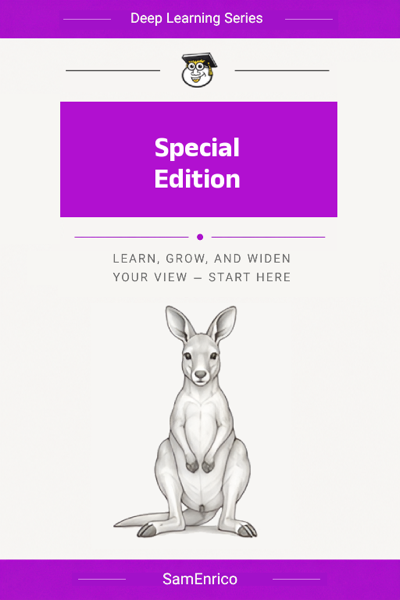
Non-FictionInformativeEducational
Special Edition eBook
A Coursebook on Special Edition
by Liles Miyoko
A Coursebook on Special Edition
Formats
Free sample
Chapter 1: The Object Revolution...--The book you are holding — the one with the sprayed edges you may have noticed, the foil-stamped cover, the heavier-than-normal paper — is not just a book. It is a manifesto. Every choice made in its production, from the weight of the stock to the finish on the cover, is a deliberate argument for a single proposition: that the physical book, as an object, has become as culturally significant as the text it carries. This proposition is not hyperbole. It is a data-backed reality that has reshaped the publishing industry over the past five years, creating a multi-billion-dollar market where a 16.99tradepaperbackandits16.99 trade paperback and its 16.99tradepaperbackandits45.00 "special edition" counterpart can sit side by side on a shelf, and the more expensive version will sell out first.This chapter is called "The Object Revolution" because that is precisely what has occurred.
Not a trend. Not a fad driven by Tik Tok and temporary enthusiasm. A revolution — a fundamental restructuring of how readers relate to books, how publishers think about their products, and how value is assigned to the written word in the twenty-first century.To understand the special edition market, you must first understand a paradox that has defined the last decade of media consumption. At the exact moment that digital media became ubiquitous — streaming services, e-readers, audiobooks, podcasts, social media — a counter-movement emerged. People did not abandon physical objects.
They began to treasure them more. Vinyl records returned. Film photography experienced a renaissance. Physical video game releases became collector's items. And books — beautiful, tactile, designed books — became status symbols, decor, and emotional anchors in a world that felt increasingly weightless.This is not nostalgia, though nostalgia plays a role.
This is a psychological response to digital fatigue. When every text message is ephemeral, when every social media post disappears into an algorithmic void, when every Kindle book is one software glitch away from vanishing — the physical book becomes a bulwark against impermanence.The special edition, in particular, is the ultimate expression of this hunger for the tangible. It says: this book matters enough to be beautiful. This story matters enough to be preserved. This author matters enough to be collected.Understanding the Landscape: What the Numbers Actually Say Before we go any further, let us ground this conversation in data.
The special edition market, as defined by the taxonomy we established in the front matter of this book, generated approximately $2.1 billion in global revenue in 2024. This figure includes direct sales from publishers, subscription box revenue, and secondary market transactions (e Bay, Abebooks, Pango Books, and private collector groups). The year-over-year growth rate from 2022 to 2024 was 47% — a compound annual growth rate that would make any venture capitalist salivate.But aggregate numbers can be misleading. The more instructive data points are behavioral. According to a 2024 survey of 5,000 self-identified "book collectors" conducted by the market research firm Book Net, the average collector spends $1,200 annually on special editions.
Forty-three percent of that spend is on books they have already read in another format. Twenty-eight percent is on books they have not yet read but bought because of the edition's aesthetic qualities. The remaining twenty-nine percent is on gifts and speculative purchases (buying multiple copies of a limited edition with the intention of trading or reselling).These numbers tell a story that contradicts traditional publishing wisdom. For a century, the industry operated on a simple premise: readers buy books to read them. The object was a vessel for the story, nothing more.
Special editions have shattered that premise. A significant portion of the market is now buying books as objects first, reading experiences second — or not at all.This is not a critique of those buyers. It is an observation of a market shift that any publisher, author, or entrepreneur in this space must internalize. The person who buys a $75 collector's edition of a 500-page fantasy novel may never read that copy. They may already have the paperback for reading.
They may listen to the audiobook. They may simply display the special edition on a "shelfie" (a photograph of their bookshelf posted to social media) and derive satisfaction from its presence in their curated collection. That satisfaction is real. That satisfaction drives revenue. And that satisfaction is the engine of the Object Revolution.The Three Forces That Created the Boom No revolution has a single cause, and the special edition boom is no exception.
Three distinct forces converged between 2020 and 2024, creating conditions that allowed what was once a niche hobby (book collecting) to become a mainstream market force.Force One: The Algorithmic Aesthetics of Book Tok The first force is the most visible and the most misunderstood. Book Tok — the book community on Tik Tok — is often credited with creating the special edition boom. This is both true and incomplete. Book Tok did not invent the desire for beautiful books. That desire has existed for centuries, from illuminated manuscripts to the Arts and Crafts movement's fine press editions.
What Book Tok did was provide an algorithmic distribution mechanism for aesthetic preference.Consider how book discovery worked before Tik Tok. A reader might see a new release on a bookstore display, read a review in a newspaper or on Goodreads, or receive a recommendation from a friend. All of these channels prioritized content (the story, the author, the genre) over form (the physical book as object). Book Tok inverted this priority. When a user scrolls through their For You Page, they are not reading reviews.
They are watching videos. And the videos that perform best — that hold attention, that generate saves and shares and comments — are overwhelmingly visual.A video of someone unboxing a special edition with sprayed edges, a reversible dust jacket, and a signed tip-in page is inherently more watchable than a video of someone describing a plot. The camera lingers on the edges as they fan the pages. The lighting catches the foil stamping. The sound of the slipcase opening is satisfyingly crisp.
These sensory inputs trigger dopamine responses that text cannot replicate.When Book Tok users see a beautiful book, they want to own that specific object. Not the story — although they may also want the story — but that object, with those specific design choices. The result is demand that is hyper-specific to editions. A standard trade paperback of the same title might sit on shelves while the sprayed-edge "Book Tok edition" sells out in hours.This dynamic has given rise to a new kind of influencer: the "book unboxer." These creators have followings in the hundreds of thousands, built entirely around the ritual of opening packages containing special editions. They film themselves removing the shrink wrap, examining the edges, testing the bookmark ribbon, and arranging the book on their shelves.
Their audiences watch not for plot summaries but for the vicarious pleasure of experiencing a beautiful object.Publishers who ignore the visual nature of Book Tok do so at their peril. A special edition that photographs well — that has high-contrast edges, that uses metallics that catch light, that has a slipcase with interesting texture — has a massive advantage over one that does not. The algorithm favors the photogenic.Force Two: The Subscription Box Supply Chain The second…
This is the end of the free sample. Get the eBook to keep going. Buy now
About this book
Details
- Author
- Liles Miyoko
- Publisher
- SamEnrico
- Language
- English
- Genre
- Non-Fiction, Informative, Educational
- Released
- 2026-05-11
- Pages (approx.)
- 152
- Available as
- eBook, Audiobook

Read better in the ZLOADR app
Your eBooks on your phone or tablet. Sign in with your SamEnrico account and start reading.
More by Liles Miyoko
 The Environmental Triggers GuideLiles Miyoko$11.99
 Jealousy and InfidelityLiles Miyoko$11.99
 Asking Better Questions GuideLiles Miyoko$11.99
 The Self Talk for Public HumiliationLiles Miyoko$11.99
 TM for Cosmetic Surgery DecisionsLiles Miyoko$11.99
 The 444-Day Standoff: The Untold Story of the Iranian Embassy SiegeLiles Miyoko$11.99
 How to Start a Cinematographic Sensitized Film Business (Beginners Guide)Liles Miyoko$11.99
 Understanding Tomaculous NeuropathyLiles Miyoko$17.99
 OBS Replaces Wirecast GuideLiles Miyoko$12.99
 High Risk Invoice FactoringLiles Miyoko$12.99
You may also like
 Hong Kong Handover 1997Dunn Johnnie$11.99
 Zumba For Postnatal Recovery CourseNeal Christian$11.99
 Zumba for BeginnersLadner Nikia$11.99
 YouTube Comment Mining GuideHumes Pandora$12.99
 Worry Box MeditationCarlin Rudy$11.99
 Workplace Stress MeditationNguyen Lynn$11.99
 Workplace Stress and Sleep RepairHawley Ivory$11.99
 Workplace Perfectionism CureDelaney Jeffry$11.99
 Workplace Injustice Anger GuideWallen Isabelle$11.99
 Work Addiction and Burnout LinkGreenwood Ester$11.99
 Women in Yoga and WellnessBeattie Galina$11.99
 Women in Stand Up ComedyChun Evangeline$11.99