
Non-FictionHealth & WellnessFriendsSocial
Social Circle Longevity Guide eBook
Cultivate lifelong friends like Okinawan moais for
Cultivate lifelong friends like Okinawan moais for emotional health.
Formats
Free sample
Chapter 1: The Okinawan Secret--–- On a humid afternoon in 2015, I found myself sitting on a worn tatami mat in the village of Ōgimi, on the northern coast of Okinawa. The woman across from me was 104 years old. Her name was Kame, and she was shelling peas with the steady, unhurried rhythm of someone who had done this same motion perhaps a million times before. She did not look 104. Her eyes were clear.
Her hands, though wrinkled, were steady. She laughed easily—a raspy, genuine sound—when I struggled to pronounce a local greeting. Around us, three other women sat in a loose circle, also shelling peas, also laughing. They had been doing this together, in this same village, for over eighty years.Kame was a member of a Moai—a traditional Okinawan social support group that is widely credited as one of the primary reasons this island produces more centenarians than almost anywhere else on earth. The word Moai translates roughly to "meeting for a common purpose." But that sterile translation misses the texture of what I witnessed that afternoon.
The women did not discuss anything profound while they shelled peas. They talked about the weather. They gossiped about a neighbor's new roof. One of them complained about a sore knee. Another offered a remedy involving ginger and hot compresses.
There was no agenda. No formal check-in. No facilitator. And yet, in that quiet, ordinary hour, something extraordinary was happening: these four women were extending each other's lives.This is not poetry or metaphor. It is biology.
Decades of research, culminating in the landmark Harvard Study of Adult Development and the Blue Zones investigations led by Dan Buettner, have confirmed that the single most powerful predictor of a long, healthy life is not your cholesterol level, your exercise routine, or your genetic inheritance. It is the quality and consistency of your social connections. People with strong, embedded social circles live longer than people without them. They have lower rates of heart disease, dementia, depression, and anxiety. They recover from surgery faster.
They report higher levels of subjective well-being. The effect is so large that the US Surgeon General, Dr. Vivek Murthy, declared loneliness a public health epidemic in 2023, noting that lacking social connection carries a mortality risk equivalent to smoking fifteen cigarettes a day.And yet, despite this overwhelming evidence, most of us are doing the opposite of what Kame and her friends have done. We are lonelier than ever. We have more "friends" on social media and fewer people who would drive us to the emergency room at 3 AM.
We have traded the Moai for the "network," and in doing so, we have stripped our lives of the very thing that keeps us alive.This book is about how to build back what we have lost. It is not a philosophical treatise on the value of friendship—you already know friendship is good. This is a practical, science-based guide to constructing a Moai of your own, whether you are twenty-five and surrounded by strangers in a new city, forty-five and watching your college friendships dissolve into annual holiday cards, or sixty-five and facing retirement with a suddenly empty calendar. The chapters ahead will teach you the architecture of lifelong connection: the five pillars of a durable circle, the 5-5-5 rule for mapping your social portfolio, the tactical playbook for turning acquaintances into allies, the art of attunement in a distracted world, the repair scripts for friendships that have drifted, and the uncomfortable but essential work of planning for the final third of life.But first, we must understand what we are trying to build. And that means returning to Okinawa, not as tourists, but as students of a living tradition that holds the keys to human flourishing.The Blue Zone Discovery In the early 2000s, National Geographic Fellow Dan Buettner assembled a team of demographers, anthropologists, and epidemiologists to identify the world's "Blue Zones"—regions where people live measurably longer, healthier lives than the global average.
They found five: Okinawa (Japan), Sardinia (Italy), Nicoya (Costa Rica), Icaria (Greece), and Loma Linda (California, home to a community of Seventh-day Adventists). Each region had its own dietary quirks and lifestyle habits, but one factor appeared in all five: strong, embedded social networks. In Sardinia, it was the centrality of family. In Nicoya, it was a sense of plan de vida—a reason to live that was deeply social. In Loma Linda, it was regular worship in a tight-knit faith community.
But nowhere was the social structure as explicit, as formalized, and as replicable as in Okinawa.The Okinawan Moai is not a casual book club or a group of friends who text occasionally. It is a committed, lifelong covenant. Traditionally, Moais are formed in childhood, often by parents who enroll their children in a group of five to eight peers who will support each other for the rest of their lives. The group meets regularly—sometimes daily, sometimes weekly—for no reason other than to be together. They contribute financially to a shared pool that can be used in emergencies.
They care for each other's children and aging parents. They show up at the hospital. They attend funerals. They celebrate holidays. And they do all of this not out of obligation, but out of a deep, culturally ingrained understanding that the group is an extension of the self.Kame's Moai, the one I witnessed shelling peas, had been together since she was seven years old.
Ninety-seven years. One of the other women had died two years prior; the group had held a memorial, pooled money for the funeral, and then simply continued meeting. The empty space on the tatami mat was acknowledged but not filled. The group had lost a member, but it had not dissolved. That is the resilience of a true Moai.Now, I can anticipate the objection forming in your mind.
"That's lovely," you might be thinking, "but I am not Okinawan. I did not have a Moai assigned to me in childhood. I am forty-three years old, and my friends are scattered across three time zones. What am I supposed to do? Build a time machine?"This is the central tension of this book—and the central promise.
Yes, childhood Moais have a head start. They have ninety-seven years of shared history. But the research is clear: adult-formed intentional friendship circles can achieve comparable depth, trust, and longevity. They simply require more deliberate architecture. You cannot rely on proximity or accident.
You have to build. And building is what this book will teach you.The Harvard Yardstick The Okinawan Moai is a beautiful story, but stories are not data. Fortunately, the data exists. The Harvard Study of Adult Development is the longest longitudinal study of human happiness ever conducted. Beginning in 1938, researchers tracked 724 men—first as adolescents, then through war, marriage, parenthood, career changes, retirement, and old age.
Later, the study expanded to include their spouses and, eventually, their children. For over eighty years, the researchers collected medical records, blood samples, brain scans, and thousands of hours of interviews. The goal was to answer a deceptively simple question: What makes a good life?The findings have…
This is the end of the free sample. Get the eBook to keep going. Buy now
About this book
Details
- Author
- Desantis Buddy
- Publisher
- SamEnrico
- Language
- English
- Genre
- Non-Fiction, Health & Wellness, Friends, Social
- Released
- 2026-06-10
- Pages (approx.)
- 130
- Available as
- eBook, Audiobook

Read better in the ZLOADR app
Your eBooks on your phone or tablet. Sign in with your SamEnrico account and start reading.
More by Desantis Buddy
 Mindful Walking For CouplesDesantis Buddy$11.99
 Urgent vs Important DistinctionDesantis Buddy$11.99
 Eisenhower Matrix Combined ABCDEDesantis Buddy$11.99
 The Black Dahlia Orson Welles LinkDesantis Buddy$11.99
 Florence and the Birth of Humanism: Petrarch, Boccaccio, and the Renaissance MindDesantis Buddy$11.99
 Marketplace ManagerDesantis Buddy$11.99
 University of Rwanda GuideDesantis Buddy$12.99
 UAE VAT Registration GuideDesantis Buddy$12.99
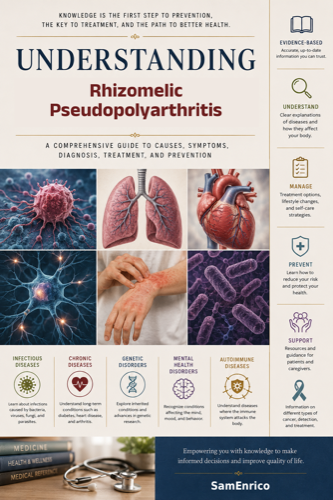 Understanding Rhizomelic PseudopolyarthritisDesantis Buddy$17.99
 How to Become a Dump OperatorDesantis Buddy$11.99
You may also like
 Hong Kong Handover 1997Dunn Johnnie$11.99
 Zumba For Postnatal Recovery CourseNeal Christian$11.99
 Zumba for BeginnersLadner Nikia$11.99
 YouTube Comment Mining GuideHumes Pandora$12.99
 Worry Box MeditationCarlin Rudy$11.99
 Workplace Stress MeditationNguyen Lynn$11.99
 Workplace Stress and Sleep RepairHawley Ivory$11.99
 Workplace Perfectionism CureDelaney Jeffry$11.99
 Workplace Injustice Anger GuideWallen Isabelle$11.99
 Work Addiction and Burnout LinkGreenwood Ester$11.99
 Women in Yoga and WellnessBeattie Galina$11.99
 Women in Stand Up ComedyChun Evangeline$11.99