
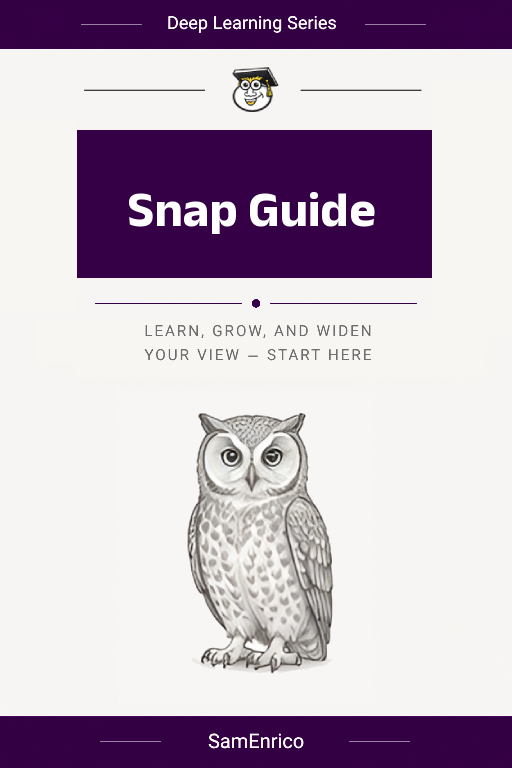
Snap Guide eBook
Explore camera-first engineering, AR creator recru
Explore camera-first engineering, AR creator recruitment, and young-skewing demographic expertise.
Formats
Free sample
Chapter 1: The Seven-Second Window--–- The average human attention span is now shorter than that of a goldfish. This is not a metaphor. In 2000, the average attention span was twelve seconds. By 2025, it had dropped to seven seconds—one second less than a goldfish. Every day, over 300 million Snapchat stories are viewed, each lasting no more than ten seconds.
Tik Tok users watch an average of 167 videos per day, each between fifteen and sixty seconds. Instagram Reels generate more than 200 billion views annually. The world has not just gone mobile. It has gone micro.This chapter is about the most important skill in the modern digital economy: the ability to capture, hold, and convert attention within seconds. Not minutes.
Not hours. Seconds. The seven-second window is the time you have—from the moment someone encounters your content, your message, your product, or your brand—to convince them to stay. If you fail in those seven seconds, you do not get a second chance. The scroll continues.
The tap moves on. The opportunity vanishes forever.Snap Guide is not another book about social media tips or viral hacks. It is a strategic framework for understanding and mastering attention in a world where attention is the scarcest resource. This book draws on neuroscience, behavioral psychology, platform data, and case studies from the most successful creators and brands of the past five years. It reveals the hidden patterns that determine whether content stops the scroll or disappears into the void.This chapter establishes the foundational problem: the attention collapse.
It explains why the seven-second window exists, how it has transformed every industry from marketing to education to leadership, and why most traditional communication strategies fail in this new environment. By the end of this chapter, you will understand the stakes, the science, and the opportunity. You will never look at a notification, a thumbnail, or a subject line the same way again.The Great Attention Collapse Let us begin with the data, because the data is devastating for anyone still using twentieth-century communication strategies.In 1971, Herbert Simon, Nobel laureate and political scientist, wrote: "What information consumes is rather obvious: it consumes the attention of its recipients. Hence a wealth of information creates a poverty of attention." Simon could not have predicted the scale of the information explosion. In 2025, the world creates more data in a single day than was created in all of human history up to the year 2000.
Every minute, 500 hours of video are uploaded to You Tube. Every second, 6,000 tweets are sent. Every day, 300 billion emails are exchanged.The human brain has not evolved to handle this. Our neural architecture is essentially the same as it was 50,000 years ago. We are wired to notice novelty, threat, and reward.
We are not wired to process infinite information streams. The result is what this book calls the Attention Collapse: the progressive shortening of focused attention span driven by the overwhelming abundance of competing stimuli.The Attention Collapse has measurable consequences. Microsoft's 2015 study found that the average human attention span had dropped from twelve seconds to eight seconds—already below the goldfish. Subsequent research has pushed that number lower. Gloria Mark, a researcher at the University of California, Irvine, found that the average screen time on any single task has dropped from two and a half minutes in 2004 to just forty-seven seconds in 2025.
Forty-seven seconds. That is not enough time to read this paragraph twice.Why Seven Seconds Changes Everything The seven-second window is not arbitrary. It is the average time a person spends deciding whether to engage with content before scrolling past. Neuroscience research using eye-tracking technology reveals the pattern. Within the first three seconds, the brain makes an initial assessment: Is this relevant?
Within the next four seconds, it makes a second assessment: Is this valuable? If either answer is no, the thumb moves.This means that every piece of content—every email, every social media post, every video, every advertisement, every presentation slide, every product description—has exactly seven seconds to pass two tests. Test one: Relevance. The viewer must immediately understand why this content matters to them. Test two: Value.
The viewer must immediately sense that the content will reward their attention.Most content fails both tests. A corporate email with a subject line that says "Quarterly Update" fails the relevance test. A Tik Tok video that takes fifteen seconds to get to the point fails the value test. A You Tube thumbnail that is cluttered and confusing fails both. The content that succeeds—the content that stops the scroll, gets the click, earns the watch—is the content that is engineered for the seven-second window.The Platforms Have Already Adapted The major digital platforms understand the seven-second window better than most users.
They have redesigned their algorithms, features, and business models around it.Snapchat pioneered the ephemeral, short-form format. Stories disappear after twenty-four hours, creating urgency and reducing the pressure for polished perfection. The ten-second video limit forces creators to get to the point. Snapchat's interface requires no explanation—swipe up, tap, hold. The learning curve is measured in seconds, not minutes.Tik Tok perfected the algorithm.
The For You Page (FYP) is an attention optimization machine. It tracks exactly when you scroll past a video (under two seconds indicates complete disinterest), when you watch to the end (strong engagement), and when you rewatch (exceptional engagement). The algorithm then serves more content that matches the patterns of what held your attention. Tik Tok creators have learned to front-load value—the first three seconds must contain a hook that promises a payoff within the next fifteen.Instagram Reels copied the format but added its own twist. The square aspect ratio, the ability to share to Stories, and the integration with the main feed create multiple entry points.
Instagram's algorithm prioritizes Reels from accounts you do not follow, which means the seven-second window determines not just engagement but discovery. A Reel that fails the seven-second test will never be shown to new audiences.You Tube Shorts represents the platform's answer to the attention collapse. Traditional You Tube videos still succeed with longer-form content—ten, twenty, even sixty minutes—but those videos are discovered through search or subscription. Shorts are discovered through the shelf, an endless vertical scroll of short-form videos competing for attention. A Short that fails the seven-second test dies instantly, seen by dozens instead of millions.Even Linked In, the professional network, has embraced short-form video and carousel posts.
The Linked In feed now prioritizes posts that generate immediate engagement—likes and comments within the first hour. The seven-second window applies even in B2B contexts. A dense, text-heavy post without a visual hook will be scrolled past just as quickly as a boring Tik Tok.Beyond Social Media: The Seven-Second Window Everywhere The seven-second window is not limited to social media. It applies to every form of digital and many forms of physical communication.Email subject lines have seven seconds to earn an open. Subject lines that are too long get truncated on mobile.
Subject lines that are vague get deleted. Subject lines that promise value but deliver spam destroy sender reputation. The most successful email marketers test…
This is the end of the free sample. Get the eBook to keep going. Buy now
About this book
Details
- Author
- Peak Berenice
- Publisher
- SamEnrico
- Language
- English
- Genre
- Non-Fiction, Strategic Atlas, Talent Intelligence
- Released
- 2026-06-01
- Pages (approx.)
- 125
- Available as
- eBook, Audiobook

Read better in the ZLOADR app
Your eBooks on your phone or tablet. Sign in with your SamEnrico account and start reading.
More by Peak Berenice
 Group Conversation DynamicsPeak Berenice$11.99
 Nobel Rejection and ResiliencePeak Berenice$11.99
 Johnny Carson King of Late NightPeak Berenice$11.99
 Gambling Disorder Diagnosis GuidePeak Berenice$11.99
 The Slack Channel Anger ControlPeak Berenice$11.99
 Whispers in the Void: The Lost Signals of the Beagle 2Peak Berenice$11.99
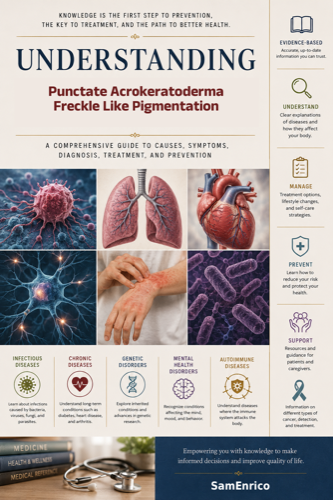 Understanding Punctate Acrokeratoderma Freckle Like PigmentationPeak Berenice$17.99
 USD Receiving for African ExportersPeak Berenice$12.99
 Flooring InstallerPeak Berenice$11.99
 How to Become a Company LaborerPeak Berenice$11.99
You may also like
 Zapier GuideGallardo Alica$12.99
 Toast GuidePacheco Lorina$12.99
 Stripe Early Talent GuideHendrick Santo$12.99
 SpaceX Hiring GuideObryan Kyung$12.99
 Salesforce GuideCuster Cruz$12.99
 Rippling GuideMcinnis Josefine$12.99
 Reddit GuideHolton Danyelle$12.99
 Pinterest GuideLindgren Solange$12.99
 Palantir GuideBarrera Shonda$12.99
 OpenAI GuideFay Zack$12.99
 Nvidia GuideOtero Michiko$12.99
 Instacart GuideDailey Michael$12.99