
Non-FictionSelf-HelpBehavioral Finance
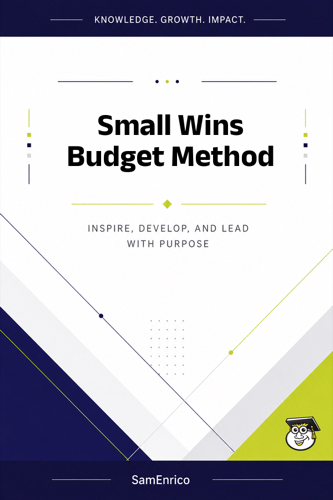
Small Wins Budget Method eBook
Uses micro-achievements to combat financial despai
Uses micro-achievements to combat financial despair.
Formats
Free sample
Chapter 1: The Aspirations Trap--If you are holding this book, there is a good chance you have tried to get your financial life together before. Maybe you downloaded a budgeting app and felt a surge of determination. Maybe you watched a You Tube video about the envelope system or the debt snowball and thought, This time will be different. Maybe you even wrote down ambitious goals—save five thousand dollars, pay off that credit card, build a real emergency fund—and felt, for a few hours or a few days, like a responsible adult.And then something happened. Or rather, nothing happened.
The determination evaporated. The app sent you notifications you stopped opening. The envelope system lasted exactly one grocery trip. The goals you wrote down started to feel less like a roadmap and more like an indictment. You looked at your bank account—the same low number, the same overdraft warning, the same sinking feeling—and you thought, What is wrong with me?Here is what the financial advice industry does not want you to know: nothing is wrong with you.
The problem is not your willpower, your discipline, or your character. The problem is the goals themselves. The problem is the entire framework of ambitious, aspirational, life-changing financial targets that every expert tells you to set. Those goals do not work for the very people who need them most. In fact, research shows that for people in financial despair, big goals do not lead to big results.
They lead to less money, more shame, and deeper paralysis.This chapter will show you why. You will learn about a concept called the Aspirations Gap—the psychological distance between where you are and where you think you should be—and how that gap becomes a trap rather than a motivator. You will encounter a counterintuitive research study from the Philippines that should have upended the entire financial self-help industry but was quietly ignored because its findings were too uncomfortable. And you will begin your first small win: the No-Goal Goal, a seven-day experiment that asks nothing of you except to notice a single number without judging it.By the end of this chapter, you will understand why every previous attempt may have failed. More importantly, you will understand that those failures were not your fault.
They were the predictable result of using the wrong tool for the job. You do not need bigger goals. You need smaller starting lines.The Day the Goals Stopped Working Let us start with a story. Not mine. Yours.Think back to the last time you set a serious financial goal.
Maybe it was January 1st. Maybe it was after a scary credit card statement. Maybe it was after watching a friend buy a house or pay off student loans. You felt that familiar mixture of resolve and shame—resolve to finally get it together, shame that you had not already.You wrote down the goal. You made it specific, measurable, achievable, relevant, and time-bound because some expert told you that SMART goals work.
Save two hundred dollars a month. Pay off five thousand dollars of debt in twelve months. Build a three-month emergency fund by the end of the year.And for a day or a week, you felt good. You felt like someone who had finally turned a corner.Then reality intervened. Your car needed repairs.
Your rent went up. Your hours got cut. Or nothing dramatic happened at all—you just could not find the extra two hundred dollars because there was no extra two hundred dollars. The math did not work. The goal that had felt so motivating on paper now felt like a judge delivering a verdict: You are not good enough.Here is what happened next, and it is so predictable that researchers have studied it across multiple countries and income levels.
When you fail to meet a big, ambitious goal, you do not try harder. You do not get more creative. You do not seek help. You experience shame. Shame is not the same as guilt.
Guilt says, I did something bad. Shame says, I am bad. And when you believe you are bad at something, you avoid it. Avoidance feels better than shame in the short term, so you stop checking your bank account. You stop opening bills.
You delete the budgeting app. You tell yourself you will try again next month.But next month, the same thing happens. The goal is still too big. The gap between where you are and where you think you should be is still too wide. So you feel shame again.
And you avoid again.This is the Aspirations Trap. It is the single most common reason people give up on their finances, and almost no financial advice addresses it directly.The Aspirations Gap: A New Way to See Your Struggle Let me introduce a term that will appear throughout this book: the Aspirations Gap.The Aspirations Gap is the distance between your current financial reality and the financial reality you believe you should have. Notice the word "should." This is not about what is possible or what you genuinely want. This is about what you have been told a responsible adult ought to have. A three-month emergency fund.
A certain credit score. A certain amount in retirement. No debt except a mortgage. These numbers come from financial experts, from social comparison, from family expectations, from the quiet voice that says, By your age, you should have X.The size of your Aspirations Gap does not depend on your income. A doctor with two hundred thousand dollars in student loans and a mortgage can have just as wide a gap as someone living paycheck to paycheck.
A freelance artist making thirty thousand dollars a year might have a narrow gap if their expectations are aligned with their reality. A corporate manager making one hundred fifty thousand dollars might have a crushing gap if they compare themselves to neighbors who make three hundred thousand.The gap is not about math. It is about psychology. And here is the crucial insight from research in behavioral economics and clinical psychology: the Aspirations Gap does not motivate action. It motivates avoidance.When the gap is small—when you are reasonably close to where you think you should be—it can create productive tension.
You might work a few extra hours, cut a few unnecessary expenses, and close the gap. But when the gap is large—when you are so far from where you think you should be that the distance feels impossible—your brain does not see an opportunity. It sees a threat. And the threat response is not hard work. It is freeze, flight, or collapse.This is not a character flaw.
This is how the human nervous system evolved. Your brain is designed to conserve energy and avoid danger. A massive, seemingly impossible financial goal registers as both. So your brain shuts down. It tells you to look at your phone, eat something, go to sleep—anything except confront the impossible thing.You have experienced this.
The more urgent your financial situation became, the harder it was to look at it. The more you needed to…
This is the end of the free sample. Get the eBook to keep going. Buy now
About this book
Details
- Author
- Holly Lashawnda
- Publisher
- SamEnrico
- Language
- English
- Genre
- Non-Fiction, Self-Help, Behavioral Finance
- Released
- 2026-06-06
- Pages (approx.)
- 148
- Available as
- eBook, Audiobook

Read better in the ZLOADR app
Your eBooks on your phone or tablet. Sign in with your SamEnrico account and start reading.
More by Holly Lashawnda
 Burnout Prevention For WomenHolly Lashawnda$11.99
 Haiti Occupation ProtesterHolly Lashawnda$11.99
 Group Fitness MasterHolly Lashawnda$11.99
 Hoffa Murder Weapon Never Found SearchHolly Lashawnda$11.99
 Flickr Photography PerfectionismHolly Lashawnda$11.99
 OKR for Side HustleHolly Lashawnda$11.99
 Guilt Free Self CareHolly Lashawnda$11.99
 The Long White Cloud: New Zealand's Pioneers of ProgressHolly Lashawnda$11.99
 Claire McCardell: The American Designer Who Redefined Fashion with Nature's GraceHolly Lashawnda$11.99
 How to Start a Meteorological Optical Instruments (electronic) Business (Beginners Guide)Holly Lashawnda$11.99
 How to Produce Multimeter AccessoriesHolly Lashawnda$11.99
 Growing BrachyscomeHolly Lashawnda$11.99
You may also like
 Hong Kong Handover 1997Dunn Johnnie$11.99
 Zumba For Postnatal Recovery CourseNeal Christian$11.99
 Zumba for BeginnersLadner Nikia$11.99
 YouTube Comment Mining GuideHumes Pandora$12.99
 Worry Box MeditationCarlin Rudy$11.99
 Workplace Stress MeditationNguyen Lynn$11.99
 Workplace Stress and Sleep RepairHawley Ivory$11.99
 Workplace Perfectionism CureDelaney Jeffry$11.99
 Workplace Injustice Anger GuideWallen Isabelle$11.99
 Work Addiction and Burnout LinkGreenwood Ester$11.99
 Women in Yoga and WellnessBeattie Galina$11.99
 Women in Stand Up ComedyChun Evangeline$11.99