
Free sample
Chapter 1: The Intimacy Advantage--Most speakers dream of large audiences. They imagine standing on a stage, bathed in light, commanding the attention of hundreds or thousands of faces. They measure success by the size of the room, the volume of applause, the number of social media followers gained from a single keynote. But here is a truth that experienced speakers learn over time, often after years of chasing crowds that never quite delivered the results they hoped for: small audiences are often more valuable than large ones.Not easier. Not less stressful.
More valuable.This chapter reframes how you think about audience size. It challenges the assumption that bigger is always better—an assumption embedded in our culture from arena concerts to stadium sports to megachurches. You will learn why smaller audiences offer advantages that large audiences cannot match, including deeper connections, higher engagement, more immediate feedback, and exponentially greater opportunities for conversion from listener to client. You will understand the quality-over-quantity mindset that separates successful small-audience speakers from those who constantly chase bigger rooms only to find themselves exhausted and unfulfilled. And you will discover how to leverage the intimacy advantage to build a speaking career that is sustainable, profitable, and deeply fulfilling.By the end of this chapter, you will see small rooms not as a consolation prize or a stepping stone to something bigger, but as the most valuable speaking environments you will ever enter.
You will stop apologizing for speaking to twelve people and start celebrating it. You will understand something that the most successful speakers—the ones who get paid the most per hour, who have the deepest client relationships, who never struggle to fill their calendars—already know: small is beautiful. Small is profitable. Small is the secret.Let us begin by defining our terms. For the purposes of this book, a "small audience" is any group where you, as the speaker, can reasonably make individual eye contact with every person, receive real-time verbal or non-verbal feedback, and engage in genuine dialogue.
This typically means fifty people or fewer. However, the principles in this book apply up to one hundred people in highly interactive settings. Beyond one hundred, the dynamics shift to what we call "large audience" speaking—a different discipline covered by other resources. This book is for everyone else: the boardroom presenter, the workshop facilitator, the PTA meeting speaker, the library event presenter, the nonprofit board retreat leader, the corporate trainer working with teams of fifteen. This book is for you.Section 1.1: Why Smaller Is Actually Better The speaking industry has long celebrated quantity over quality.
Speakers boast about the size of their audiences on their websites. Event planners ask for attendance numbers when booking talent. The assumption, rarely examined, is that more people equals more impact, more influence, and more income. But this assumption is flawed in ways that become obvious the moment you calculate the numbers.Professional speaker Zoe Cairns puts it directly: "It's quality over quantity. Many speakers aim for hundreds of people in the room, but the true value lies in the quality of the audience, not the quantity." She identifies five specific advantages of smaller audiences that larger ones simply cannot match.
First, better connection. In a small room, you are not a distant figure on a stage. You are a person sitting a few feet away, and your audience can see your face, hear your natural voice, and feel your presence as a fellow human rather than a performer. Second, the ability to tailor your message in real time. When you can see people's reactions—their furrowed brows, their nodding heads, their questioning expressions—you can adjust on the fly.
A large audience forces you to deliver a fixed script. A small audience invites you to have a conversation. Third, more feedback and interaction. Questions come naturally in small rooms. People feel safe raising their hands, offering comments, even respectfully disagreeing.
That feedback makes your content better and your delivery sharper. Fourth, confidence building. Speaking to small audiences regularly builds your skills without the pressure of a thousand staring faces. You learn to read the room, to pivot when something is not landing, to trust your instincts. Fifth, higher quality engagement.
The person who sits in a workshop of fifteen leaves with a personalized experience. The person who sits in a keynote of five hundred leaves with a memory of a performance. Which one is more likely to hire you, refer you, or buy your product?The math supports this perspective with striking clarity. Consider a keynote speech to five hundred people. Afterward, you might shake hands with twenty people.
Of those, perhaps ten have a real conversation with you. Of those, maybe one or two become actual clients, referral sources, or long-term advocates. That is a conversion rate of 0.4 percent at best.Now consider a workshop for fifteen people. You speak with every single person afterward. You answer their specific questions.
You understand their unique challenges. All fifteen have a meaningful connection with you. Of those, perhaps five become clients or referral sources. That is a conversion rate of 33 percent—eighty times higher than the large audience scenario. The workshop to fifteen people is worth more to your business than the keynote to five hundred.
And the workshop probably took less preparation time and generated less travel stress.Ryan Vet, author of the USA TODAY best-selling "Speak Goodr," has delivered over eight hundred live presentations across four continents. His experience spans every possible audience size, from intimate boardrooms to conference keynotes. And what has he concluded after all those miles and all those stages? That connection—not crowd size—is the true measure of speaking success. His book emphasizes how to connect with any audience regardless of whether you face five people or five thousand.
The techniques differ, but the goal is the same: make each person feel seen, heard, and changed.The key insight that separates successful small-audience speakers from those who never quite figure it out is this: large audiences are impressed. Small audiences are changed. When you speak to a large group, you create a shared experience that people remember vaguely. They recall that the speaker was funny, or that the slides were beautiful, or that the venue was nice. But the specifics fade within days.
When you speak to a small group, you create individual experiences that people remember personally. The person in the third row remembers that you looked at them when you talked about imposter syndrome. The executive on the left remembers that you answered their specific question about team motivation. The workshop participant remembers that you stayed after to help them think through their unique situation. These personal memories do not fade.
They become part of the listener's story.The small room allows you to see reactions, answer questions, address concerns, and build relationships. Those relationships are the foundation of a sustainable speaking career. Not applause. Not follower counts. Not the size of the room.
Relationships.Section 1.2: The Quality Over Quantity Mindset Shifting from a quantity mindset to a quality mindset requires redefining your measures of success. This is not a minor adjustment. It is a fundamental reorientation of…
This is the end of the free sample. Get the eBook to keep going. Buy now
About this book
Details
- Author
- Stanley Lynette
- Publisher
- SamEnrico
- Language
- English
- Genre
- Non-Fiction, Self-Help / Small Groups
- Released
- 2026-06-06
- Pages (approx.)
- 133
- Available as
- eBook, Audiobook

Read better in the ZLOADR app
Your eBooks on your phone or tablet. Sign in with your SamEnrico account and start reading.
More by Stanley Lynette
 Resilience for First RespondersStanley Lynette$11.99
 Immigrant Real Estate MogulStanley Lynette$11.99
 Prolapse Support GuideStanley Lynette$11.99
 Freelance Rate Negotiation ScriptsStanley Lynette$11.99
 Beyoncé FormationStanley Lynette$11.99
 The Trance Depth ScaleStanley Lynette$11.99
 The Prop Rescripting TechniqueStanley Lynette$11.99
 When the World Was Sung Into Being: The Cosmic Melody of the Yoruba OrishasStanley Lynette$11.99
 Hina's Celestial Hymn: The Birth of the MoonStanley Lynette$11.99
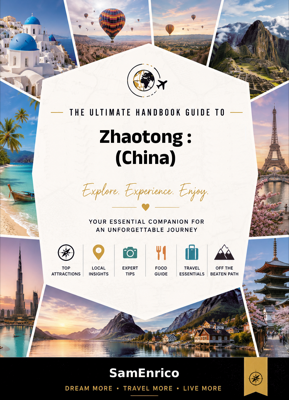 Ultimate Handbook Guide to Zhaotong : (China) Travel GuideStanley Lynette$11.99
 Ghana Dropshipping Clearance AgentStanley Lynette$12.99
 Franchise International Payment SystemsStanley Lynette$12.99
You may also like
 Hong Kong Handover 1997Dunn Johnnie$11.99
 Zumba For Postnatal Recovery CourseNeal Christian$11.99
 Zumba for BeginnersLadner Nikia$11.99
 YouTube Comment Mining GuideHumes Pandora$12.99
 Worry Box MeditationCarlin Rudy$11.99
 Workplace Stress MeditationNguyen Lynn$11.99
 Workplace Stress and Sleep RepairHawley Ivory$11.99
 Workplace Perfectionism CureDelaney Jeffry$11.99
 Workplace Injustice Anger GuideWallen Isabelle$11.99
 Work Addiction and Burnout LinkGreenwood Ester$11.99
 Women in Yoga and WellnessBeattie Galina$11.99
 Women in Stand Up ComedyChun Evangeline$11.99