
Non-FictionHealth & WellnessEating Behavior
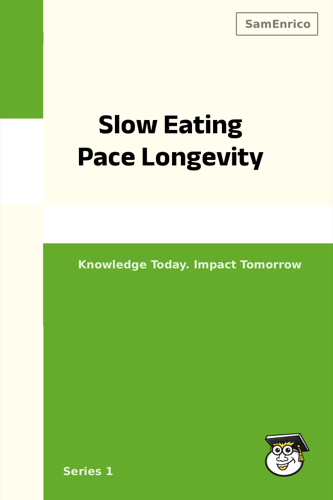
Slow Eating Pace Longevity eBook
Eat slowly and mindfully, stopping when 80 percent
Eat slowly and mindfully, stopping when 80 percent full.
Formats
Free sample
Chapter 1: The Speed Trap...--–- The first thing you need to understand is that you are not broken.You have not failed. You do not lack willpower. You are not secretly lazy or undisciplined or destined to struggle with your weight for the rest of your life. The problem is not you. The problem is the speed at which you have been taught to eat.Let that land for a moment.For generations, we have been told that the secret to health lies in what we eat.
Eat less fat. Eat less sugar. Eat more protein. Eat more plants. Go keto.
Go vegan. Go paleo. Each new diet arrives with a messianic promise, and each diet eventually fails for the vast majority of people—not because the science is wrong, but because the premise is incomplete. The question is not only what you put in your mouth. The question is how you put it there.This book makes a radical argument that will sound strange at first, then obvious, then life-changing: The pace at which you eat may matter more than the specific foods on your plate.The Disappearing Food Act Let me paint a scene you will recognize.It is 12:47 PM on a Tuesday.
You are sitting at your desk, or standing at your kitchen counter, or maybe parked in your car between errands. In front of you is a meal—a sandwich, a salad bowl, a container of leftovers. Your phone is propped against your coffee mug, playing a video. Your email inbox is open on your laptop. You take a bite while scanning a message.
You take another bite while scrolling. You look down. The food is gone.You do not remember chewing. You do not remember tasting. You do not remember the moment when hunger turned into satisfaction.
The food simply vanished.This is the Disappearing Food Act. It is the most common eating disorder nobody talks about, and it has become entirely normal. We eat while driving, while working, while watching, while walking, while worrying. We have turned the act of nourishment into a background task, something to be completed as quickly and efficiently as possible so we can return to the real business of our lives.But here is the truth that changes everything: When you eat mindlessly, you eat more. Not because you are greedy.
Not because you lack control. But because your body's satiety system—a marvel of evolutionary engineering—requires time to do its job. And we have stolen that time from it.The Speed Satiety Disconnect Your body has a built-in fullness alarm. It works like this: as you eat, your stomach expands. Stretch receptors in the stomach wall send signals up the vagus nerve to your brain's hypothalamus.
At the same time, your fat cells release a hormone called leptin, which tells your brain, "We have enough energy stored here. You can stop." Your stomach releases ghrelin, the hunger hormone, which gradually quiets as you become full.This system is elegant, sophisticated, and completely automatic. There is just one catch: it takes approximately twenty minutes to work.Twenty minutes from the first bite to the moment your brain registers fullness. In evolutionary terms, this delay made perfect sense. For most of human history, food was scarce and eating quickly offered a survival advantage.
If your tribe killed a mammoth, you wanted to eat as much as you could as fast as you could, because you did not know when the next mammoth would come. The twenty-minute lag was a feature, not a bug.But that was then. Now, food is abundant, cheap, and engineered to be consumed at warp speed. And that twenty-minute lag has become a metabolic trap.Here is what happens inside the body of a fast eater: you sit down to a meal. You are genuinely hungry—perhaps a 3 or 4 on the hunger scale we will explore in Chapter 6.
You begin eating rapidly. Bite follows bite. There is no pause, no chewing count, no utensil drop. Within eight minutes, you have consumed an entire plate of food. Your stomach is physically full, but your brain has not received the memo yet.
The stretch receptors are still firing. The leptin has not fully registered. The ghrelin is still whispering "more."So you keep eating. You go back for seconds. Or you finish your partner's leftovers.
Or you grab a cookie because "there's always room for dessert." By the time the twenty-minute alarm finally goes off, you have consumed 300, 400, sometimes 500 calories more than your body actually needed.Do that once a day, every day, and you are looking at an annual surplus of 100,000 to 180,000 calories. That translates to fifteen to thirty pounds of potential fat gain per year.And here is the cruelest part: because the extra calories were consumed during the lag window, you do not even feel them. You do not feel stuffed. You do not feel uncomfortable. You just feel...
done. Which is exactly how you would have felt if you had stopped ten minutes and 300 calories earlier.The speed-satiety disconnect is the single most underrecognized driver of weight gain in the modern world.The Research Is Unmistakable This is not speculation. The science is clear.A landmark study published in the Journal of the American Dietetic Association divided participants into two groups. One group was instructed to eat as quickly as possible. The other group was told to eat slowly, putting down their utensils between bites and chewing thoroughly.
Both groups were given the same meal. The results were striking: the fast eaters consumed significantly more calories, and they reported lower levels of satiety despite having eaten more food.Another study, this one from the Journal of Clinical Endocrinology & Metabolism, measured the levels of appetite-regulating hormones in fast versus slow eaters. The slow eaters showed higher levels of PYY and GLP-1—both hormones that signal fullness—and lower levels of ghrelin, the hunger hormone. In other words, eating slowly actually changed their hormonal response to the meal.Perhaps the most compelling data comes from a large-scale Japanese study published in BMJ Open. Researchers followed nearly sixty thousand people with type 2 diabetes and tracked their eating speed.
The results were stunning: fast eaters were 115 percent more likely to develop metabolic syndrome than slow eaters. Not 15 percent. Not 50 percent. One hundred and fifteen percent.Let me say that again. Eating quickly more than doubles your risk of developing a cluster of conditions—high blood pressure, high blood sugar, excess body fat around the waist, and abnormal cholesterol levels—that together constitute metabolic syndrome.
And metabolic syndrome is a direct precursor to heart disease, stroke, and type 2 diabetes.Speed eating is not a harmless quirk. It is a legitimate risk factor for chronic disease.How Speed Became Normal If fast eating is so harmful, how did it become the default mode for so many of us?The answer is cultural, economic, and technological. And it is important to understand the forces that shaped you, because you cannot escape a trap you do not see.The Industrialization of Eating: In the early twentieth century, Frederick Winslow Taylor pioneered "scientific management"—the idea that every workplace movement could be optimized for efficiency.…
This is the end of the free sample. Get the eBook to keep going. Buy now
About this book
Details
- Author
- Littlefield Kimberley
- Publisher
- SamEnrico
- Language
- English
- Genre
- Non-Fiction, Health & Wellness, Eating Behavior
- Released
- 2026-06-06
- Pages (approx.)
- 129
- Available as
- eBook, Audiobook

Read better in the ZLOADR app
Your eBooks on your phone or tablet. Sign in with your SamEnrico account and start reading.
More by Littlefield Kimberley
 Fireplace Sleep VisualizationLittlefield Kimberley$11.99
 Comparison in Chronic IllnessLittlefield Kimberley$11.99
 Pelvic Floor Laser TherapyLittlefield Kimberley$11.99
 The Reject Diet Mentality GuideLittlefield Kimberley$11.99
 Ashoka's Redemption: The Blood of Kalinga (261 BC)Littlefield Kimberley$11.99
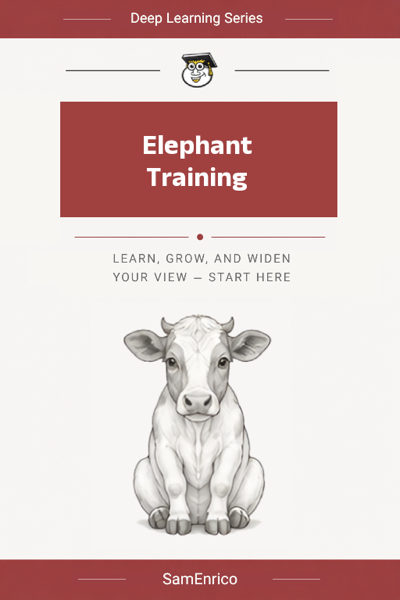 Elephant TrainingLittlefield Kimberley$11.99
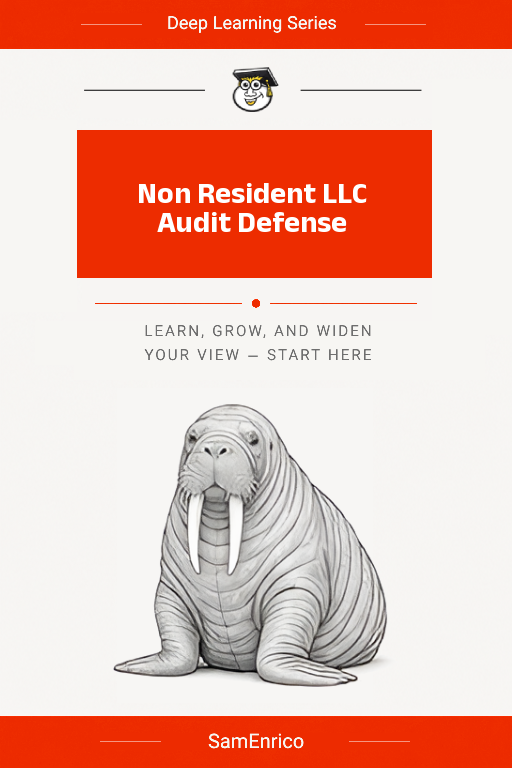 Non Resident LLC Audit DefenseLittlefield Kimberley$12.99
 Nairobi Startup EventsLittlefield Kimberley$12.99
 The Breeder's Guide to Dartmoor HorsesLittlefield Kimberley$11.99
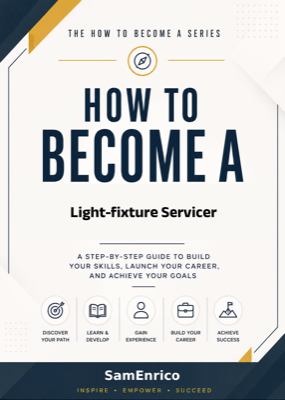 How to Become a Light-fixture ServicerLittlefield Kimberley$11.99
You may also like
 Hong Kong Handover 1997Dunn Johnnie$11.99
 Zumba For Postnatal Recovery CourseNeal Christian$11.99
 Zumba for BeginnersLadner Nikia$11.99
 YouTube Comment Mining GuideHumes Pandora$12.99
 Worry Box MeditationCarlin Rudy$11.99
 Workplace Stress MeditationNguyen Lynn$11.99
 Workplace Stress and Sleep RepairHawley Ivory$11.99
 Workplace Perfectionism CureDelaney Jeffry$11.99
 Workplace Injustice Anger GuideWallen Isabelle$11.99
 Work Addiction and Burnout LinkGreenwood Ester$11.99
 Women in Yoga and WellnessBeattie Galina$11.99
 Women in Stand Up ComedyChun Evangeline$11.99