
Non-FictionForecast & OutlookSlovakia
Slovak Labor Mobility
Analyzes worker moves to Czech Republic and Austri
Analyzes worker moves to Czech Republic and Austria.
Formats
About this book
Free sample
Chapter 1: The Velvet Chains...--The border between Slovakia and the Czech Republic is, for most practical purposes, invisible. No passport checks. No customs booths. No uniformed officers demanding papers. A Slovak driver crossing into Moravia might notice only a small blue sign with the word "Česká republika" and a white line painted across the asphalt.
That is all. Thirty years after the Velvet Divorce, the border has become a bureaucratic ghost—present on maps, absent in daily life.But for the 250,000 Slovaks who have crossed it to work, that invisible line carries an extraordinary weight. It separates two wage levels, two tax regimes, two social security systems, and two very different futures. On one side, a factory worker in Trenčín earns €1,200 per month. On the other side, a factory worker doing the exact same job in Brno earns €1,700.
The work is identical. The language is mutually intelligible. The difference is the border.This chapter tells the story of how that border came to exist, why it functions the way it does, and how centuries of history, thirty years of policy, and millions of individual decisions have shaped the labor corridor that now connects the Tatras to the Bohemian basin. Understanding this history is not an academic exercise. It is the prerequisite for understanding every other dimension of Slovak labor mobility—the wages, the legal battles, the family separations, and the dreams that drive a nation westward.The Habsburg Foundation: Mobility Before Nations Before there was Slovakia or the Czech Republic, there was the Habsburg Empire.
For three centuries, the territories that now comprise these two countries were united under a single crown, part of a sprawling Central European polity that stretched from Krakow to Trieste. Within this empire, labor mobility was not merely permitted—it was essential.The industrial revolution arrived in the Habsburg lands in the mid-nineteenth century, and with it came the first systematic labor migrations. Workers from the poorer, agricultural regions of Upper Hungary (roughly modern-day Slovakia) traveled to the industrial centers of Bohemia and Moravia, where coal mines, steel mills, and textile factories offered wages that could…
This is the end of the free sample. Get the eBook to keep going. Buy now
Contents
- Chapter 1
- Chapter 2
- Chapter 3
- Chapter 4
- Chapter 5
- Chapter 6
- Chapter 7
- Chapter 8
- Chapter 9
- Chapter 10
- Chapter 11
- Chapter 12
Details
- Author
- Jennings Dana
- Publisher
- SamEnrico
- Language
- English
- Genre
- Non-Fiction, Forecast & Outlook, Slovakia
- Released
- 2026-06-10
- Pages (approx.)
- 128
- Available as
- eBook, Audiobook

Read better in the ZLOADR app
Your eBooks on your phone or tablet. Sign in with your SamEnrico account and start reading.
More by Jennings Dana
 Collaborative Art For Business Creativity ManualJennings Dana$11.99
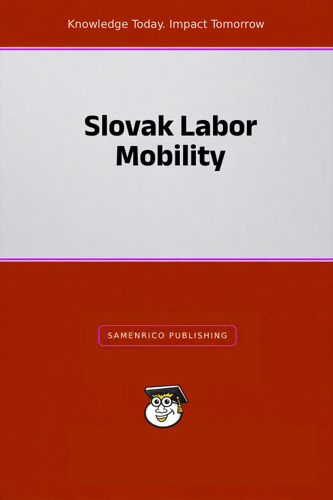 Slovak Labor MobilityJennings Dana$11.99
 Restaurant Weight Loss GuideJennings Dana$11.99
 Waiting and Delay Anger PatternsJennings Dana$11.99
 The Lead Generation Funnel HandbookJennings Dana$11.99
 Frozen Secrets of the White Continent: Uncovering Antarctica's Hidden PastJennings Dana$11.99
 The Day the Beatles Never Broke Up: A Musical Timeline DividedJennings Dana$11.99
 Understanding Chromosome 8, Trisomy 8qJennings Dana$17.99
 How to Start a Consulting Service BusinessJennings Dana$11.99
 Supabase Firebase AlternativeJennings Dana$12.99
 ESOP Buyer Profile GuideJennings Dana$12.99
 TreehousesJennings Dana$11.99
You may also like
 Hong Kong Handover 1997Dunn Johnnie$11.99
 Zumba For Postnatal Recovery CourseNeal Christian$11.99
 Zumba for BeginnersLadner Nikia$11.99
 YouTube Comment Mining GuideHumes Pandora$12.99
 Worry Box MeditationCarlin Rudy$11.99
 Workplace Stress MeditationNguyen Lynn$11.99
 Workplace Stress and Sleep RepairHawley Ivory$11.99
 Workplace Perfectionism CureDelaney Jeffry$11.99
 Workplace Injustice Anger GuideWallen Isabelle$11.99
 Work Addiction and Burnout LinkGreenwood Ester$11.99
 Women in Yoga and WellnessBeattie Galina$11.99
 Women in Stand Up ComedyChun Evangeline$11.99