
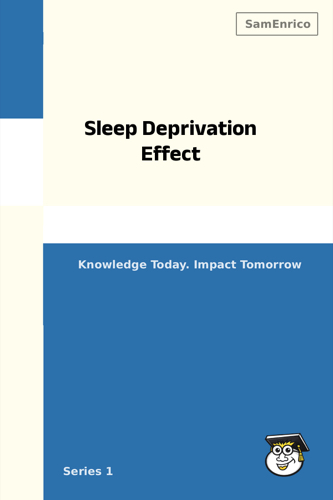
Sleep Deprivation Effect eBook
Explains how fatigue harms facial recognition accu
by Mattos Keiko
Explains how fatigue harms facial recognition accuracy.
Formats
Free sample
Chapter 1: The 3 AM Lineup--It begins, as so many injustices do, not with malice but with exhaustion. A 7-Eleven parking lot in Bakersfield, California, 2:47 AM. The fluorescent lights hum their sickly yellow. A shift nurse named Maria Fernandez has just finished sixteen hours of back-to-back trauma shifts—her second double in five days. She stops for coffee.
She doesn’t see the man who approaches from behind the dumpster. She doesn’t see the gun until it presses into her ribs.The robbery lasts forty-seven seconds. Later, Maria will tell detectives she remembers the gun, the voice, the smell of cigarettes. But the face? She saw it for maybe three seconds—a flash under bad lighting, partially obscured by a pulled-down baseball cap.
She will try anyway. The police will encourage her to try. By the time she sits at the wooden table in the viewing room at 5:30 AM—still wearing her hospital scrubs, having now been awake for twenty-two hours—Maria Fernandez is running on fumes. Her brain has been in survival mode for half a day. She stares at the six men behind the one-way glass.
One of them is a local resident named David Mendez, who has never committed a crime more serious than a speeding ticket. He was picked up three blocks from the 7-Eleven because he matched a vague description: male, medium build, dark clothing.Maria points to David Mendez. “That’s him,” she says. “I’m sure.”Six months later, after David has lost his job, his apartment, and thirty pounds from stress, the real perpetrator is arrested for an unrelated burglary. His DNA matches the coffee cup left at the scene.
David Mendez is released. The district attorney offers a terse apology. Maria Fernandez is devastated—not because she lied, but because her memory lied to her.She wasn’t malicious. She was exhausted.The Invisible Epidemic This book is about a specific kind of failure that almost never makes the headlines but accounts for an astonishing number of wrongful convictions, security breaches, workplace conflicts, and fractured relationships. It is the failure of the tired brain to recognize a face.We tend to think of sleep deprivation as a feeling—an unpleasant but manageable state of grogginess that coffee can fix.
We tell ourselves, “I function fine on five hours.” We brag about all-nighters as badges of honor. We assume that seeing a face is like seeing a chair or a tree: an objective perception that remains stable regardless of how tired we are. That assumption is catastrophically wrong.Face recognition is not like recognizing an object. It is a specialized, high-stakes cognitive function that depends on a delicate neural ballet performed primarily by a small region of your brain called the fusiform face area, or FFA. This region, located in the temporal lobe, evolved specifically to process faces as wholes—not as collections of parts but as integrated, meaningful, emotionally resonant gestalts.
When you look at your mother’s face, you don’t catalog the shape of her nose, the distance between her eyes, the curve of her jaw, and then compute a match. You simply see your mother. That effortless, instantaneous recognition is the work of a well-rested right hemisphere working in concert with the FFA.Sleep deprivation dismantles this machinery.In a landmark 2004 study, sleep researcher Ståle Pallesen and his colleagues used functional magnetic resonance imaging (f MRI) to watch the brains of sleep-deprived participants as they attempted to recognize faces. The results were striking. After just one night of total sleep deprivation, activity in the right hemisphere’s FFA dropped dramatically.
The brain, desperate to compensate, shifted processing to the left hemisphere—which handles faces analytically, breaking them into features (“Is the nose wide? Are the eyebrows thick?”). This left-hemisphere strategy is slower, more brittle, and fails catastrophically when lighting, angle, or expression changes. It is the neural equivalent of trying to recognize your mother by measuring her nose with a ruler.The result is a brain that is not just tired but fundamentally impaired. A sleep-deprived person trying to identify a face is not operating at 80% capacity.
They are operating with a different, inferior perceptual system.The Gap Between Demand and Biology Here is the central paradox that this book will unravel: we demand high-stakes face recognition from people who are systematically, predictably, and dangerously sleep-deprived.Consider the typical eyewitness lineup. The crime occurs late at night—most robberies, assaults, and violent crimes happen between 10 PM and 2 AM. The witness is interviewed at the scene, then again at the station. A lineup is assembled. By the time the witness sits in front of that one-way glass, they may have been awake for sixteen, eighteen, even twenty-four hours.
And yet, the legal system treats their identification as if it were made at noon on a full night’s sleep.Consider the border security agent working a rotating shift. The body’s circadian rhythm does not adapt quickly to shift changes. A night shift worker on their fourth consecutive night may have a biological perception of “middle of the night” even at 2 PM. When that agent examines your passport photo, their FFA may be operating at half its normal activity. The difference between admitting a legitimate traveler and missing a person of interest could be the difference between a well-timed nap and its absence.Consider the exhausted parent.
After a week of broken sleep with a newborn, they misread their toddler’s fear as defiance. They escalate. The child cries. The parent feels guilty. Neither understands that the problem was not the child’s behavior but the parent’s amygdala, decoupled from the visual cortex, defaulting to threat interpretation because it can no longer reliably detect sadness.Sleep deprivation is not a personal failing.
It is a systemic vulnerability. And until we recognize it as such, we will continue to put tired people in positions where they must recognize faces—and we will continue to suffer the consequences.Why This Book? Why Now?Over the past decade, the science of sleep and face recognition has advanced dramatically. We now have f MRI studies, behavioral experiments, and longitudinal data that pinpoint exactly how fatigue degrades perception. We know which emotions become invisible to the tired brain (sadness, specifically).
We know how long it takes for a nap to restore upper-face feature recognition (sixty minutes). We know that caffeine makes you faster and more confident but not more accurate.But this science has not yet reached the people who need it most: police officers, judges, security directors, shift managers, and everyday humans navigating exhausted lives. This book is the bridge.The Tired Witness will take you on a journey through the neuroscience of face recognition, the mechanisms of fatigue-induced failure, and the real-world consequences in law enforcement, national security, and personal relationships. It will then provide evidence-based solutions: nap protocols, environmental fixes, cognitive training, and policy recommendations. By the end, you will never look at a tired person the same way again—and you will never trust your own tired eyes without a second thought.The Structure of This Book This book is divided into four parts, each designed to build on the last while remaining…
This is the end of the free sample. Get the eBook to keep going. Buy now
About this book
Details
- Author
- Mattos Keiko
- Publisher
- SamEnrico
- Language
- English
- Genre
- Non-Fiction, True Crime, Sleep
- Released
- 2026-06-10
- Pages (approx.)
- 159
- Available as
- eBook, Audiobook

Read better in the ZLOADR app
Your eBooks on your phone or tablet. Sign in with your SamEnrico account and start reading.
More by Mattos Keiko
 Quit Smoking for SchizophreniaMattos Keiko$11.99
 Anger Trigger AwarenessMattos Keiko$11.99
 Rapid Peg System Recall CourseMattos Keiko$11.99
 Low Carb Portion Control MasteryMattos Keiko$11.99
 Medical Trauma Nightmare GuideMattos Keiko$11.99
 Grandparent Grief GuideMattos Keiko$11.99
 Scholarships In Dubai HandbookMattos Keiko$11.99
 The Aswang's Hungry Shadows: A Filipino Feast of FearMattos Keiko$11.99
 The Ghosts of Whitechapel: DNA and the Ripper’s ShadowMattos Keiko$11.99
 How to Produce Special Effects ControllersMattos Keiko$11.99
 S Corporation Succession RulesMattos Keiko$12.99
 Africa Domain Renewal Price CheckMattos Keiko$12.99
You may also like
 Hong Kong Handover 1997Dunn Johnnie$11.99
 Zumba For Postnatal Recovery CourseNeal Christian$11.99
 Zumba for BeginnersLadner Nikia$11.99
 YouTube Comment Mining GuideHumes Pandora$12.99
 Worry Box MeditationCarlin Rudy$11.99
 Workplace Stress MeditationNguyen Lynn$11.99
 Workplace Stress and Sleep RepairHawley Ivory$11.99
 Workplace Perfectionism CureDelaney Jeffry$11.99
 Workplace Injustice Anger GuideWallen Isabelle$11.99
 Work Addiction and Burnout LinkGreenwood Ester$11.99
 Women in Yoga and WellnessBeattie Galina$11.99
 Women in Stand Up ComedyChun Evangeline$11.99