

Non-FictionStrategic AtlasGTM Strategy
Slack PLG Motion Guide eBook
Analyze freemium viral loops, bottom-up adoption,
by Eaves Tommye
Analyze freemium viral loops, bottom-up adoption, and sales-led enterprise expansion that defined modern SaaS go-to-market.
Formats
Free sample
Chapter 1: The Demo Delusion–- In 2013, a failed video game company accidentally built a $27 billion business. But the real accident wasn't the product—it was discovering that their sales team was almost completely useless.The offices of Tiny Speck, the creators of the ill-fated massively multiplayer online game Glitch, were not supposed to birth a Saa S giant. The game had consumed four years of development, $17 million in venture funding, and the creative energy of a team that had previously sold Flickr to Yahoo. When Glitch shut down in December 2012, the mood was funereal. The team had built an internal communication tool to manage their own chaos—a chat system with persistent rooms, searchable history, and integrations.
They called it Slack. It was meant to be a funeral arrangement, not a product.Then something strange happened. Other startups heard about the tool and asked to use it. Then small teams. Then medium-sized companies.
Within six months, Slack had thousands of active users. And here was the truly shocking part: almost none of them had ever spoken to a salesperson.The Number That Should Terrify You Let me start with a number that should keep every B2B founder awake at night: 53 percent of buyers now prefer to complete their entire software purchase process without any interaction with a sales representative.That's not a prediction. That's not a trend line. That is current data from Gartner's 2022 B2B Buyer Survey, and it has been climbing steadily for six years. In 2016, that number was 33 percent.
In 2019, it was 44 percent. In 2022, it crossed the majority threshold. By 2026, industry analysts project it will exceed 65 percent.Let me translate that into business terms. If you are selling B2B software today, the majority of your potential customers will actively avoid your sales team. They will find your website, evaluate your product, compare you to competitors, make a decision, and swipe a credit card—all without ever clicking "Contact Sales." The only thing your perfectly crafted sales development representative scripts are doing is annoying the people who might have bought from you.This is not a hypothesis.
This is the reality that Slack stumbled into by accident. When they finally hired a head of sales in 2014 (the legendary Kevin Egan, who had built Salesforce's inside sales organization), he discovered something terrifying: his team had almost nothing to do. The product was already selling itself. Customers were upgrading without being asked. The sales team's primary function had become answering support questions and processing credit cards—tasks that the product should have handled.The End of the Saddle Inside Slack, there is a famous internal memo that never got published externally.
It was written by Stewart Butterfield, the company's co-founder and CEO, in early 2014. The subject line was "The End of the Saddle."The memo argued that most software companies were selling horse saddles in a world that had already invented the car. Here's the logic: in the nineteenth century, if you wanted to sell transportation, you talked about saddles—the leather quality, the stitching, the comfort of the stirrups. You hired saddle salespeople to demonstrate saddle features. You built a saddle marketing machine.
And then Henry Ford invented the automobile, and no one cared about saddles anymore.Butterfield's point was that most enterprise software companies were still selling "saddles" (features: chat, file sharing, search) when what customers actually wanted was "transportation" (organizational transformation: fewer emails, faster decisions, less anxiety about missing important information). The saddle salespeople couldn't see that the product category had changed because they were too busy arguing about stirrup leather.Slack's insight was that the job to be done for workplace communication software was never "send a message." The job to be done was "reduce the anxiety of missing something important." That's a different psychological contract entirely. When you understand that, you stop building feature lists and start building anxiety-reduction engines. You also stop hiring salespeople to explain features and start building products that explain themselves.The Demo Paradox Here is a paradox that most founders refuse to accept: if your product requires a demo to be understood, your product is broken.I can feel the objections forming. "But our product is complex!" "Enterprise buyers expect demos!" "We have a high-touch sales motion!" These are not counterarguments.
They are confessions.Let me be precise about what I mean. There are two very different activities that both get called "demos," and conflating them has destroyed more PLG initiatives than any other single mistake.Discovery demos are sessions where a salesperson explains how the product works. They walk through features. They answer "how do I do X?" questions. They show screenshots or live instances.
This type of demo is a sign of product failure. If a user cannot understand your product in 30 minutes of solo exploration, the problem is not their attention span—it is your product's clarity. Slack had discovery demos in 2013. By 2014, they had eliminated almost all of them because they discovered that users who took a demo were less likely to convert than users who just signed up and explored on their own. The demo introduced confusion (too many options, too many "you could also do this" tangents) and delayed the moment of personal value discovery.Commercial negotiations, on the other hand, are not demos at all.
They are conversations about price, security, compliance, legal terms, and procurement processes. These conversations are unavoidable for enterprise deals above a certain size—typically 50,000to50,000 to 50,000to100,000 in annual contract value. They require humans. They require negotiation. But they do not require a product walkthrough.
The user should already know the product. The commercial conversation is about everything around the product: liability caps, data residency, service level agreements, SOC2 reports, and payment terms.The companies that succeed at PLG for enterprise are those that ruthlessly eliminate the first type of demo while gracefully accommodating the second. Slack's sales team in 2015 spent zero time showing the product. Every prospect had already used it, often for months. The sales team's job was to answer questions like "can you sign our data processing addendum?" and "will you commit to 99.99 percent uptime?" That is a fundamentally different sales motion than the one most B2B companies have built.The Psychology of the Modern Buyer To understand why the demo is dying, you need to understand how software buying decisions are actually made today.Stage One: The Itch (0-30 days pre-purchase)The buyer experiences a problem.
Emails are overwhelming. Team coordination is breaking down. Files are getting lost in shared drives. But they don't know if software can solve it, and they're not ready to talk to vendors. They search Google.
They read blog posts. They ask Twitter. They are looking for education, not a sales pitch.Stage Two: The Self-Serve Evaluation (30-60 days pre-purchase)The buyer has narrowed down to three or four potential solutions. They go to each website. They sign up for free trials or freemium accounts.
They test the product with a small team. They are looking for value, not features. They will spend approximately five to ten hours in this phase, and they will avoid sales contact at all costs because they want an unbiased evaluation.Stage…
This is the end of the free sample. Get the eBook to keep going. Buy now
About this book
Details
- Author
- Eaves Tommye
- Publisher
- SamEnrico
- Language
- English
- Genre
- Non-Fiction, Strategic Atlas, GTM Strategy
- Released
- 2026-06-01
- Pages (approx.)
- 140
- Available as
- eBook, Audiobook

Read better in the ZLOADR app
Your eBooks on your phone or tablet. Sign in with your SamEnrico account and start reading.
More by Eaves Tommye
 Money Anxiety Coping WorkbookEaves Tommye$11.99
 Michael Parkinson Chatty ManEaves Tommye$11.99
 Climate Nobel LaureatesEaves Tommye$11.99
 Impossible Workload Anger Control CourseEaves Tommye$11.99
 The Energy Based Scheduling GuideEaves Tommye$11.99
 Raven’s Gambit: The Forgotten Oath of the JötnarEaves Tommye$11.99
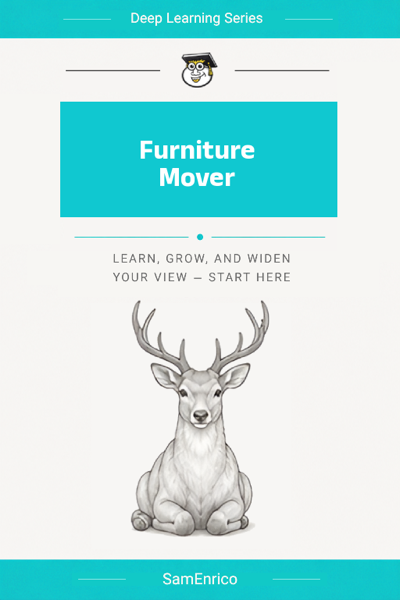 Furniture MoverEaves Tommye$11.99
 Understanding PyrosisEaves Tommye$17.99
 Currency Risk African ExportersEaves Tommye$12.99
 How to Start a Ball and Roller Bearings (wholesale) Business (Beginners Guide)Eaves Tommye$11.99
You may also like
 Hong Kong Handover 1997Dunn Johnnie$11.99
 Zumba For Postnatal Recovery CourseNeal Christian$11.99
 Zumba for BeginnersLadner Nikia$11.99
 YouTube Comment Mining GuideHumes Pandora$12.99
 Worry Box MeditationCarlin Rudy$11.99
 Workplace Stress MeditationNguyen Lynn$11.99
 Workplace Stress and Sleep RepairHawley Ivory$11.99
 Workplace Perfectionism CureDelaney Jeffry$11.99
 Workplace Injustice Anger GuideWallen Isabelle$11.99
 Work Addiction and Burnout LinkGreenwood Ester$11.99
 Women in Yoga and WellnessBeattie Galina$11.99
 Women in Stand Up ComedyChun Evangeline$11.99