
SIBO Microbiome Connection eBook
Address small intestinal bacterial overgrowth as a
Address small intestinal bacterial overgrowth as a specific dysbiosis pattern.
Formats
Free sample
Chapter 1: The Rainforest Within--–- Imagine standing at the edge of a primeval rainforest. The air is thick with humidity and the sound of unseen life—insects chirping, birds calling, leaves rustling in the canopy overhead. Millions of species coexist in a delicate, ancient balance. Each organism occupies a specific niche. Some break down fallen logs.
Others fix nitrogen in the soil. Still others climb toward the light. No single species dominates. The rainforest does not need to be managed, medicated, or micromanaged. It simply thrives—until something disrupts it.Now imagine a bulldozer carving a straight line through that forest.
The rich, loamy soil erodes. The canopy fragments. Sunlight pours onto ground that has known only shade for centuries. In the wake of destruction, a different kind of growth emerges: not the diverse cathedral of old-growth trees, but a thicket of invasive vines and pioneer species that choke out everything else. The rainforest has not died.
It has become something else entirely—a monoculture, impoverished and unstable.Your gut is that rainforest.This is not a metaphor. It is the most accurate scientific framework for understanding what happens in small intestinal bacterial overgrowth (SIBO). For decades, the medical establishment has treated SIBO as if it were a simple infection: bad bacteria invading a sterile space, requiring antibiotics to wipe them out. But that model is fundamentally wrong. It has led to countless treatment failures, endless cycles of relapse, and millions of patients told that their suffering is "just IBS" or "all in your head."The truth is both simpler and more profound.
Your gastrointestinal tract is not a sterile tube. It is a series of microbial ecosystems, each with its own unique population of bacteria, archaea, fungi, and viruses. From the harsh, acidic stomach to the dense, fermentative colon, these microbes form a complex food web that influences everything—your digestion, your immune system, your mood, your skin, your weight, and even your thoughts. When that ecosystem collapses into a dysbiotic pattern—a monoculture of gas-producing pathogens in the small bowel—the result is SIBO. But SIBO is not the disease.
It is a symptom of a deeper ecological disaster.This chapter will transform how you see your own body. You will learn why the rainforest analogy is not just poetic but practical, how distinct gut habitats function, what happens when they break down, and why restoring balance—not just killing bacteria—is the only path to lasting recovery. If you have tried restrictive diets, rounds of antibiotics, and herbal protocols only to find yourself back where you started, it is because you have been fighting the symptoms of ecological collapse without addressing the collapse itself. That ends now.The Geography of Your Inner Ecosystem Before we can understand what goes wrong, we must understand the landscape. The human gastrointestinal tract is approximately thirty feet long, running from mouth to anus.
But length alone tells you nothing about the dramatic ecological shifts that occur along its path. Each segment has a different p H, different oxygen levels, different transit time, and—most importantly—a different microbial community.The Stomach: The Acidic Gatekeeper The stomach is the least hospitable habitat in the gut. With a p H between 1.5 and 3.5, it is a chemical vat designed to denature proteins and kill pathogens. Most bacteria cannot survive here. Those that do—primarily Lactobacillus, Streptococcus, and Helicobacter pylori (in some individuals)—are acid-tolerant specialists.
The stomach is not meant to be densely populated. In a healthy person, you might find 10 to 100 bacterial colony-forming units per milliliter of gastric fluid. That is virtually sterile compared to what lies ahead.The stomach's harsh environment serves a critical ecological function: it is the gatekeeper. When you swallow food, you also swallow bacteria from your mouth, your food, and your environment. The stomach acid destroys most of them before they can reach the small intestine.
This is why chronic use of proton pump inhibitors (PPIs)—acid-blocking medications—is a major risk factor for SIBO. You have effectively removed the gatekeeper, allowing a steady stream of bacteria to colonize where they do not belong.The Small Intestine: The Transitional Corridor The small intestine is where the rainforest begins to emerge. Approximately twenty feet long and divided into three sections (duodenum, jejunum, and ileum), it is the primary site of nutrient absorption. The p H rises gradually from about 6 in the duodenum to 7.4 in the terminal ileum. Oxygen levels drop as you move distally.
Bile acids and pancreatic enzymes flow into the duodenum, breaking down fats and proteins while also suppressing bacterial growth.In a healthy person, the small intestine is not sterile, but it is relatively sparse compared to the colon. Typical bacterial counts range from 1,000 to 100,000 colony-forming units per milliliter—orders of magnitude lower than the colon. The dominant species are typically Lactobacillus, Enterococcus, Streptococcus, and small numbers of Bacteroides and Clostridium. These microbes perform essential functions: they compete with pathogens, produce vitamins (notably B12 and K), and modulate the immune system.But the small intestine is also vulnerable. Because it is a corridor between the dense microbial populations of the mouth and the colon, it relies on several defense mechanisms to prevent overgrowth.
The Migrating Motor Complex (MMC) sweeps bacteria downward between meals. Stomach acid kills incoming microbes. Bile acids inhibit certain species. The ileocecal valve prevents backflow from the colon. When any of these defenses fail, the small intestine can become overrun—not necessarily with pathogens, but with the wrong microbes in the wrong place.
That is SIBO.The Colon: The Dense Jungle The colon is where the rainforest reaches its full glory. Approximately five feet long and home to an estimated 100 trillion microorganisms, the colon is one of the densest microbial ecosystems on Earth. The p H is slightly acidic (5.5 to 6.5) due to fermentation of dietary fiber into short-chain fatty acids. Oxygen is virtually absent—this is an anaerobic environment.The colonic microbiome is extraordinarily diverse. Healthy individuals harbor hundreds of bacterial species, primarily from the phyla Bacteroidetes and Firmicutes.
These microbes break down dietary fiber that human enzymes cannot digest, producing short-chain fatty acids (acetate, propionate, and butyrate) that fuel colon cells, regulate inflammation, and influence metabolism. They synthesize vitamins, metabolize bile acids, and train the immune system to distinguish friend from foe.The colon does not overgrow easily because it has reached an ecological equilibrium. The dense, diverse community occupies every available niche, leaving no space for invaders. Pathogenic bacteria cannot establish a foothold because the native species outcompete them for resources and produce antimicrobial compounds. This is the principle of colonization resistance—one of the most important concepts in microbiome science.The Key Insight: SIBO is not an infection.
It is a violation of geography. Bacteria that belong in the colon (or even the mouth) have migrated to the small intestine, where they do not belong, and the small intestine's defenses have failed to clear them. The result is not a "bad" bacterial species but a disrupted ecosystem—a rainforest reduced to a thicket of vines.The Myth of Sterility If you were trained in medicine twenty or thirty years ago, you learned that the small intestine was essentially sterile. This was not…
This is the end of the free sample. Get the eBook to keep going. Buy now
About this book
Details
- Author
- Lawless Jenise
- Publisher
- SamEnrico
- Language
- English
- Genre
- Non-Fiction, Health & Wellness, SIBO
- Released
- 2026-06-12
- Pages (approx.)
- 159
- Available as
- eBook, Audiobook

Read better in the ZLOADR app
Your eBooks on your phone or tablet. Sign in with your SamEnrico account and start reading.
More by Lawless Jenise
 School Zone Safety FocusLawless Jenise$11.99
 Oral Fixation Replacement ManualLawless Jenise$11.99
 The Parent Death Scattering GuideLawless Jenise$11.99
 Female Rulers Succession Planning StrategiesLawless Jenise$11.99
 The Silk Road Escape: The Untold Story of the Inmate Who Vanished from a SupermaxLawless Jenise$11.99
 The Frozen Inferno: Iceland’s 1179 Eruption and the Lost Vikings of ÖræfajökullLawless Jenise$11.99
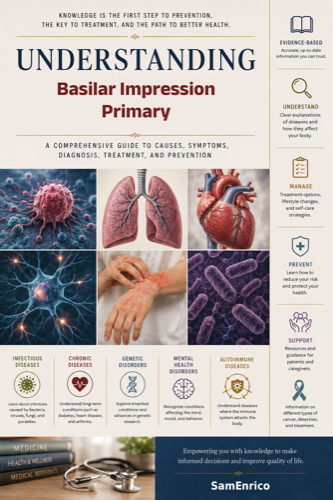 Understanding Basilar Impression PrimaryLawless Jenise$17.99
 HVAC TechnicianLawless Jenise$11.99
 Gen X Financial Advisory SpendingLawless Jenise$12.99
 Blockchain Payments for ExportersLawless Jenise$12.99
 10 Ways to Use Chilli Sauce (Recipe Book)Lawless Jenise$11.99
You may also like
 The IBS and SIBO GuideJohansen Ilse$11.99
 FODMAP and SIBO Connection GuideRutherford Rae$11.99
 SIBO Overlap ManagementMarble Hoa$11.99
 IBS And SIBO Connection GuideFaulkner Ileen$11.99
 SIBO Treatment ProtocolEnnis Lily$11.99
 Food Intolerance and SIBORowland Darlena$11.99
 Methanobrevibacter InterpretationWerner Tomika$11.99
 IBS and SIBO ConnectionDorn Leonarda$11.99
 SIBO Treatment HandbookReardon Delisa$11.99
 IBS SIBO Overlap GuideBroadway Isabelle$11.99