
Non-FictionHealth & WellnessRunning
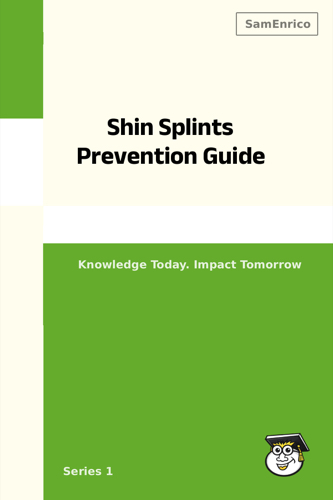
Shin Splints Prevention Guide eBook
Teaches calf stretching, footwear choice, and load
Teaches calf stretching, footwear choice, and load management for runners.
Formats
Free sample
Chapter 1: The Mileage Lie--–- The morning of the Marine Corps Marathon, Sarah laced her shoes the way she had for every run over the past four months. Tight heel lock. Double knot. The same routine. She had done everything right.
She had followed the training plan religiously, never increasing her weekly mileage by more than ten percent. She had bought expensive shoes from the specialty store where a bearded man watched her run on a treadmill. She had even added calf stretches after reading an article about injury prevention. At mile fourteen, something shifted. Not a dramatic snap or a pop.
Just a low, persistent thrumming along the inside of her left shin. By mile eighteen, she was altering her gait, landing softer on the right foot to spare the left. By mile twenty-two, she was walking. She finished—seven minutes slower than her goal—and spent the next eight weeks unable to run more than two miles without the same dull ache returning. The physical therapist used two words: shin splints.
Sarah was baffled. “But I did everything right,” she said.The physical therapist nodded. “That’s exactly why you got hurt.”This is the mileage lie. It is the false promise whispered by every generic training plan, every shoe advertisement, and every well-meaning friend who says “just rest and you’ll be fine.” The lie is this: if you follow the rules, you will not get hurt. The truth is far more uncomfortable.
Most runners who develop shin splints are not reckless beginners who ramp up too fast. They are dedicated, disciplined athletes who are doing many things correctly but missing one critical piece of the puzzle. They are stretching the wrong muscle at the wrong time. They are wearing shoes that look fine but have secretly turned against them. They are managing their training load using a rule that was never designed to prevent the specific mechanism of Medial Tibial Stress Syndrome.This chapter is not a warm-up.
It is not an overview of what will come later. It is a demolition of the false assumptions that keep runners trapped in the cycle of injury, rest, reinjury, and frustration. By the time you finish these pages, you will understand why “doing everything right” is often the fastest path to shin splints. You will learn to see your own running history with new eyes. And you will be ready for the three-pillar system that forms the backbone of this book.The Perpetual Comeback Shin splints are not a career-ender.
They are not a stress fracture, a torn tendon, or a ruptured ligament. In the hierarchy of running injuries, they sit in a strange middle ground: too painful to ignore, rarely severe enough to demand surgery, and almost never requiring a cast or crutches. This middle ground is precisely why they are so dangerous. They do not force you to stop. They simply punish you every time you try to start again.Consider the typical cycle.
A runner feels the first twinge after a long run or a hard workout. They take a few days off. The pain subsides. They return to running, cautiously at first, then with their normal enthusiasm. By the third week back, the pain has returned, often worse than before.
They take a week off. They ice. They stretch. They try again. This is the perpetual comeback.
It can last months or years. Some runners spend entire seasons managing shin pain rather than solving it. They learn to run with an altered gait, compensating in ways that eventually injure their hips, knees, or opposite leg. They accumulate not one injury but a cascade of them, all traceable back to the original untreated MTSS.The medical literature confirms this pattern. Studies of recreational runners show that shin splints have a recurrence rate of nearly forty percent within two years.
That is not because the condition is incurable. It is because most treatment protocols address the symptom—inflammation—rather than the cause—the mechanical imbalance that produces the inflammation in the first place. Rest and ice will quiet an angry periosteum. They will not fix a tight soleus, a dead shoe, or a training schedule that accumulates microtrauma faster than the body can repair it.The Anatomy of a Misunderstood Injury To understand why the mileage lie persists, you must first understand what shin splints actually are. The term itself is part of the problem.
“Shin splints” sounds vague, almost trivial. It conjures images of a minor nuisance, a price of admission for the sport. The medical community abandoned the term years ago in favor of a more precise diagnosis: Medial Tibial Stress Syndrome, or MTSS. The name matters because it tells you exactly what is happening.The tibia is your shinbone, the large weight-bearing bone in the lower leg. Running produces ground reaction forces of two to three times your body weight with every footstrike.
That force travels up the leg, through the bones and joints, and is absorbed by muscles and connective tissue along the way. The periosteum is a thin, nerve-rich membrane that wraps around the outside of the tibia. It is not designed to bear load directly. It is designed to anchor muscles and transmit sensation. When the muscles attached to the periosteum pull repeatedly and forcefully, the periosteum becomes inflamed.
That inflammation is MTSS.Which muscles are pulling? The primary culprits are the calf muscles, specifically the soleus. The soleus attaches to the back of the tibia along its inner edge. Every time you push off the ground, the soleus contracts. Every time you land, the soleus lengthens under tension to control the forward motion of your shin.
If the soleus is tight or fatigued, it pulls harder on its attachment points. That pulling irritates the periosteum. The result is pain along the inner edge of the lower leg, typically spanning three to six inches above the ankle bone.This is why stretching the shin directly—pointing and flexing the foot, massaging the front of the leg—provides only temporary relief. The problem is not in the shin. The problem is in the calf.
You cannot stretch your way out of a problem that originates in a different muscle group. You can only quiet the symptoms while the underlying cause continues to do damage.The Red Flag Checklist Before you invest another minute in prevention or treatment, you must rule out two conditions that mimic shin splints but require completely different management. These are the masqueraders. Mistaking them for MTSS can lead to weeks of ineffective treatment, or worse, serious injury.The first masquerader is the tibial stress fracture. A stress fracture is a microscopic crack in the bone itself.
It produces pain that is more focal than MTSS—you can point to a specific spot, about the size of a quarter, that hurts when pressed. The hallmark test is the hop test. Stand on the affected leg and hop three to four times. If the pain sharpens dramatically, or if you cannot hop without significant discomfort, suspect a stress fracture. Other red flags include pain that wakes you at night, pain that persists at rest, and pain that does not improve…
This is the end of the free sample. Get the eBook to keep going. Buy now
About this book
Details
- Author
- Gregory Everett
- Publisher
- SamEnrico
- Language
- English
- Genre
- Non-Fiction, Health & Wellness, Running
- Released
- 2026-06-07
- Pages (approx.)
- 143
- Available as
- eBook, Audiobook

Read better in the ZLOADR app
Your eBooks on your phone or tablet. Sign in with your SamEnrico account and start reading.
More by Gregory Everett
 Broken ToysGregory Everett$11.99
 Metta For Breakup HealingGregory Everett$11.99
 Eisenhower For Meetings GuideGregory Everett$11.99
 Tax Lien Wholesaling StrategyGregory Everett$11.99
 Immigrant AI Startup Founder JourneysGregory Everett$11.99
 Firangi and Desi DivideGregory Everett$11.99
 Borderline Parent Child WorthGregory Everett$11.99
 Amputation Body Esteem GuideGregory Everett$11.99
 The Healers of Axum: Ancient Africa's Medical PioneersGregory Everett$11.99
 The Forgotten Codebreakers of World War IGregory Everett$11.99
 Breaking the Sound Barrier: The Untold Story of Chuck Yeager and the Bell X-1Gregory Everett$11.99
 Prompt Engineering for Property Marketing FunnelsGregory Everett$11.99
You may also like
 Hong Kong Handover 1997Dunn Johnnie$11.99
 Zumba For Postnatal Recovery CourseNeal Christian$11.99
 Zumba for BeginnersLadner Nikia$11.99
 YouTube Comment Mining GuideHumes Pandora$12.99
 Worry Box MeditationCarlin Rudy$11.99
 Workplace Stress MeditationNguyen Lynn$11.99
 Workplace Stress and Sleep RepairHawley Ivory$11.99
 Workplace Perfectionism CureDelaney Jeffry$11.99
 Workplace Injustice Anger GuideWallen Isabelle$11.99
 Work Addiction and Burnout LinkGreenwood Ester$11.99
 Women in Yoga and WellnessBeattie Galina$11.99
 Women in Stand Up ComedyChun Evangeline$11.99