
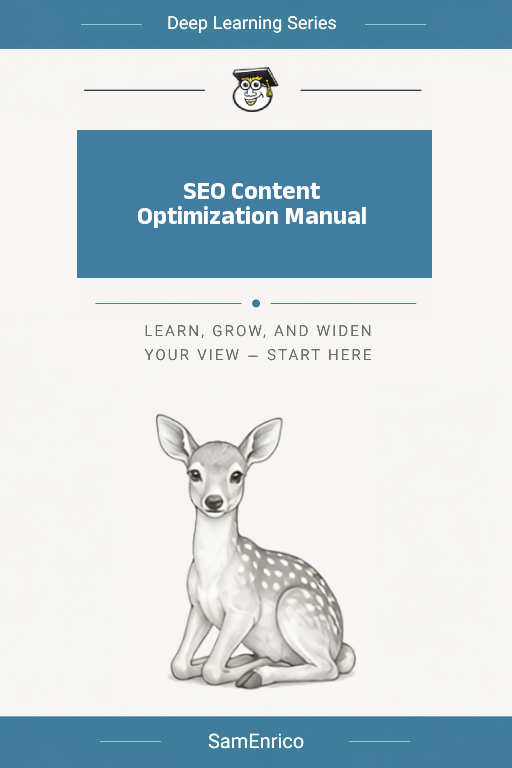
Non-FictionAI OperatorCreative OperationsSEO Guide
SEO Content Optimization Manual eBook
Use generative AI to research keywords, outline pi
Use generative AI to research keywords, outline pillar pages, and optimize existing content for search. Includes internal linking suggestions, meta description generation, and schema markup prompts.
Formats
Free sample
Chapter 1: The Invisible Heist--–- On a Tuesday morning in March 2024, a mid-sized software company lost 47% of its organic traffic before anyone finished their first cup of coffee. No algorithm update was announced. No manual penalty was issued. No competitor outranked them. The traffic simply evaporated because Google had started answering questions directly inside the search results, and the company’s carefully crafted content had become invisible overnight.This is not a cautionary tale.
This is the new normal.The shift from traditional search engine results pages to generative engine responses is not a future prediction—it is happening right now, as you read this sentence. Every day, millions of searches that once resulted in a click to a website now end with a complete answer generated by artificial intelligence, pulled from multiple sources, and displayed without requiring the user to visit any of them. This chapter is about understanding that shift, naming the forces behind it, and preparing you for the rest of this book, which will teach you exactly how to stop being invisible and start being cited.The great unlinking is already underway. Whether you are an SEO professional, a content strategist, a business owner, or a freelance writer, the rules of visibility have changed. Ranking number one is no longer the ultimate prize.
Being one of the three to five sources an AI trusts to answer a question has become the new gold standard. And if you do not understand how this new system works, you will wake up one morning to find your traffic has vanished, just like that software company did.The Collapse of the Ten Blue Links For more than two decades, the fundamental unit of search was the link. You typed a query into Google, and you received a page of ten blue links—ten websites that Google believed were the most relevant answers to your question. Your job as an SEO professional was to get your link into one of those ten positions, ideally as high as possible, because data consistently showed that the number one result received approximately ten times more clicks than the number ten result.That era is ending.Today, when you search for “how to fix a leaky faucet,” Google often displays a step-by-step guide written by its AI, pulling information from multiple plumbing websites, and showing it directly on the search results page. When you ask “what is the capital of Uruguay,” the answer appears in a large box at the top of the screen—Montevideo—with no need to click through to Wikipedia.
When you search for product recommendations, Google’s AI Overview synthesizes reviews from a dozen sources and presents a summary with pros, cons, and pricing, all without requiring a single click.This phenomenon is called the zero-click search, and its growth has been relentless. According to industry data from 2024 and 2025, more than half of all Google searches now end without a click to any website. Users get their answer directly from the search results page, often from an AI-generated summary, and move on with their day.For businesses that have built their entire digital strategy around attracting clicks, this is catastrophic. But for businesses that understand the new rules, it is an opportunity. Because while the number of clicks is declining, the value of being cited as a source by an AI is increasing.
That citation builds brand authority, drives indirect traffic (users who remember your brand and search for you directly later), and positions you as a trusted source in your industry.Introducing Generative Engine Optimization (GEO)If traditional SEO was about optimizing for search engines, Generative Engine Optimization (GEO) is about optimizing for generative AI systems—the large language models that power Chat GPT, Google’s AI Overviews, Perplexity, Claude, and Gemini.The distinction is not merely semantic. Traditional search engines rank web pages. Generative engines synthesize answers. A traditional search engine looks at your page and decides, “This page is relevant for keyword X, so we will show it at position Y.” A generative engine looks at your page and decides, “This passage from this page contains a definitive answer to the user’s question, so we will include it in our synthesized response—and we will cite the source.”This shift changes everything about how you should create and optimize content.In the traditional model, you wanted to rank for keywords. You researched high-volume search terms, wrote pages targeting those terms, and measured success by your position on the search engine results page.
In the new model, you want to be cited by AI. You research the questions users are asking AI systems, write pages that answer those questions definitively and authoritatively, and measure success by how often your brand appears as a source in AI-generated answers.The core metric has changed. You no longer need to be number one. You need to be one of the three to five sources an AI trusts.How Retrieval-Augmented Generation (RAG) Actually Works To understand how to optimize for AI, you must first understand how AI retrieves and uses your content. The technical mechanism behind most modern generative AI search systems is called Retrieval-Augmented Generation (RAG) , and it works like this.When a user asks a question to an AI system like Chat GPT with browsing enabled, or to Google’s AI Overview, the system does not simply generate an answer from its internal memory.
Instead, it follows a three-step process.Step One: Retrieval. The system searches through a pre-indexed corpus of content—millions of web pages, articles, and documents that have been crawled and stored in advance. It uses vector search to find passages that are semantically relevant to the user’s question. This is not traditional keyword matching. Vector search understands meaning.
If the user asks about “automotive vehicles,” the system can retrieve passages about “cars” because it understands that these concepts are related.Step Two: Augmentation. The system takes the retrieved passages and adds them to the context window of the large language model. The model now has both the user’s question and several relevant passages from your content (and from your competitors’ content) to work with.Step Three: Generation. The language model synthesizes an answer based on the retrieved passages. It may quote directly from your content, paraphrase your ideas, or combine information from multiple sources.
In many implementations, the model also provides citations, linking back to the original sources.Here is the critical detail that most SEO professionals misunderstand: RAG systems pull from a pre-indexed corpus, not by live-crawling the web for every query.This means that if your content is not already indexed—if the AI crawler has not visited your site, parsed your HTML, and stored your passages in the vector database—you cannot be retrieved. There is no real-time forgiveness. You are simply absent from the source material that the AI uses to generate answers.This is why being “AI-citable” requires fundamentally different preparation than traditional search engine optimization. You cannot rely on Googlebot finding you organically over time. You need to ensure that AI crawlers (like GPTBot, Google-Extended, and Perplexity Bot) can access, parse, and index your content correctly from day one.The Two Types of AI…
This is the end of the free sample. Get the eBook to keep going. Buy now
About this book
Details
- Author
- Castle Renetta
- Publisher
- SamEnrico
- Language
- English
- Genre
- Non-Fiction, AI Operator, Creative Operations, SEO Guide
- Released
- 2026-05-29
- Pages (approx.)
- 160
- Available as
- eBook, Audiobook

Read better in the ZLOADR app
Your eBooks on your phone or tablet. Sign in with your SamEnrico account and start reading.
More by Castle Renetta
 MBSR Teacher Training PrimerCastle Renetta$11.99
 Burnout Prevention for Remote Workers CourseCastle Renetta$11.99
 Cousteau's Flying CalypsoCastle Renetta$11.99
 Workplace Stress for NeurodivergentsCastle Renetta$11.99
 The RLS Evening Routine RestructuringCastle Renetta$11.99
 Shadows of Susa: The Forgotten Conspiracy of the Achaemenid CourtCastle Renetta$11.99
 Understanding Keratosis Palmoplantar-periodontopathyCastle Renetta$17.99
 How to Start a Olive Oil Refining Business (Beginners Guide)Castle Renetta$11.99
 Succession Planning Global GuideCastle Renetta$12.99
 Title ClerkCastle Renetta$11.99
You may also like
 Hong Kong Handover 1997Dunn Johnnie$11.99
 Zumba For Postnatal Recovery CourseNeal Christian$11.99
 Zumba for BeginnersLadner Nikia$11.99
 YouTube Comment Mining GuideHumes Pandora$12.99
 Worry Box MeditationCarlin Rudy$11.99
 Workplace Stress MeditationNguyen Lynn$11.99
 Workplace Stress and Sleep RepairHawley Ivory$11.99
 Workplace Perfectionism CureDelaney Jeffry$11.99
 Workplace Injustice Anger GuideWallen Isabelle$11.99
 Work Addiction and Burnout LinkGreenwood Ester$11.99
 Women in Yoga and WellnessBeattie Galina$11.99
 Women in Stand Up ComedyChun Evangeline$11.99