
Non-FictionBusiness BriefRemittance
Sendwave Remittance Exit Audiobook
Sell African remittance startups following Sendwav
Trace the diaspora money transfer app's sale to Chime.
Formats
Free sample
Chapter 1: The Missing Piece--December 2020 was a bitter month for global remittance. COVID-19 had shattered supply chains, borders were sealed, and migrant workers—the lifeblood of cross-border payments—watched their hours evaporate. Western Union had cut its earnings forecast by nearly 40 percent. Money Gram was trading below two dollars a share. Analysts declared the industry “legacy tech in a digital coffin.”And yet, on December 7, 2020, World Remit—soon to rebrand as Zepz—quietly signed a term sheet to acquire Sendwave for $500 million.The news landed like a thunderclap.
Not because $500 million was the largest fintech acquisition in history—it wasn’t. Not because the price tag shocked insiders—it didn’t. The shock came from what Sendwave represented: a startup that had deliberately refused to play the growth game. While competitors raced to launch in forty countries, Sendwave focused on exactly four sending corridors. While others raised hundreds of millions to subsidize user acquisition, Sendwave grew profitably on word-of-mouth and low-friction design.
While most founders boasted about “changing the world,” Sendwave’s team quietly told investors, “We just want to make sending money home feel like sending a text message.”That modesty turned out to be worth half a billion dollars.This book is about why. It is about the specific, repeatable, and surprisingly unsexy mechanics that made Sendwave not just successful but acquisitive—the kind of startup that a larger company could not afford to ignore. And it is about the question that every African remittance founder must now answer: How do I build the next missing piece?To understand the answer, you have to start at the beginning. Not of Sendwave—but of the gap it was born to fill.The Corridor That Nobody Wanted Before Sendwave, the US-to-Africa remittance market was a wasteland of inefficiency. The major players—Western Union, Money Gram, Ria—charged fees that would be illegal in any other industry.
Sending 200from New Yorkto Nairobicouldcost200 from New York to Nairobi could cost 200from New Yorkto Nairobicouldcost18 in fees plus a hidden 3 to 5 percent margin on the exchange rate. The recipient waited three to five business days. If something went wrong, customer service was a black hole.The digital challengers that had disrupted Europe-to-Africa corridors—World Remit, Azimo, Transfer Go—barely touched the US market. The reason was simple: regulation. The United States does not have a single money transmitter license.
It has fifty. Each state has its own application process, its own bonding requirements, its own net worth thresholds, and…
This is the end of the free sample. Get the Audiobook to keep going. Buy now
About this book
Details
- Author
- Lemons Leandra
- Publisher
- SamEnrico
- Language
- English
- Genre
- Non-Fiction, Business Brief, Remittance
- Released
- 2026-05-29
- Pages (approx.)
- 140
- Available as
- eBook, Audiobook

Listen in the VoxFlicks app
Audiobooks and audio dramas wherever you go. Sign in with your SamEnrico account and press play.
More by Lemons Leandra
 Loci for Cooking RecipesLemons Leandra$11.99
 The Single Parent StudentLemons Leandra$11.99
 Medication for NightmaresLemons Leandra$11.99
 EQ For Teachers And EducatorsLemons Leandra$11.99
 Drug Dependency Success StoriesLemons Leandra$11.99
 Mindfulness Meditation for Addiction RecoveryLemons Leandra$11.99
 Memory Palace PodcastsLemons Leandra$11.99
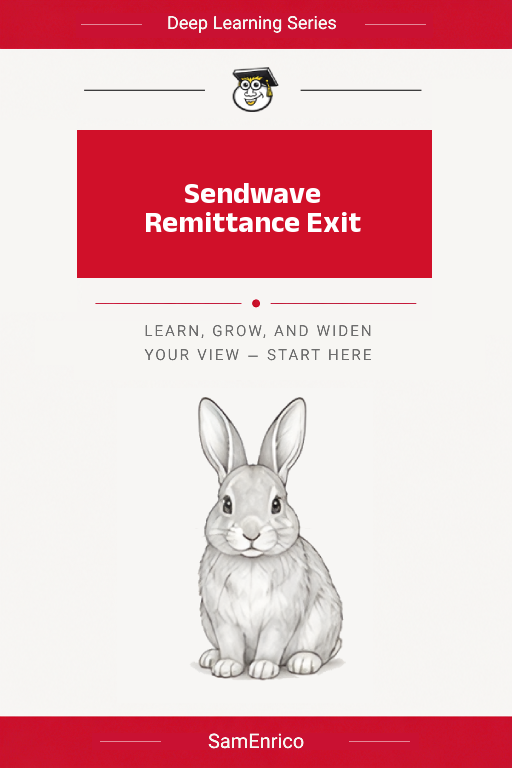 Sendwave Remittance ExitLemons Leandra$12.99
 Self Worth And WorkaholismLemons Leandra$11.99
 Metta For IndecisionLemons Leandra$11.99
 The Silk and the Spy: A Love Affair That Changed HistoryLemons Leandra$11.99
 The Last Whisper of the Nightingale: The Enigmatic Tale of the Vanishing SongbirdsLemons Leandra$11.99
You may also like
 Hong Kong Handover 1997Dunn Johnnie$11.99
 Zumba For Postnatal Recovery CourseNeal Christian$11.99
 Zumba for BeginnersLadner Nikia$11.99
 YouTube Comment Mining GuideHumes Pandora$12.99
 Worry Box MeditationCarlin Rudy$11.99
 Workplace Stress MeditationNguyen Lynn$11.99
 Workplace Stress and Sleep RepairHawley Ivory$11.99
 Workplace Perfectionism CureDelaney Jeffry$11.99
 Workplace Injustice Anger GuideWallen Isabelle$11.99
 Work Addiction and Burnout LinkGreenwood Ester$11.99
 Women in Yoga and WellnessBeattie Galina$11.99
 Women in Stand Up ComedyChun Evangeline$11.99