
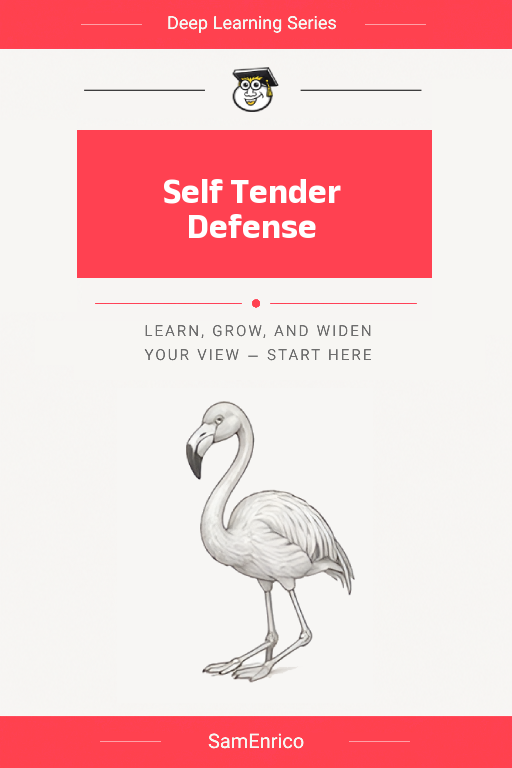
Non-FictionCrisis ManagementTender
Self Tender Defense Audiobook
Company offers to buy its own shares at a premium,
by Taylor Kayla
Company offers to buy its own shares at a premium, raising the price for the bidder.
Formats
Free sample
Chapter 1: The Valuation Paradox...--–- The chief financial officer stared at the screen, watching the stock price bleed from 24.50to24.50 to 24.50to21.30 in seventeen minutes. A hedge fund had just disclosed a 7.2% stake, and the market was reacting as if the company had announced bankruptcy. The activist’s letter, leaked to the press an hour ago, accused management of "squandering intrinsic value" and demanded either a breakup or a leveraged buyback. The CFO had two choices: wait for the annual meeting and fight a proxy war, or strike first. He picked up the phone and called the CEO.
"We launch a self-tender tomorrow at $26.50," he said. "Thirty percent premium. Let’s see who the weak hands really are."This book is about why that CFO was right—and why most executives would have been wrong. The self-tender defense is the most misunderstood, misapplied, and potentially powerful tool in corporate finance. When executed with precision, it transforms a company from prey to predator.
When botched, it becomes a confession of failure.The Central Puzzle: Why Would a Company Pay a Premium for Its Own Stock?Every MBA student learns the Modigliani-Miller theorem: in efficient markets, a company cannot create value purely through financial engineering. Buying back shares at fair price should be a zero-net-present-value transaction. Paying a premium—offering more than the market price—should destroy value for remaining shareholders. And yet, sophisticated companies do exactly this. They launch substantial issuer bids at double-digit premiums.
They borrow billions to retire their own stock. And sometimes, their remaining shares rise afterward.The puzzle has a solution, but it requires abandoning the narrow lens of efficient markets and adopting a strategic, behavioral, and control-oriented framework. The self-tender is not a valuation exercise; it is a weapon. The premium is not a confession of overpayment; it is a signal. And the market’s immediate reaction—almost always a price drop—is not a verdict; it is a head fake.This chapter introduces the foundational framework that will guide every subsequent chapter: the price dynamics framework that distinguishes between temporary head fakes and permanent hangovers, the intrinsic value anchor that determines which outcome you will experience, and the strategic logic that transforms a mechanical buyback into a defensive masterstroke.The Head Fake: When the Market Gets It Wrong Let us begin with the phenomenon that gives this chapter its name.
A head fake in sports is a deceptive movement that causes an opponent to react incorrectly—to jump when the player…
This is the end of the free sample. Get the Audiobook to keep going. Buy now
About this book
Details
- Author
- Taylor Kayla
- Publisher
- SamEnrico
- Language
- English
- Genre
- Non-Fiction, Crisis Management, Tender
- Released
- 2026-06-01
- Pages (approx.)
- 158
- Available as
- eBook, Audiobook

Listen in the VoxFlicks app
Audiobooks and audio dramas wherever you go. Sign in with your SamEnrico account and press play.
More by Taylor Kayla
 Parenting Mental Health GuideTaylor Kayla$11.99
 Chemotherapy Breath ComfortTaylor Kayla$11.99
 Stress and Substance Use CouplesTaylor Kayla$11.99
 Athletic Performance NappingTaylor Kayla$11.99Athletic Performance NappingTaylor Kayla$11.99
 Infant CPR ProtocolTaylor Kayla$11.99
 The Trucking Company TrapTaylor Kayla$11.99
 Gratitude for Solitude GuideTaylor Kayla$11.99
 The Old Man and the Sea RealTaylor Kayla$11.99
 Loma Linda Adventist HealthTaylor Kayla$11.99
 Frozen Echoes: The Lost Franklin Expedition's Final BroadcastTaylor Kayla$11.99
 The Gum Tree Alchemists: Indigenous Australian Knowledge of Medicinal PlantsTaylor Kayla$11.99
You may also like
 Hong Kong Handover 1997Dunn Johnnie$11.99
 Zumba For Postnatal Recovery CourseNeal Christian$11.99
 Zumba for BeginnersLadner Nikia$11.99
 YouTube Comment Mining GuideHumes Pandora$12.99
 Worry Box MeditationCarlin Rudy$11.99
 Workplace Stress MeditationNguyen Lynn$11.99
 Workplace Stress and Sleep RepairHawley Ivory$11.99
 Workplace Perfectionism CureDelaney Jeffry$11.99
 Workplace Injustice Anger GuideWallen Isabelle$11.99
 Work Addiction and Burnout LinkGreenwood Ester$11.99
 Women in Yoga and WellnessBeattie Galina$11.99
 Women in Stand Up ComedyChun Evangeline$11.99