
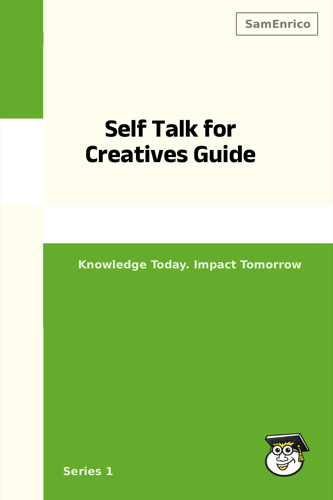
Self Talk for Creatives Guide eBook
Rewires creative block and comparison internal dia
by Heaton Kasie
Rewires creative block and comparison internal dialogue.
Formats
Free sample
Chapter 1: The Leash and the Key--–- Every creative person I have ever met—whether a painter, a poet, a coder, a chef, or a composer—shares a secret that they almost never say out loud. The secret is this: there is a voice inside their head that tells them they are not good enough, and that voice speaks with such authority that they often mistake it for the truth. You know this voice. It is the one that whispered before you started this chapter, "Who do you think you are to write anything?" Or maybe it said, "You should organize your desk first," or "Just check your email one more time." That voice has a name, and understanding its nature is the single most important step you will ever take as a creative person. This chapter is not about silencing that voice—because silencing is impossible.
This chapter is about learning to hold its leash while holding the key to your own studio.The Many Masks of the Thing That Stops You Let us call this voice what it is: Resistance. The term is not new. Writers have called it writer's block. Musicians call it the wall. Psychologists call it avoidance or self-handicapping.
But Resistance is a better name because it captures the active, adversarial nature of the experience. Resistance is not a lack of discipline or a failure of character. It is a specific psychological force whose entire purpose is to keep you safe, small, and stationary. The tragedy is that what keeps you safe also keeps you from doing the work you were made to do.Resistance wears many masks. You have probably encountered most of them.
Procrastination is its favorite disguise. "I will start tomorrow" feels reasonable, even responsible. But tomorrow never comes. There is always another tomorrow. Perfectionism is another classic mask.
"I need to learn more first" or "I am not ready yet" sounds like humility, but it is actually fear dressed up as virtue. Preparation is a particularly sneaky form of Resistance. "I must clean my studio before I can work" transforms tidying into a moral obligation, as if a clean desk has ever written a single good sentence. Exhaustion is another favorite. "I am too tired to be creative" confuses physical fatigue with creative energy, which often runs on a completely different circuit.
And finally, comparison—the mask that will get its own full treatment in Chapter 3—disguises itself as honest assessment. "I will never be as good as them" sounds like humility, but it is actually Resistance using other people's success as evidence for your own inadequacy.Here is what you need to know above all else: Resistance is not lazy. Resistance works very hard. It works seven days a week. It never takes a vacation.
It studies you like a detective, learning exactly which arguments will work on you at exactly which moments. For some people, Resistance uses flattery: "You are too talented to waste time on this small project." For others, it uses shame: "Who do you think you are to try this?" Resistance knows your history. It knows your childhood wounds. It knows your secret fears about what people will think if you fail—and what they will think if you succeed. And it uses all of that information to keep you exactly where you are.The Inner Critic Is Not the Enemy.
It Is a Security Guard.Here is where most self-help books get it wrong. They tell you to "silence your inner critic" or "overcome negative self-talk." This advice is not just unhelpful; it is impossible. You cannot silence a voice that is wired into your brain's survival circuitry. The inner critic is not a bug in your mental software. It is a feature.
Your brain evolved to assume the worst because assuming the worst kept your ancestors alive. That rustle in the bushes might be a predator. That social rejection might mean exile from the tribe. Your creative work—especially the vulnerable act of sharing something you made—triggers the same ancient alarm system.The inner critic is not a powerful authority figure who knows what is best for you. It is a scared, loud, repetitive entity that mistakes yelling for protecting.
Imagine a security guard who has been hired to keep you safe. This guard has one tool: a bullhorn. And because the guard only knows how to use the bullhorn, everything looks like a threat. A blank page? Bullhorn.
A deadline? Bullhorn. A colleague's success? Bullhorn. The guard is not evil.
The guard is doing what security guards do: assuming danger. But you would not let a security guard drive your car, choose your meals, or raise your children. Why would you let one run your creative life?The goal of this entire book can be stated very simply: you want to reduce the volume of the inner critic from 100 percent to about 10 or 20 percent. You want the critic to still be there—because it will always be there—but you want it to be background noise rather than the lead singer. Think of a dial from 0 to 10.
You cannot turn it to 0. But you can turn it from 10 down to 2 or 3. At that volume, you can hear the critic, but you do not have to obey it. You can say, "Thank you for your concern. I have got it from here." And then you can work.The Second Voice No One Talks About If the inner critic is the loud voice, there is another voice that almost never gets mentioned in creative self-help.
Let us call it the Inner Mentor. The Inner Mentor does not shout. It does not use absolutes. It never says "you always" or "you never." Instead, it makes observations about specific, changeable things. Where the critic says "This is garbage," the mentor says "This draft needs revision." Where the critic says "You have no talent," the mentor says "You have not yet mastered this specific technique." Where the critic says "They are better than you," the mentor says "What can you learn from their process?"The Inner Mentor is not a cheerleader.
It does not tell you that you are amazing or that everything you touch turns to gold. False positivity is just as unhelpful as harsh criticism. The mentor is a neutral, curious observer. It asks questions instead of making pronouncements. "What happened there?" "What would happen if you tried the opposite?" "What is one small thing you could change?" The mentor treats creative work as an experiment, not a judgment.
Experiments can fail. Failure is data. Data is useful. Judgment is useless.The reason the Inner Mentor is so quiet is that you have spent years training the critic. Every time you compared yourself to someone else, you gave the critic more ammunition.
Every time you called yourself a procrastinator, you strengthened that neural pathway. Every time you said "I am not a morning person" or "I am just not good at that," you were rehearsing the critic's script. The good news—and this is the most important sentence in this chapter—is that the brain can rewire. Neuroplasticity is not a metaphor. It is a biological fact.…
This is the end of the free sample. Get the eBook to keep going. Buy now
About this book
Details
- Author
- Heaton Kasie
- Publisher
- SamEnrico
- Language
- English
- Genre
- Non-Fiction, Self-Help, Creative
- Released
- 2026-06-09
- Pages (approx.)
- 112
- Available as
- eBook, Audiobook

Read better in the ZLOADR app
Your eBooks on your phone or tablet. Sign in with your SamEnrico account and start reading.
More by Heaton Kasie
 Shopping Addiction TherapyHeaton Kasie$11.99
 Dhatu Tissue Layer GuideHeaton Kasie$11.99
 Binge Eating and Perfectionism LinkHeaton Kasie$11.99
 Open Body Language GuideHeaton Kasie$11.99
 High Blood Pressure CausesHeaton Kasie$11.99
 Panic Relapse PreventionHeaton Kasie$11.99
 Canyon Descent ProtocolsHeaton Kasie$11.99
 The Lion’s Ingenuity: Benjamin Banneker’s Astronomical WondersHeaton Kasie$11.99
 The Vanished Vermeer: A Dutch Master’s Midnight EscapeHeaton Kasie$11.99
 A Collector's Handbook to the Ford FalconHeaton Kasie$11.99
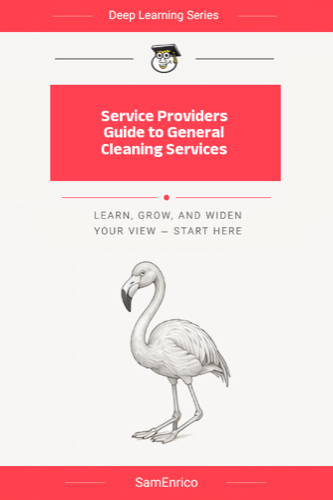 Service Providers Guide to General Cleaning ServicesHeaton Kasie$11.99
 How to Become a Major-assembly InspectorHeaton Kasie$11.99
You may also like
 Hong Kong Handover 1997Dunn Johnnie$11.99
 Zumba For Postnatal Recovery CourseNeal Christian$11.99
 Zumba for BeginnersLadner Nikia$11.99
 YouTube Comment Mining GuideHumes Pandora$12.99
 Worry Box MeditationCarlin Rudy$11.99
 Workplace Stress MeditationNguyen Lynn$11.99
 Workplace Stress and Sleep RepairHawley Ivory$11.99
 Workplace Perfectionism CureDelaney Jeffry$11.99
 Workplace Injustice Anger GuideWallen Isabelle$11.99
 Work Addiction and Burnout LinkGreenwood Ester$11.99
 Women in Yoga and WellnessBeattie Galina$11.99
 Women in Stand Up ComedyChun Evangeline$11.99