
Non-FictionSelf-HelpNursing Confidence
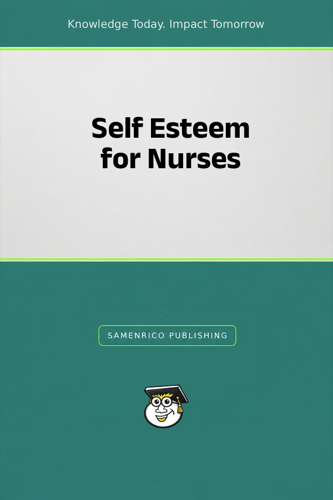
Self Esteem for Nurses eBook
Build confidence in patient care and doctor intera
Build confidence in patient care and doctor interactions using this healthcare guide.
Formats
Free sample
Chapter 1: The Silent Epidemic--–- The call light glowed red from Room 204, but Sarah didn’t hear it anymore. She stood in the medication room, gripping the counter with both hands, staring at the patient’s potassium level on a printed lab slip. The value was 2.9—critically low. She knew exactly what this meant: replacement protocol, cardiac monitoring, a call to the resident. She also knew, with the same certainty, that she would not make that call.
Not yet. Not until she had checked the labs twice, reviewed the protocol three times, and rehearsed her script in the mirror. Not until she was absolutely sure she wouldn’t sound stupid.Sarah had been a registered nurse for eleven months. She had passed the NCLEX on her first attempt. Her preceptor had signed off on every clinical skill.
She had never made a medication error, never missed a critical change in status, never received a single patient complaint. By every objective measure, she was a competent, even exceptional, new graduate. But Sarah did not feel competent. She felt like a fraud wearing scrubs. And she was not alone.The Paradox at the Heart of the Profession This chapter opens with a painful paradox that haunts the nursing profession: highly intelligent, rigorously trained, clinically capable nurses routinely describe themselves as frauds waiting to be exposed.
They whisper it in break rooms, confess it over text messages, and type it anonymously into Reddit threads at two in the morning. “I don’t know how I passed nursing school.” “Everyone here is smarter than me.” “Someday they’re going to figure out I have no idea what I’m doing.” These are not the words of incompetent practitioners. They are the words of competent practitioners who have been systematically trained to doubt themselves.The phenomenon has a name. Psychologists Pauline Clance and Suzanne Imes first described it in 1978 as the imposter phenomenon—an internal experience of intellectual phoniness in which individuals attribute their success to luck, timing, or deception rather than their own ability. They found that imposter phenomenon was particularly prevalent among high-achieving women in competitive, hierarchical professions.
Nursing, with its combination of life-or-death stakes, rigid hierarchy, and predominantly female workforce, is a perfect breeding ground.But imposter phenomenon alone does not explain the scale of the problem. Nurses also suffer from what this chapter calls the glass room effect—the unique vulnerability of a profession in which mistakes are immediately, publicly visible. An architect can erase a flawed blueprint before anyone sees it. A software engineer can roll back bad code without a client ever knowing. A nurse who administers the wrong medication or misses a critical vital sign change does so in front of the patient, the family, the physician, and often a room full of other staff.
The error is not theoretical. It is witnessed. It is documented. It haunts.The combination of imposter phenomenon and the glass room effect produces a specific kind of chronic self-doubt that is different from ordinary nervousness. It is not the anxiety of inexperience, which fades with repetition.
It is a persistent internal narrative that rewires the brain to interpret every success as luck and every failure as proof of fundamental inadequacy.Inexperience Versus Low Self-Esteem: A Crucial Distinction Before we go any further, we must draw a line that most books on nursing confidence fail to draw. Clinical inexperience and low professional self-esteem are not the same thing. They require different interventions, and confusing them is one reason so many nurses remain stuck.Clinical inexperience is a temporary state. It feels like: “I haven’t done this enough times yet. I need more practice.
I need to see more cases.” Inexperience responds to repetition. The tenth central line dressing change is easier than the first. The fiftieth code blue is less disorienting than the fifth. Inexperience is solved by time, exposure, and a supportive environment. It is not a character flaw.Low professional self-esteem is a persistent internal narrative.
It feels like: “I am inherently bad at this. Other people were born with something I lack. No amount of practice will fix me because the problem is me.” Low self-esteem does not respond to repetition. In fact, repetition can make it worse—because each repetition provides new evidence to twist into proof of inadequacy. The nurse with low self-esteem does not think, “I made a mistake, and now I know what to do differently.” She thinks, “I made a mistake because I am a mistake.”The interventions for these two conditions are opposite.
Inexperience requires more practice and more exposure. Low self-esteem requires cognitive rewiring—changing the internal story, not just the external skill set.Throughout this book, we will ask you to distinguish between these two sources of doubt. When you feel your stomach drop before a call to a physician, ask yourself: Is this inexperience? (I haven’t called this attending before, and I don’t know how she responds.) Or is this low self-esteem? (I believe my concern is not worth hearing, regardless of the data.) The answer determines the solution.The Glass Room: Why Your Mistakes Are Not Like Other People’s Mistakes Let us dwell for a moment on the glass room effect, because it is specific to nursing and it is rarely discussed openly.Consider the difference between a nursing error and an error in almost any other white-collar profession.
A lawyer who misses a filing deadline can often file late with a small penalty. The client may never know. An accountant who misclassifies an expense can amend the return. The error is contained. A nurse who gives the wrong dose of insulin does so in real time, in front of the patient, who may be looking directly at the syringe.
The error is visible not only to the nurse but to everyone in the room. And the consequences—a blood sugar crash, a seizure, a death—unfold immediately, in the same room, witnessed by the same people.This visibility changes the psychology of error. In most professions, you have time to correct a mistake before anyone notices. In nursing, the mistake announces itself. The monitor alarms.
The patient deteriorates. The family member asks, “What just happened?” The physician demands an explanation. There is no quiet corner in which to retract and revise.The result is a profession in which the fear of error is not abstract but visceral. It is not “What if I make a mistake someday?” It is “I made a mistake two hours ago, and I am still replaying it, and everyone who witnessed it still remembers.” This is not paranoia. It is the structure of the work.Research published in the Journal of Patient Safety estimates that medical error is the third-leading cause of death in the United States, and nurses are at the frontline of error detection and prevention.
The same study found that nurses report feeling “constantly watched” and “afraid to speak up” even when they are certain an error is about to occur. The fear is not of the error itself, though that is real enough. The fear is of being seen making the error—of the permanent record, the…
This is the end of the free sample. Get the eBook to keep going. Buy now
About this book
Details
- Author
- Mclean Zenaida
- Publisher
- SamEnrico
- Language
- English
- Genre
- Non-Fiction, Self-Help, Nursing Confidence
- Released
- 2026-06-06
- Pages (approx.)
- 142
- Available as
- eBook, Audiobook

Read better in the ZLOADR app
Your eBooks on your phone or tablet. Sign in with your SamEnrico account and start reading.
More by Mclean Zenaida
 Grieving the Lost CareerMclean Zenaida$11.99
 Self Hypnosis for Sickle Cell PainMclean Zenaida$11.99
 Anger at Childs SchoolMclean Zenaida$11.99
 Looking Up and RightMclean Zenaida$11.99
 Crawford Slip MethodMclean Zenaida$11.99
 Small Talk for LaundromatsMclean Zenaida$11.99
 Design Thinking for GovernmentMclean Zenaida$11.99
 Rising Suns: The Asian Formula 1 Champions Who Defied the OddsMclean Zenaida$11.99
 The Last Emperor Who Walked Away: Haile Selassie’s Silent AbdicationMclean Zenaida$11.99
 A Collector's Handbook to the Steyr 8Mclean Zenaida$11.99
 How to Produce Optoelectronic DisplaysMclean Zenaida$11.99
 A Beginners Guide to Popinjay (Volume 1)Mclean Zenaida$11.99
You may also like
 Hong Kong Handover 1997Dunn Johnnie$11.99
 Zumba For Postnatal Recovery CourseNeal Christian$11.99
 Zumba for BeginnersLadner Nikia$11.99
 YouTube Comment Mining GuideHumes Pandora$12.99
 Worry Box MeditationCarlin Rudy$11.99
 Workplace Stress MeditationNguyen Lynn$11.99
 Workplace Stress and Sleep RepairHawley Ivory$11.99
 Workplace Perfectionism CureDelaney Jeffry$11.99
 Workplace Injustice Anger GuideWallen Isabelle$11.99
 Work Addiction and Burnout LinkGreenwood Ester$11.99
 Women in Yoga and WellnessBeattie Galina$11.99
 Women in Stand Up ComedyChun Evangeline$11.99