
Non-FictionSelf-HelpBody Acceptance
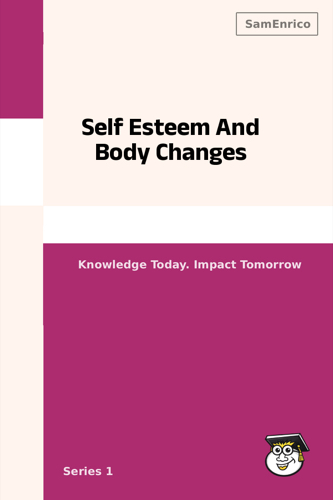
Self Esteem And Body Changes eBook
Maintain relationship confidence through pregnancy
Maintain relationship confidence through pregnancy, aging, weight changes, or illness.
Formats
Free sample
Chapter 1: The Stranger In The Mirror--–- The hospital room had a window, but the woman in Bed 4 couldn’t see out of it. She could only see her own reflection: pale, swollen, stitched from sternum to pelvis, attached to three different bags. She had survived the hysterectomy. The surgeon called it “successful.” Her husband called it “a miracle.” But when she looked at the glass, she didn’t see a survivor. She saw a stranger.
“I don’t know who that is,” she whispered to the night nurse. The nurse, kind but rushed, said the only thing anyone ever says: “You look great, considering.” The woman in Bed 4 nodded, smiled, and then cried silently for an hour. Not because she was in pain. Because she had just met the person she would be for the rest of her life, and she hadn’t been introduced.This is not a story about vanity. This is a story about identity.Every day, thousands of people experience what the woman in Bed 4 experienced.
Not just surgery patients. New parents who look in the mirror and don’t recognize the soft belly, the dark circles, the deflated breasts. People in midlife who catch their reflection in a store window and think, When did my mother’s face arrive on my shoulders? Cancer survivors who see a port scar, a colostomy bag, a bald head, and feel not relief but alienation. People who have gained or lost significant weight and find themselves navigating the world in a body that moves differently, occupies space differently, gets treated differently by strangers.
And people with chronic illnesses—autoimmune disorders, long COVID, chronic fatigue—who wake up one day and realize their body has become an unreliable narrator.They all say the same thing. I don’t know who I am anymore.If that sentence landed in your chest like a stone, this chapter is for you. If you have ever stood in front of a mirror and felt not sadness but strangeness, you are in the right place. If you have avoided mirrors entirely, or covered them, or only looked at yourself from the neck up, or only in dim light, or only when fully dressed—this chapter will give you a tool to stop running.Because here is the truth that no one tells you: The problem is not that you look different. The problem is that you feel different.
And until you separate what happened from what you think it means, you will remain a stranger in your own skin.The Body Schema: Why Your Brain Thinks You’ve Been Replaced The human brain is a prediction machine. Every millisecond, it makes thousands of guesses about where your body ends and the world begins, about how much space you occupy, about what movements are possible. Neuroscientists call this internal map the body schema. You don’t have to think about it. It runs in the background, like the operating system on a phone.You know how you can reach for a coffee mug without looking at your hand?
That’s your body schema. You know how you can navigate a dark hallway without bumping into walls? Body schema. You know how you can feel that your legs are crossed even with your eyes closed? Body schema.Your body schema is not just about movement.
It is also about identity. Embedded in that neural map is a sense of who you are—your age, your size, your capabilities, your place in the social world. And here is the terrifying part: your brain treats that map as reality, not as a representation of reality. When the map and the world align, you feel grounded, capable, at home. When they don’t align, your brain triggers a threat response identical to the one you would feel if you lost a loved one or a job.This is not an opinion.
This is neurobiology.When you look in the mirror and don’t recognize yourself, your amygdala (the brain’s alarm system) fires. Your cortisol levels rise. You enter a state of low-grade panic. And because the human brain is a meaning-making machine, it immediately asks: Why am I panicking? And it answers: Because something is wrong with me.
Because I am broken. Because I am no longer acceptable.But that answer is a story. Not a fact. The fact is: your body schema hasn’t updated yet. That’s all.
You are not broken. You are just running old software on new hardware.The Before Narrative and The After Narrative Here is where most people get stuck. They don’t just experience the mismatch between their body schema and their reflection. They dramatize it. They turn a neutral fact (“my body has changed”) into a catastrophic story (“I am no longer worthy of love”).Let me show you what I mean.The Before Narrative is the story you tell yourself about who you used to be.
It is almost always a fairytale. Not because you’re lying, but because memory is a novelist, not a reporter. The Before Narrative sounds something like this:“Before, I was confident. I was attractive. I was spontaneous.
I could wear anything. I didn’t think about my body at all—I just lived in it. People looked at me differently. I had energy. I had options.
I was me.”Notice the language. No caveats. No nuance. Just a clean, heroic arc.The After Narrative is the story you tell yourself about who you have become. It is almost always a horror story.
It sounds something like this:“Now, I am invisible. I am broken. I am a burden. Every time I look in the mirror, I see someone I don’t want to be. My partner must be disgusted.
My friends are just being nice. I will never feel good in my skin again. I am not the person I was supposed to be.”Again, clean catastrophe.Here is the problem: both narratives are stories. They are not facts. The facts are neutral.
Let me show you the difference.Fact: I gained 40 pounds.Story: I am lazy and undisciplined.Fact: I have a scar from my sternum to my pelvis.Story: I am disfigured and unlovable.Fact: I use a cane now.Story: I am old and useless.Fact: My breasts are different after breastfeeding.Story: My body is ruined.Do you see the gap? The facts are simply data. The stories are the meaning you have attached to the data. And here is the liberating truth: you can change the story without changing the facts.The Mirror Is Not Your Enemy (But It’s Also Not Your Friend)Before we go any further, let’s talk about the mirror. Because the mirror is where most of this identity crisis plays out.
You stand there, looking at a body that doesn’t match your internal map, and your brain screams, Danger!But the mirror is not the problem. The mirror is just glass with silver on the back. The problem is what you do when you look into it. Most people do one of three things:Avoidance. You stop looking.
You cover mirrors. You get dressed in the dark. You only look from the neck up. This works in the…
This is the end of the free sample. Get the eBook to keep going. Buy now
About this book
Details
- Author
- Goddard Harriett
- Publisher
- SamEnrico
- Language
- English
- Genre
- Non-Fiction, Self-Help, Body Acceptance
- Released
- 2026-06-10
- Pages (approx.)
- 129
- Available as
- eBook, Audiobook

Read better in the ZLOADR app
Your eBooks on your phone or tablet. Sign in with your SamEnrico account and start reading.
More by Goddard Harriett
 Dad Stress And Self Care GuideGoddard Harriett$11.99
 The MBSR Evening Wind DownGoddard Harriett$11.99
 Open World Game CompletionismGoddard Harriett$11.99
 Wakonda’s Whisper: The Lost Song of the Buffalo SpiritGoddard Harriett$11.99
 The Han Dynasty’s Earth Shakers: Ancient China’s Quest to Predict the UnpredictableGoddard Harriett$11.99
 Speed ReadingGoddard Harriett$11.99
 Understanding Hepatic Ductular HypoplasiaGoddard Harriett$17.99
 How to Become a Display FabricatorGoddard Harriett$11.99
 E-Commerce Health Beauty OutlookGoddard Harriett$12.99
 Affordable Masters In Turkey ManualGoddard Harriett$12.99
You may also like
 Hong Kong Handover 1997Dunn Johnnie$11.99
 Zumba For Postnatal Recovery CourseNeal Christian$11.99
 Zumba for BeginnersLadner Nikia$11.99
 YouTube Comment Mining GuideHumes Pandora$12.99
 Worry Box MeditationCarlin Rudy$11.99
 Workplace Stress MeditationNguyen Lynn$11.99
 Workplace Stress and Sleep RepairHawley Ivory$11.99
 Workplace Perfectionism CureDelaney Jeffry$11.99
 Workplace Injustice Anger GuideWallen Isabelle$11.99
 Work Addiction and Burnout LinkGreenwood Ester$11.99
 Women in Yoga and WellnessBeattie Galina$11.99
 Women in Stand Up ComedyChun Evangeline$11.99