
Non-FictionAI OperatorConsumer InsightsSegmentation Guide
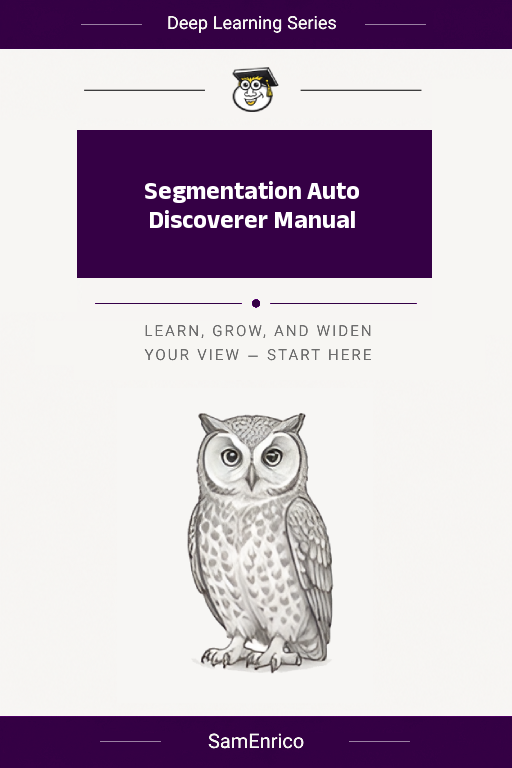
Segmentation Auto Discoverer Manual
Identify natural customer segments from survey dat
Identify natural customer segments from survey data using AI clustering without predefined groups. Includes segment profiling, size estimation, and targeting recommendations prompts.
Formats
About this book
Free sample
Chapter 1: The $2 Trillion Blind Spot--–- Every year, across industries and continents, companies burn approximately two trillion dollars marketing to people who will never buy, ignoring people who would love to buy, and shouting the wrong message at everyone in between. Not because their products are bad. Not because their teams are lazy. Not even because their data is wrong. They burn this money because they start with the wrong question. They ask, “What do I think my segments are?” instead of “What does the data reveal?”This chapter is the intervention. If you only read one chapter of this book, make it this one. Because before you run a single algorithm, write a single prompt, or open a single CSV file, you must unlearn the single most expensive habit in marketing: the a priori assumption.The Myth of the Obvious Segment Walk into any product meeting, and you will hear it within the first ten minutes. “Our target is women twenty-five to forty.” Or “We’re going after small business owners.” Or “Gen Z cares about sustainability.” These statements arrive with the confidence of gravity. They feel true. They feel safe. They are almost always wrong.Not because women twenty-five to forty aren’t customers. They might be. But so are women forty-one to sixty. And men. And non-binary users. And teenagers buying for their parents. By fixing on a demographic, you have blinded yourself to everyone else. Worse, you have assumed that everyone inside your demographic box wants the same thing. A twenty-six-year-old medical resident and a thirty-nine-year-old stay-at-home parent share an age bracket. They do not share a single purchasing motive.Demographic segmentation is a relic of the 1950s, when direct mail had to be coarse because printing was expensive and databases were weak. It persists today for one reason only: it is easy. Asking “What is your age?” is simple. Coding responses into buckets is simpler. But the ease of a method is not a valid reason to use it. The question is not whether demographic segmentation is convenient. The question is whether it works.It does not.A 2021 meta-analysis of 1,200…
This is the end of the free sample. Get the eBook to keep going. Buy now
Contents
- Chapter 1
- Chapter 2
- Chapter 3
- Chapter 4
- Chapter 5
- Chapter 6
- Chapter 7
- Chapter 8
- Chapter 9
- Chapter 10
- Chapter 11
- Chapter 12
Details
- Author
- Workman Sylvie
- Publisher
- SamEnrico
- Language
- English
- Genre
- Non-Fiction, AI Operator, Consumer Insights, Segmentation Guide
- Released
- 2026-05-30
- Pages (approx.)
- 159
- Available as
- eBook, Audiobook

Read better in the ZLOADR app
Your eBooks on your phone or tablet. Sign in with your SamEnrico account and start reading.
More by Workman Sylvie
 Resentment After Layoff GuideWorkman Sylvie$11.99
 TV News Producer Deadline Stress GuideWorkman Sylvie$11.99
 OCD And Gut Microbiome LinkWorkman Sylvie$11.99
 Rajneeshpuram Survivor StoryWorkman Sylvie$11.99
 College Student Gambling Addiction GuideWorkman Sylvie$11.99
 The Billion-Dollar Bet: How a Poker Pro Built a Casino EmpireWorkman Sylvie$11.99
 Understanding LaryngomalaciaWorkman Sylvie$17.99
 Logistics Real Estate OutlookWorkman Sylvie$12.99
 CandlesWorkman Sylvie$11.99
You may also like
 Hong Kong Handover 1997Dunn Johnnie$11.99
 Zumba For Postnatal Recovery CourseNeal Christian$11.99
 Zumba for BeginnersLadner Nikia$11.99
 YouTube Comment Mining GuideHumes Pandora$12.99
 Worry Box MeditationCarlin Rudy$11.99
 Workplace Stress MeditationNguyen Lynn$11.99
 Workplace Stress and Sleep RepairHawley Ivory$11.99
 Workplace Perfectionism CureDelaney Jeffry$11.99
 Workplace Injustice Anger GuideWallen Isabelle$11.99
 Work Addiction and Burnout LinkGreenwood Ester$11.99
 Women in Yoga and WellnessBeattie Galina$11.99
 Women in Stand Up ComedyChun Evangeline$11.99