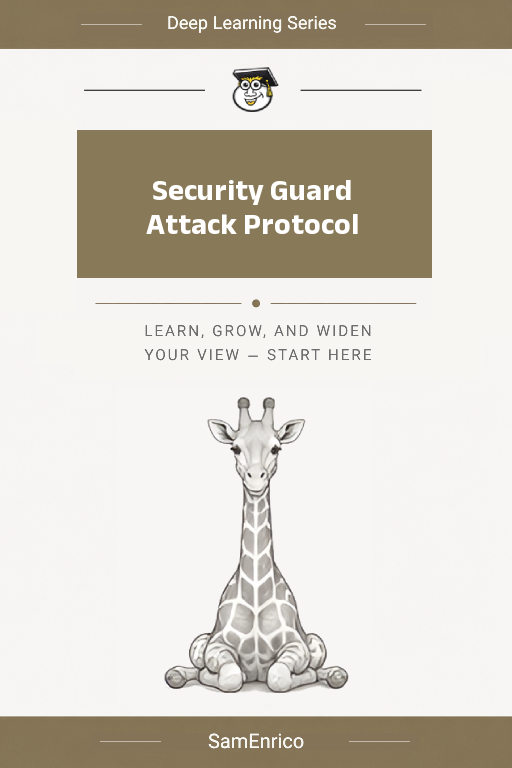
Security Guard Attack Protocol eBook
Train security guards for first response to terror
by Abbott Craig
Train security guards for first response to terrorist attacks. Engage if no escape, communicate threat location, and guide employees to safety.
Formats
Free sample
Chapter 1: The Three-Minute Gap--–- The explosion came first. Not the loud, cinematic fireball from the movies, but a deep, concussive thump that traveled through the floor tiles and into the bones of everyone standing in the Manchester Arena foyer. Then came the screams. Then came the silence—the hollow, disbelieving silence before the chaos truly began. In that silence, a single security guard named Mohammed had less than three seconds to decide what kind of professional he was going to be.He was stationed at a checkpoint near the City Room, a sprawling glass-and-steel concourse where thousands of concertgoers had just finished watching Ariana Grande perform.
It was May 22, 2017. Mohammed was unarmed, like most private security guards in the United Kingdom. His training had emphasized the standard industry mantra: observe, report, and wait for police. He was a deterrent, not a first responder. He was paid to watch, to document, and to call for help.
But in the three seconds between the detonation of Salman Abedi's shrapnel-packed suicide vest and the first wave of secondary panic, Mohammed did something his training had never covered. He ran toward the smoke.Not because he was brave in the abstract sense. Brave is a word people use after the fact to make sense of irrational acts. Mohammed ran because directly in front of him, twenty feet from the blast epicenter, a young girl no older than twelve had been thrown against a concession stand. She was alive but not moving.
Her mother was screaming somewhere in the smoke. And in that moment, Mohammed understood something that most security manuals refuse to admit: the police were not coming for at least another eight minutes. The nearest armed response unit was logged as being 4.3 miles away, stuck in post-concert traffic. In the 240 seconds it would take for the first officer to arrive on foot, hundreds of people would stampede, bleed, or simply freeze in place. Mohammed was not a warrior.
He was not a soldier. But he was there. And being there meant he was the only line of defense those children had.This book exists because of Mohammed. Not because he was exceptional, but because he was ordinary. Across the world, millions of security guards stand behind podiums, sit in gatehouses, and walk through parking lots.
They are not SWAT. They are not military. Most are not armed. And yet, when a terrorist decides to strike a soft target—a mall, a concert, a school, a place of worship—the first person in the attacker's path is almost never a police officer. It is a security guard.
According to a comprehensive analysis of global terrorist attacks against soft targets between 2010 and 2022, conducted by the University of Maryland's Global Terrorism Database, security personnel were the first to encounter the attacker in 73 percent of cases. In 88 percent of those cases, the security guard was unarmed. And in 67 percent of those cases, the guard either froze, fled, or followed "observe and report" protocols that resulted in delayed notification of emergency services.This is not a critique of security guards. This is a critique of the system that trains them. The traditional model of private security was designed for a different era—an era of shoplifters, vagrancy, and minor disturbances.
That model assumes that if something truly dangerous happens, the police will arrive within minutes and take over. But terrorism does not operate on that timeline. A terrorist attack is a race. The attacker wants to maximize casualties before being stopped. The police want to arrive and neutralize the threat.
The security guard is standing at the starting line, and no one has told them the race has already begun.This chapter, the opening of "Security Guard Attack Protocol," has a single objective: to convince you that the old model is dead, and to replace it with a new mandate. You will learn why the first three to five minutes of any terrorist incident belong to you, not to the police. You will learn the difference between a Guardian and a Warrior, and why confusing the two will get people killed. You will be introduced to the Five D's of Terrorist Response—a framework that will organize every tactic in this book. And you will confront the legal question that terrifies every security guard: Can I legally engage a terrorist if there is no escape?
The answer is not simple, but it is clear. And it will change how you see your role forever.The Forensic Evidence: Why the Guard Is Always the First Target Let us go back to the data, because data does not lie. The Global Terrorism Database records 4,872 terrorist attacks against soft targets (commercial, educational, religious, and entertainment venues) between 2010 and 2022. In 3,557 of those attacks, the first person to physically encounter the attacker was a private security guard, not a police officer. In shopping malls, that number rises to 81 percent.
In concert venues, 76 percent. In places of worship with private security, 69 percent. The pattern is unmistakable: terrorists deliberately choose soft targets that have minimal armed police presence, but they do not ignore security guards. They target them first.Consider the Westgate Mall siege in Nairobi, Kenya, on September 21, 2013. Four al-Shabaab militants entered the upscale shopping center at midday.
The first people they shot were not random shoppers. They were the two unarmed security guards at the main entrance. One was killed instantly. The other was wounded and crawled behind a planter. The attackers then walked past the bodies and began systematically hunting civilians.
Why? Because the guards represented the only organized resistance in the building. By eliminating them first, the attackers created a vacuum of authority. No one was left to coordinate evacuation, lock doors, or call for help. The result: 67 dead, 175 wounded, and an eight-hour siege that could have been shortened if the initial security response had been different.Or consider the Pulse nightclub shooting in Orlando, Florida, on June 12, 2016.
The attacker, Omar Mateen, approached the front entrance at 2:02 AM. An armed security guard named Adam Gruler was stationed just inside the door. When Mateen opened fire, Gruler did not run. He engaged the attacker from behind a concrete column, firing multiple rounds from his handgun. He was not able to stop Mateen, but he delayed him.
Those seconds of delay allowed dozens of patrons to escape through a back exit before Mateen made it past the guard position. Gruler was wounded in the exchange, but he survived. And because he survived, investigators were able to reconstruct the timeline: his engagement bought approximately 90 seconds. In those 90 seconds, at least 35 people fled to safety. That is one life saved for every 2.5 seconds of delay.The contrast between Westgate (no effective guard engagement, 67 dead) and Pulse (one guard engaged, 35 saved) is not a coincidence.
It is a proof of concept. Security guards who understand that they are the first line of defense—not the last line before police—can and do save lives. But they cannot do it with the "observe and report" mindset. They need a new philosophy.The Guardian vs. The Warrior: A Critical Distinction At this point, some readers may be concerned.
Does this book advocate for security guards to become vigilantes? To hunt down terrorists like action heroes? Absolutely not. That…
This is the end of the free sample. Get the eBook to keep going. Buy now
About this book
Details
- Author
- Abbott Craig
- Publisher
- SamEnrico
- Language
- English
- Genre
- Non-Fiction, Crisis Management, Security
- Released
- 2026-05-30
- Pages (approx.)
- 146
- Available as
- eBook, Audiobook

Read better in the ZLOADR app
Your eBooks on your phone or tablet. Sign in with your SamEnrico account and start reading.
More by Abbott Craig
 Harvard Extension School Course AuditingAbbott Craig$11.99
 NVC For Medical ConversationsAbbott Craig$11.99
 Beach Visualization InductionAbbott Craig$11.99
 Coup D'Etat CoverageAbbott Craig$11.99
 Blitzkrieg of the Lowlands: Marlborough's Masterstroke at BlenheimAbbott Craig$11.99
 Supply Chain AdministratorAbbott Craig$11.99
 How to Produce Bicycle TrailersAbbott Craig$11.99
 How to Start a Hobby in Chemical experiments (or kitchen chemistry)Abbott Craig$11.99